Serotonin, Fasting, and Mood: What the Science Shows
- Tony Lindsay
- 3 days ago
- 13 min read


Fasting typically triggers a short adaptation dip in mood, followed by neurochemical shifts — including changes in serotonin dynamics — that can support emotional wellbeing for many people when done safely. That’s the short answer. The longer one involves tryptophan transport, gut bacteria, BDNF, and a handful of clinical trials that are promising but not yet definitive. If you take SSRIs or SNRIs, have a history of bipolar disorder or an eating disorder, are pregnant, or manage diabetes with medication, talk to your clinician before changing your eating window. For everyone else, the mechanisms below explain what’s actually happening and how to use that knowledge practically.
Key Takeaways
Fasting can support serotonin-related mood improvements through multiple converging pathways, but the evidence is strongest for people without active psychiatric conditions and weakest for those already on mood-stabilizing medications.
Point | Details |
Peripheral vs. central serotonin | Blood serotonin measures don’t reflect brain serotonin; BDNF is the more reliable human proxy for central effects. |
Human study signals | Bastani et al. found significant increases in plasma serotonin and BDNF in 29 healthy adults across a month of Ramadan fasting. |
Key mechanisms | Gut microbiota remodeling, reduced neuroinflammation (lower TNF-α and IL-6), and BDNF upregulation are the strongest evidence-backed pathways. |
Timeline | Mood benefits typically emerge after 2+ weeks; the first 1–3 days often involve an adaptation dip, not improvement. |
ForgeFast | ForgeFast’s structured IF protocols and habit-tracking framework support the gradual, clinician-aligned approach the evidence recommends. |
Table of Contents
What do human studies show about fasting, serotonin, and mood?
How does fasting change serotonin and BDNF through multiple pathways?
Is intermittent fasting safe for mood, and how do you start?
Why the serotonin-fasting story is more complicated than it looks
ForgeFast gives you the structure the science actually requires
What do human studies show about fasting, serotonin, and mood?
The human evidence is genuinely interesting, though still limited by small samples and short follow-up periods.
Key human studies at a glance
Study | Population | Protocol | Key Biomarkers | Mood Outcome | Limitations |
29 healthy adults | Ramadan fasting (~14–16 h/day, 29 days) | Plasma serotonin, BDNF, NGF | Significant increases in all three markers | No control group; observational; peripheral serotonin only | |
MDD inpatients + healthy controls | 72-hour water-only fast | BDNF, BDI sub-scores | Cognitive-affective symptom improvement in some MDD subgroups; BDNF changes differed between groups | Small clinical sample; extreme protocol; not generalizable to IF | |
Mixed human cohorts | 12+ week IF protocols | Serotonin, BDNF, fatigue scores | Reduced fatigue, improved depressive symptom scores; longer protocols showed stronger emotional benefits | Heterogeneous regimens; confounded by weight loss |
The Bastani et al. Ramadan study is the most-cited human data point linking fasting directly to serotonin increases. Twenty-nine healthy adults were measured before Ramadan and again on days 14 and 29. Plasma serotonin, BDNF, and nerve growth factor (NGF) all rose significantly across the month. The pattern is consistent with the gut-brain axis and anti-inflammatory mechanisms described below — but the absence of a control group means you can’t rule out seasonal, behavioral, or social confounders.
The 72-hour fasting trial is more provocative. Researchers compared metabolic and BDNF changes in MDD inpatients against healthy controls after a water-only fast. Some MDD subgroups showed measurable improvement in cognitive-affective symptom sub-scores on the Beck Depression Inventory. BDNF responses diverged between groups, suggesting that the depressed brain responds to caloric restriction differently than a healthy one. This is mechanistically plausible — energy metabolism is disrupted in MDD, and fasting may partially correct that — but a 72-hour water fast is not intermittent fasting, and the clinical setting limits direct application.
What the human data consistently shows:
Sustained fasting protocols (weeks, not days) correlate more reliably with mood improvements than acute fasts.
BDNF increases appear across multiple study designs and populations, making it the most replicated biomarker signal.
Peripheral serotonin increases in Ramadan studies, but central serotonin remains unmeasured in all human fasting trials to date.
Mood benefits in clinical populations (MDD) are real in some subgroups but inconsistent across the literature.
Callout: Every human fasting-mood study published so far has a sample size under 100. Treat the evidence as hypothesis-generating, not practice-changing.
What do animal studies reveal about fasting and serotonin?
Preclinical data fills in the mechanistic gaps that human studies can’t ethically or practically address. The picture from rodent models is more detailed — and more nuanced — than popular summaries suggest.
A 2026 Translational Psychiatry study using a 14-day chronic restraint stress model found that intermittent fasting reversed stress-induced depression-like behaviors and demyelination in mice. The protective effect was associated with specific shifts in gut microbial composition, identified through 16S rRNA sequencing. This is a meaningful finding: it suggests fasting doesn’t just change neurotransmitter levels directly — it restructures the microbial environment that influences brain chemistry and even myelin integrity.
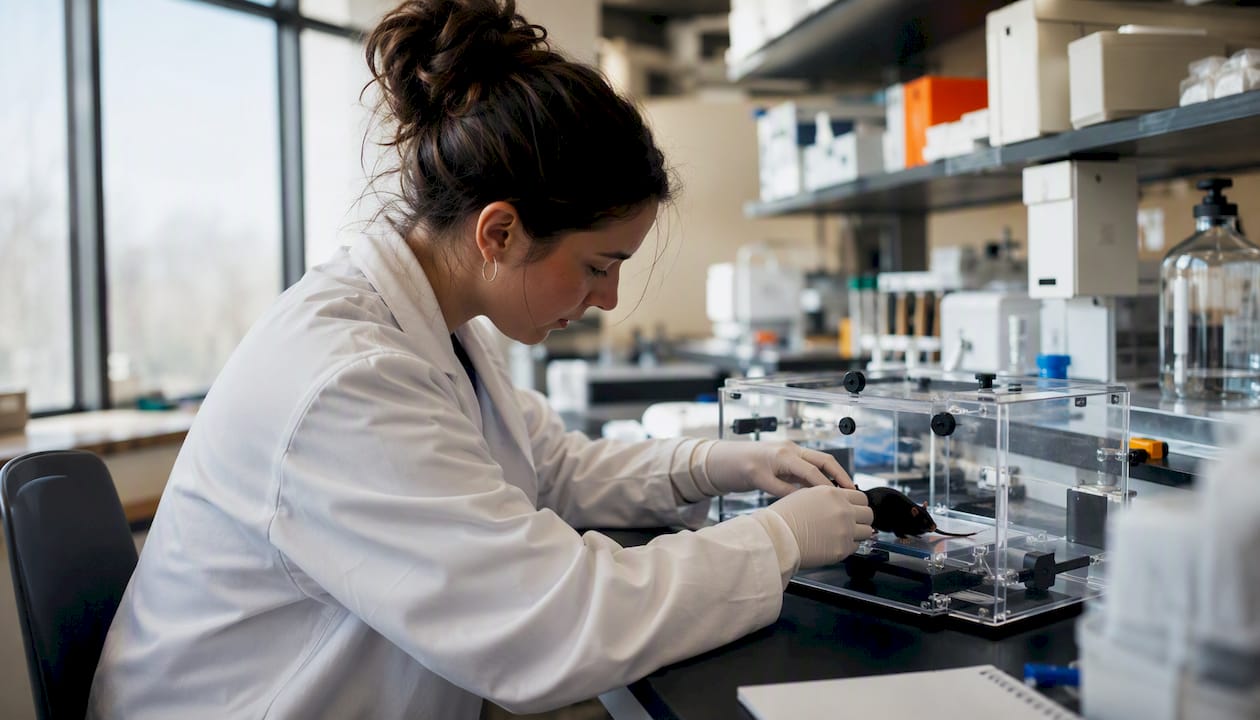
A comprehensive ScienceDirect review synthesizing preclinical IF studies found that brain oxidative stress, inflammatory cytokines (TNF-α, IL-6), and serotonergic markers are all modulated by fasting, with the direction and magnitude depending heavily on protocol intensity and duration. Short, moderate fasting tends to reduce neuroinflammation and support serotonergic function. Prolonged or severe restriction can push in the opposite direction.
Key mechanistic findings from animal models:
IF reduces brain TNF-α and IL-6, cytokines that impair tryptophan conversion to serotonin by shunting it toward the kynurenine pathway instead.
Serotonin transporter (SERT) expression and 5-HT receptor sensitivity shift under fasting conditions, altering how efficiently neurons use available serotonin.
BDNF upregulation under IF is robust across multiple rodent paradigms and correlates with reduced anxiety- and depression-like behavior on standard behavioral tests (forced swim, open field, elevated plus maze).
Gut microbial shifts under IF — specifically changes in Firmicutes:Bacteroidetes ratio — precede and predict neurochemical changes, supporting a microbiota-first causal sequence.
The translation caveat is real: rodent serotonin metabolism differs from human metabolism in important ways, behavioral tests don’t map cleanly onto human mood, and the fasting protocols used in animal studies (alternate-day fasting, severe caloric restriction) often don’t resemble the 16:8 or 5:2 schedules most people actually follow.
How does fasting change serotonin and BDNF through multiple pathways?
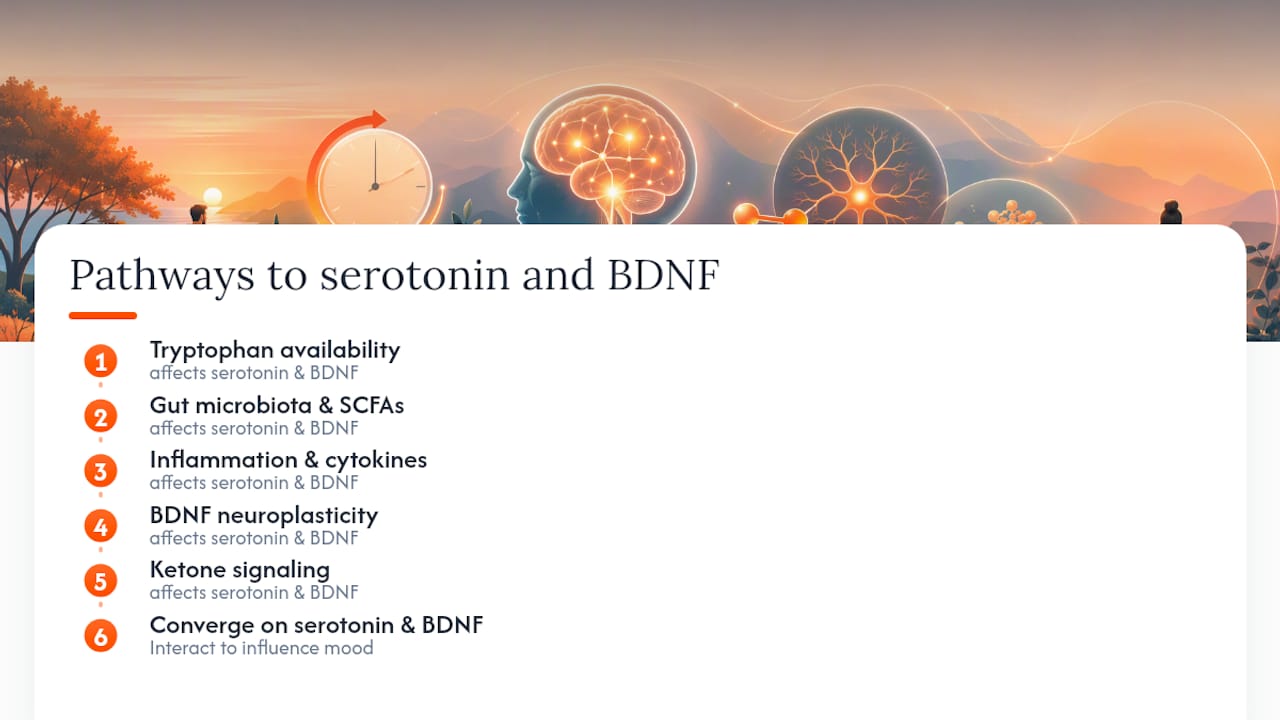
No single mechanism explains fasting’s effect on mood. At least five distinct biological routes converge on serotonin and BDNF, and they interact.
Tryptophan availability and the blood-brain barrier
Fasting lowers insulin, which reduces the clearance of competing LNAAs from the bloodstream. That can temporarily lower the tryptophan-to-LNAA ratio and reduce central serotonin synthesis during the acute phase. As the fast extends and protein turnover shifts, the ratio can recover or even improve — particularly if the eating window includes tryptophan-rich foods (turkey, eggs, pumpkin seeds, dairy) paired with a moderate carbohydrate load to drive insulin-mediated LNAA clearance.
Gut microbiota and short-chain fatty acids
The gut-brain axis is probably the most underappreciated pathway here. IF remodels gut microbial communities, increasing the relative abundance of bacteria that produce short-chain fatty acids (SCFAs) like butyrate and propionate. SCFAs support the intestinal epithelium, reduce gut permeability, and promote the production of tryptophan derivatives that facilitate central serotonin synthesis. They also directly reduce neuroinflammation via vagal signaling and immune modulation.
Inflammation and cytokine-driven serotonin metabolism
Chronic low-grade inflammation — common in metabolic syndrome, obesity, and treatment-resistant depression — activates the enzyme indoleamine 2,3-dioxygenase (IDO), which diverts tryptophan away from serotonin synthesis and toward the kynurenine pathway. Kynurenine metabolites include quinolinic acid, a neurotoxin. IF downregulates TNF-α and IL-6 and reduces IDO activity, effectively redirecting tryptophan back toward 5-HT production. This is likely the dominant mechanism in people whose mood improves with IF.
BDNF and neuroplasticity
Brain-derived neurotrophic factor is the molecular signal most consistently linked to fasting’s mood effects. BDNF supports synaptic plasticity, neurogenesis in the hippocampus, and resilience to stress. Low BDNF is a well-established feature of major depression. Fasting — particularly the metabolic shift toward ketone production — upregulates BDNF expression in the hippocampus and prefrontal cortex. The neurological benefits of intermittent fasting extend well beyond serotonin, with BDNF acting as a downstream amplifier of multiple fasting-induced signals.
Ketone signaling
Beta-hydroxybutyrate (BHB), the primary ketone produced during extended fasting, has direct neuroactive properties. It inhibits the NLRP3 inflammasome, reducing neuroinflammation, and appears to upregulate BDNF independently of caloric restriction. BHB levels typically rise after 12–16 hours of fasting, which is why the 16:8 protocol sits at the threshold of meaningful metabolic signaling.
HPA axis and circadian alignment
Fasting modulates cortisol rhythms and can reset circadian clock gene expression in peripheral tissues. Misaligned circadian rhythms suppress serotonin synthesis and disrupt melatonin production (melatonin is synthesized from serotonin). Eating within a consistent, daylight-aligned window — rather than late at night — amplifies the circadian benefit and supports both serotonin and sleep quality.

Pro Tip: To maximize tryptophan transport into the brain during your eating window, pair a tryptophan-rich protein source (eggs, turkey, or cottage cheese) with a moderate serving of complex carbohydrates. The carb-driven insulin spike clears competing amino acids, giving tryptophan a clearer path across the blood-brain barrier. Timing this meal in the evening also aligns with the natural serotonin-to-melatonin conversion that supports sleep.
Receptor subtypes shape the mood outcome as much as total 5-HT levels. 5-HT1A autoreceptors in the raphe nuclei act as a brake on serotonin release — their sensitivity can increase during fasting, which may initially blunt mood. 5-HT2A receptors, concentrated in the prefrontal cortex, mediate cognitive flexibility and emotional regulation. Fasting-induced changes in receptor density and sensitivity mean that two people with identical plasma serotonin levels can have very different mood responses.
What mood changes should you expect, and when?
The timeline matters as much as the mechanism. Most people don’t feel better immediately.
Hours 0–24 (acute adaptation):
Mild irritability, difficulty concentrating, and low-grade fatigue are common as blood glucose drops and the brain hasn’t yet shifted to ketone metabolism.
Peripheral serotonin oscillations flatten as meal-anticipatory peaks disappear.
Cortisol may rise transiently as a counter-regulatory response.
Days 2–7 (metabolic transition):
BHB production begins, reducing neuroinflammation and supporting BDNF.
Many people report improved mental clarity and reduced afternoon energy crashes by day 3–5.
Mood remains variable; some people experience a second dip around day 4–5 as glycogen stores fully deplete.
Weeks 2–12 (adaptation and consolidation):
Gut microbiota composition begins shifting, increasing SCFA production and tryptophan availability.
BDNF upregulation becomes more consistent; studies using 12+ week protocols show the strongest emotional benefits.
Sleep quality often improves as circadian alignment strengthens, which feeds back positively on serotonin synthesis the following day.
For consistent fasting and brain rewiring, the timeline is weeks to months, not days.
Who tends to benefit:
People with metabolic inflammation (elevated CRP, insulin resistance) — the anti-inflammatory mechanism is most active here.
Those with mild-to-moderate depressive symptoms without active psychiatric treatment.
Individuals with disrupted circadian rhythms from irregular eating patterns.
People who sleep better when they stop eating 3–4 hours before bed.
Who risks mood worsening:
Anyone with a history of bipolar disorder — fasting can trigger hypomanic or manic episodes.
People with active or recovered eating disorders — fasting protocols can reinforce restrictive cognitions.
Those with hypoglycemia or insulin-dependent diabetes — blood sugar instability directly impairs serotonin synthesis.
People under high acute stress — the HPA axis is already dysregulated, and fasting adds another stressor.
Sleep deserves its own note. Serotonin is the precursor to melatonin. When fasting improves circadian alignment and reduces late-night eating, melatonin production often improves, sleep quality rises, and next-day mood follows. This is one of the clearest and most underappreciated feedback loops in the fasting-mood relationship.
Is intermittent fasting safe for mood, and how do you start?
The honest answer: for most healthy adults, yes. For specific populations, the risks are real enough to require clinical oversight.
A gradual starting schedule
Week 5+: 16:8 if tolerated. A 16-hour fast is where BHB production becomes consistent and the gut-brain axis changes begin accumulating. Practical 16:8 guidance can help you structure this around work demands.
If mood dips noticeably at any stage, step back to the previous window for one week before progressing. A dip in week 1 is normal adaptation. A dip that persists past week 2 or worsens is a signal to stop and consult a clinician.
For fasting schedule templates built around professional schedules, ForgeFast’s resource library covers common timing challenges.
Red flags: stop and seek care if you experience
Persistent low mood or hopelessness lasting more than 3 days into a new fasting phase.
Racing thoughts, decreased need for sleep, or elevated impulsivity (possible hypomania).
Preoccupation with food restriction, guilt around eating, or compensatory behaviors.
Dizziness, heart palpitations, or confusion (hypoglycemia symptoms).
Significant sleep disruption lasting more than one week.
Tracking objective physiological signals alongside subjective mood can help you catch problems early. A wearable like the VOLTRA biometric tracker gives continuous heart rate variability and sleep staging data — useful for seeing whether your nervous system is adapting or struggling before your mood fully registers the difference.
What does the research still not know?
The honest limitations of this field are worth stating plainly, because the popular coverage often overstates certainty.
Major gaps in the current evidence:
No human fasting study has directly measured central (brain) serotonin. All human data relies on peripheral plasma measures, BDNF as a proxy, or behavioral/self-report outcomes.
Sample sizes across all published human fasting-mood trials are small, typically under 50 participants. Effect sizes may not replicate in larger, more diverse populations.
Fasting protocols vary enormously across studies (Ramadan, 5:2, 16:8, 72-hour water fasts), making cross-study comparison unreliable.
Follow-up periods rarely exceed 12 weeks. Long-term mood outcomes — beyond three months — are essentially unknown.
The Ramadan studies conflate fasting with social, spiritual, and sleep-schedule changes that independently affect mood and serotonin.
Sex differences are understudied. Women’s serotonin synthesis rates differ from men’s at baseline, and hormonal fluctuations across the menstrual cycle interact with both fasting and serotonin metabolism. Most published studies skew male or don’t stratify by sex.
Age effects are similarly underexplored. Older adults show different BDNF baseline levels and different gut microbiome compositions, which likely modifies the fasting response.
Open questions for future research:
Do receptor-specific changes (5-HT1A vs. 5-HT2A) explain why some people feel calmer and others feel more anxious during fasting?
What is the minimum effective fasting duration for meaningful BDNF upregulation in humans?
Can IF serve as an adjunct to antidepressant treatment in carefully selected MDD patients, and what monitoring protocols would make that safe?
The cautious interpretation: fasting shows real biological plausibility for mood support, and the early human data is encouraging. It is not yet evidence-based medicine for mood disorders.
How to apply this science safely with structured support
The gap between “biologically plausible” and “safe for you specifically” is where most people get into trouble. A structured approach closes that gap.
Practical checklist before starting:
Screen yourself honestly for the contraindications listed above (SSRIs, bipolar history, eating disorder history, diabetes, pregnancy).
Get a baseline blood panel if you haven’t had one recently: fasting glucose, HbA1c, CRP, and a lipid panel give you a metabolic starting point.
Set a consistent eating window that aligns with daylight hours and your work schedule.
Prioritize hydration during the fasting window: water, black coffee, and plain tea are all fine; electrolytes matter if you’re exercising.
Plan your eating window meals to include tryptophan-rich proteins and complex carbohydrates, particularly in the evening meal.
Track sleep quality from day one. Mood and sleep are tightly coupled; a deteriorating sleep trend is an early warning sign.
Schedule a check-in with your clinician at the 4-week mark, especially if you take any psychiatric medication.
Structured programs help for a specific reason: behavioral scaffolding reduces the cognitive load of decision-making during adaptation. When you don’t have to decide what to eat, when to eat, or whether a mood dip is normal, you’re less likely to abandon the protocol prematurely or push through a genuine red flag. ForgeFast’s mental clarity habits framework integrates the behavioral and biological dimensions of IF in a way that a simple eating-window timer doesn’t.
Guided programs are useful. They are not a substitute for clinical consultation if you have a mood disorder or take psychiatric medication.
Why the serotonin-fasting story is more complicated than it looks
The popular narrative goes like this: fast longer, boost serotonin, feel better. It’s clean, it’s shareable, and it’s mostly wrong as a mechanism.
What the evidence actually shows is messier and more interesting. Fasting doesn’t directly raise brain serotonin in any simple linear way. It restructures the conditions under which serotonin is synthesized, used, and recycled. The gut microbiome shifts. Inflammation drops. BDNF rises. Tryptophan metabolism gets redirected away from the kynurenine pathway. Sleep improves. Circadian rhythms tighten. All of these changes feed into serotonergic function indirectly, over weeks, not hours.
The people who report the most dramatic mood improvements from IF are usually the ones who had the most metabolic inflammation to begin with. That’s not a coincidence. The anti-inflammatory mechanism is probably doing more work than the direct serotonin mechanism in most cases. Which means IF is not a serotonin supplement. It’s a metabolic intervention that happens to create conditions where serotonin systems work better.
That reframe matters practically. If you’re starting IF primarily for mood and you don’t see a change in the first week, you haven’t failed. You’re still in the adaptation phase. The biology takes time. The mistake most people make is either quitting too early or ignoring genuine warning signs because they’re committed to the protocol. Both errors are avoidable with the right framework and honest self-monitoring.
One more thing the popular coverage gets wrong: the Ramadan studies are not clean evidence for IF. Ramadan involves a specific social context, altered sleep schedules, spiritual practice, and community support — all of which independently affect mood. Attributing the serotonin and BDNF increases entirely to the fasting component is a stretch. The human evidence for IF specifically, stripped of those confounders, is thinner than the headlines suggest.
ForgeFast gives you the structure the science actually requires
The research is clear on one thing: unstructured fasting is where the risks concentrate. Skipping meals randomly, pushing fasting windows without tracking how your body responds, or starting IF while on psychiatric medication without clinical oversight — these are the scenarios where mood worsens instead of improving.

ForgeFast is built around the exact framework the evidence supports: a gradual protocol progression (12:12 to 16:8), behavioral habit tracking, meal composition guidance that accounts for tryptophan availability, and educational content grounded in the gut-brain axis and BDNF research covered in this article. The platform isn’t a replacement for your doctor. It’s the structured daily support that makes clinician-aligned fasting actually sustainable. Before you enroll, check the contraindications above and loop in your clinician if you take any mood-related medication. Then start your ForgeFast protocol with a framework designed to reduce the guesswork the adaptation phase usually creates.
Useful sources and further reading
The sources below are the primary references behind this article. Each one is worth reading directly if you want to go deeper on a specific mechanism or study design.
Source | Why it matters |
The most-cited human study directly measuring plasma serotonin and BDNF changes during a month of religious fasting. | |
Clinical trial showing differential BDNF and mood sub-score responses in depressed inpatients vs. healthy controls. | |
Comprehensive review of how IF remodels gut microbiota, raises SCFAs, and supports central serotonin synthesis. | |
Synthesizes preclinical evidence on inflammatory cytokines, oxidative stress, and BDNF across multiple IF protocols. | |
Mouse model showing IF reverses stress-induced depression-like behavior and demyelination via microbial shifts. | |
Broader review of human cohort data linking sustained IF protocols to improved fatigue and depressive symptom scores. | |
Explains why peripheral serotonin oscillates with meal timing and how fasting flattens those pre-meal surges. |
This article is for general educational purposes only and does not constitute medical or psychiatric advice. If you take prescription medication, have a diagnosed mood disorder, or have a history of an eating disorder, consult a qualified clinician before changing your eating pattern.
Recommended
Comments