How to Skip Breakfast Without Hunger: a 4-Week Plan
- Tony Lindsay
- 1 day ago
- 9 min read

Yes, you can skip breakfast without persistent morning hunger — and for most busy professionals, a structured time-restricted eating (TRE) protocol makes that possible within weeks, not months. The simplest starting window: eat between 12:00 PM and 8:00 PM (16:8) or 11:00 AM and 5:00 PM (18:6). Before you start, run a quick safety check: if you take medications that require food, are pregnant, manage type 1 diabetes, or have a history of disordered eating, talk to a clinician first. ForgeFast, built around Tony Lindsay’s habit-first methodology, gives you the structure to make this shift stick.
Key Takeaways
Skipping breakfast without hunger is achievable within four weeks using a structured TRE protocol, consistent morning rituals, and protein-focused feeding-window meals.
Point | Details |
Start with 16:8 or 18:6 | Eat between 12:00–8:00 PM (16:8) or 11:00 AM–5:00 PM (18:6) as your first target window. |
Early signals appear around day 10 | A 50-day TRE trial observed anxiety reduction and metabolic improvements measurable by day 10. |
Protein anchors the feeding window | Lead every first meal with 30–40 g of protein to blunt hunger through the rest of the day. |
Hunger outcomes vary by individual | Systematic reviews show IF does not consistently reduce hunger vs. continuous restriction — monitor your own signals. |
ForgeFast structures the habit | ForgeFast provides TRE protocols, morning ritual templates, and habit-tracking to make the window automatic. |
Table of Contents
How to skip breakfast without hunger: your 4-week starter plan
A gradual progression beats a cold-turkey approach. Here is a week-by-week framework that any busy schedule can absorb.
Week 1: Shift the window by 30–60 minutes. If you normally eat at 7:00 AM, push your first meal to 8:00 or 8:30 AM. Drink 16 oz of water immediately on waking. Add black coffee or plain tea after 30 minutes if you use caffeine.
Week 2: Consolidate and anchor. Push the first meal to 10:00–10:30 AM. Pair the delay with an existing calendar anchor — your first meeting, your commute, a morning walk. Behavior anchors reduce decision fatigue more reliably than willpower alone.

Week 3: Reach your target window. Move the first meal to 11:00 AM (18:6) or noon (16:8). Most people notice hunger signals shifting by this point. The 16:8 fasting protocol is the most studied and generally the most tolerable entry point.
Week 4: Anchor the habit. Maintain the window consistently for seven days. Focus on ritual, not restriction. The goal is making the fasting window feel automatic, not effortful.
Daily micro-routine checklist:
Wake and drink 16 oz of water before anything else
Five minutes of light movement (a short walk, stretching) to blunt cortisol-driven hunger
Black coffee or plain tea within the first hour if desired
A five-minute priority list to redirect attention from food to work
Delay solid food until your target window opens
For someone already fasting occasionally, compress weeks 1 and 2 into a single week and move directly to the target window by day 10.
What the research says about the adaptation timeline
Knowing what to expect week by week keeps you from quitting too early.
Day 10: A 50-day TRE trial observed measurable reductions in anxiety and early metabolic improvements by day 10, with participants eating two meals within a 6-hour feeding window. These are early signals, not guarantees — individual variability is real.
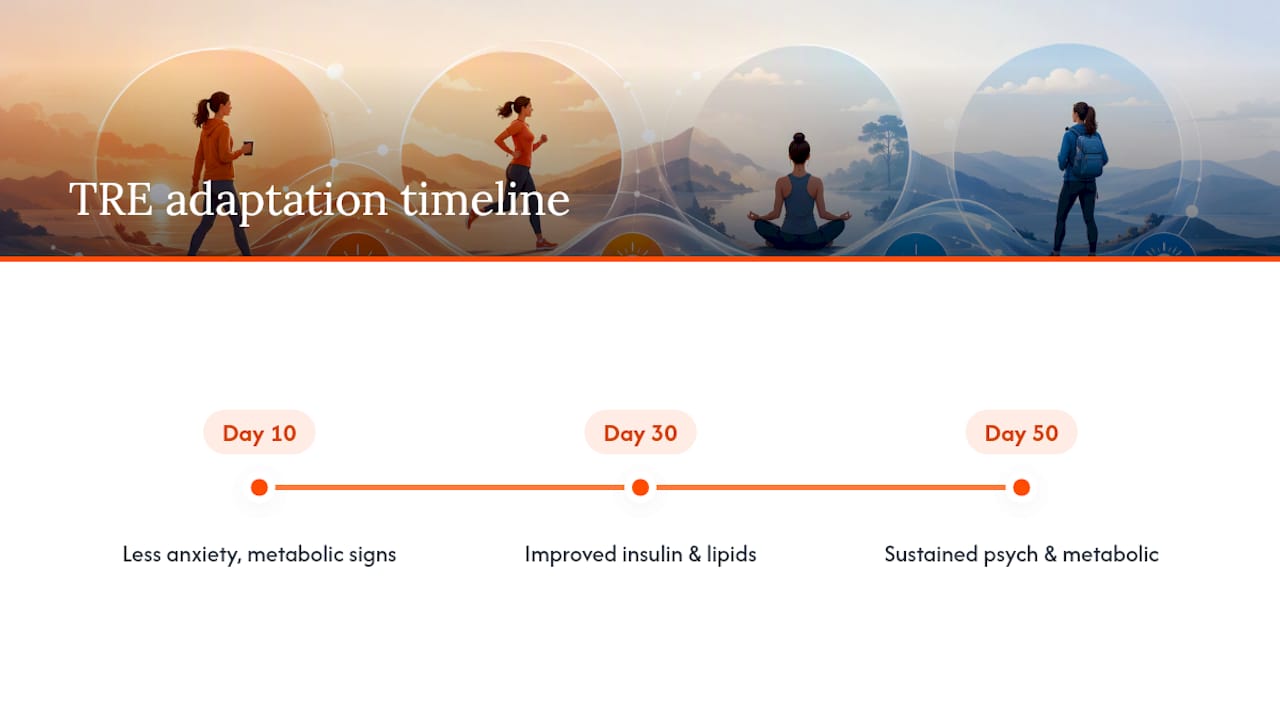
Day 30: Insulin sensitivity and lipid metabolism improvements begin appearing in clinical studies at this range. A comprehensive IF review points to autophagy and hormonal regulation as the underlying mechanisms, though study designs vary considerably.
Day 50: The same 50-day trial found psychological and metabolic improvements sustained through the full intervention period.
One honest caveat: a systematic review found that IF does not consistently reduce subjective hunger compared with continuous energy restriction. Appetite outcomes are mixed across trials. Some people feel noticeably less hungry by week three; others adapt more slowly. Monitoring your own signals matters more than matching a textbook timeline.
Meal timing adds another layer. Cohort data suggests that Longer overnight fasts combined with an early first meal were associated with lower BMI over time, whereas skipping breakfast alone did not show a clear long-term weight advantage in that subgroup. Earlier eating windows may align better with circadian biology for some people.
Morning rituals that make fasting psychologically easier
The hardest part of skipping breakfast is rarely physical hunger. It is habit-driven eating impulse — the automatic reach for food because the clock says 7:30 AM.
Practical morning ritual sequence:
Hydrate first (16–20 oz water within five minutes of waking)
Two minutes of paced breathing (4-second inhale, 6-second exhale) to lower cortisol and reduce stress-driven hunger signals
Write three work priorities for the day — this cognitive redirect is brief but effective at shifting attention away from food
Light movement: a 10-minute walk or five minutes of stretching
Interoceptive awareness — the ability to distinguish genuine physiological hunger from a habitual eating cue — is a trainable skill. When hunger hits, pause and ask: is this a stomach signal or a clock signal? Paced breathing and brief body scans help answer that question accurately, according to a psychobiological review on IF and emotional regulation.
If you notice persistent anxiety, preoccupation with food, or mood disruption that does not ease by week two, those are signs to consult a clinician or psychologist before continuing.
Pro Tip: Pair your fasting window with your first calendar event of the day — a meeting, a commute, a workout. When the window is tied to an existing behavior, adherence becomes nearly automatic.
A 12-month behavioral trial found that flexible IF formats improved binge and uncontrolled eating behaviors compared with continuous calorie restriction, which suggests structure with some flexibility outperforms rigid restriction for long-term adherence.
What to eat during your feeding window to avoid overeating later
Opening your window with the wrong foods can undo hours of disciplined fasting by triggering a hunger cascade that lasts all afternoon.
Macronutrient priorities:
Protein first: 30–40 g at your first meal slows gastric emptying and supports satiety through the rest of the window. Think eggs, Greek yogurt, canned salmon, or a protein shake.
Fiber with every meal: Vegetables, legumes, and whole grains slow glucose absorption and keep GLP-1 elevated longer.
Minimally processed fats: Avocado, olive oil, and nuts extend satiety without spiking insulin.
Sample feeding-window meals for busy schedules:
First meal (noon): Two eggs scrambled with spinach, half an avocado, and a slice of whole-grain toast
Second meal (3:00–4:00 PM): Greek yogurt with berries and a handful of walnuts, or a chicken and vegetable grain bowl
Final meal (by 8:00 PM for 16:8): Salmon with roasted vegetables and brown rice
Short do/don’t list:
Avoid: fruit juice, sweetened protein bars, white bread, and sugary coffee drinks at window-open — these spike blood sugar and accelerate return of hunger
Prefer: whole food sources of protein and fiber, eaten slowly, at a table rather than at a desk
TRF research shows variable effects on ghrelin and leptin across studies — some TRF participants showed decreased fasting ghrelin, which would blunt hunger, but many showed no change. Meal composition is one lever you actually control.
How workouts, sleep, caffeine, and medications interact with your fasting window
Exercise:
Fasted low-intensity cardio (walking, cycling) is generally well-tolerated and may enhance fat oxidation
Resistance training works better inside or just before the feeding window for most people; training fasted on heavy compound lifts often degrades performance and recovery
If morning workouts are non-negotiable, shift your window earlier (9:00 AM–5:00 PM) rather than skipping the meal entirely post-training
Sleep and circadian timing:
Earlier eating windows (finishing by 6:00–7:00 PM) tend to align better with circadian biology and may reduce evening hunger for some people
Consistent sleep and wake times reinforce the hormonal rhythms that make morning fasting easier over time
Caffeine:
Black coffee and plain tea do not break a fast and can blunt morning hunger effectively
Caffeine after 1:00 PM disrupts sleep quality for many people, which raises cortisol the next morning and increases perceived hunger — time it accordingly
If caffeine increases anxiety or heart rate noticeably, reduce the dose rather than eliminating it; some people find it amplifies hunger rather than suppressing it
Medications:
Metformin, NSAIDs, and several other common medications require food to avoid GI distress or hypoglycemia risk
Anyone on glucose-lowering drugs, thyroid medications, or corticosteroids should review their fasting plan with a prescribing clinician before starting
Who should not skip breakfast without medical clearance
Some situations require a clinician’s sign-off before any fasting protocol begins.
Clear contraindications — stop or consult first:
Pregnancy or breastfeeding
Type 1 diabetes or insulin-dependent type 2 diabetes
Active eating disorder or recent history of one
Medications that require food at specific times (ask your pharmacist or prescriber)
Pediatric or adolescent populations
Red-flag symptoms during fasting — stop and seek care:
Dizziness, fainting, or near-syncope
Severe or worsening anxiety
Persistent cognitive decline or inability to concentrate after week two
Hypoglycemia symptoms (shakiness, sweating, confusion)
A prospective cohort study on fasting and mental well-being underscores that psychological effects vary considerably by individual — screening for anxiety sensitivity and eating-disorder risk before starting is a reasonable precaution, especially in clinical populations. Interdisciplinary oversight (medical, nutritional, and psychological) is the standard recommendation for anyone with existing health conditions.
Quick fixes for common problems in the first two weeks
Morning headache: Drink 20 oz of water with a pinch of salt or an electrolyte tablet. Dehydration and sodium loss drive most early fasting headaches.
Energy dip at 10:00 AM: Black coffee or green tea, plus a five-minute walk. If it persists past day 14, shorten the window by one hour and rebuild.
Intense hunger that won’t pass: A small protein snack (hard-boiled egg, 20 g protein shake) is not a failure — it is a tool. Use it, then re-evaluate whether the window is too aggressive for your current adaptation level.
Morning irritability: Often a blood sugar or sleep issue, not a fasting problem. Prioritize seven to eight hours of sleep and check caffeine timing.
Working lunch conflicts: Shift your window to 11:00 AM–7:00 PM so a noon working lunch fits naturally. Flexibility in IF formats improves adherence without sacrificing the core benefit.
Nausea when the window opens: Eat slowly and start with something light (broth, a small portion of protein). Opening the window with a large meal after a long fast often causes GI distress.
Decision rule: If you hit two or more of these issues simultaneously for more than three days, shorten the fasting window by two hours for one week before pushing again. Gradual progression beats white-knuckling a window that is too wide too soon.
Simple metrics to track whether TRE is working
You do not need a lab to know if this is working. A minimal tracking system fits in 60 seconds a day.
Daily micro-log (one line in a notes app or journal):
Morning hunger score: 0 (none) to 3 (intense)
Focus score: 0 (foggy) to 3 (sharp)
Caffeine timing: first cup time
One energy note: high, medium, or low by midday
Weekly check-in:
Habit adherence: how many days did you hold the window?
Mood: better, same, or worse than the week before?
Optional: body weight, same time and conditions each week
Optional objective measures: If you take glucose-lowering medications or have metabolic concerns, periodic fasting glucose checks with a clinician’s guidance add useful data. A fitness-tracking platform like LifeDesk can help sync workout data and progress alongside your fasting log, giving you a cleaner picture of how training and TRE interact over time.
If hunger scores stay at 2–3 past day 21, or mood consistently worsens, those are signals to pause and consult a clinician rather than push through.
ForgeFast makes the habit side of this much easier
Knowing the protocol is one thing. Executing it consistently across a packed calendar is another.

ForgeFast is built specifically for the gap between knowing what to do and actually doing it every day. The app delivers structured TRE programs, morning ritual templates, and habit-tracking reminders timed to your schedule — not a generic alarm at 6:00 AM. The ForgeFast methodology combines psychological coaching with biological science, so you are not just tracking a window; you are building the mental scaffolding that makes the window automatic. It does not replace medical supervision for contraindicated conditions, and it is upfront about that. What it does replace is the guesswork of building a fasting habit alone. Start a free trial at Forgefastmethod and run the first week of the protocol with the structure already built for you.
Why structure beats willpower every time
Most people who try to skip breakfast fail not because their body can’t adapt, but because they rely on motivation instead of systems. Motivation is highest on day one and lowest on day nine — exactly when the adaptation is still incomplete and hunger is most likely to spike.
Tony Lindsay’s approach inside ForgeFast is built on one insight: small, repeatable rituals compound faster than large, effortful decisions. The morning hydration habit, the calendar anchor, the five-minute priority list — none of these feel significant on their own. Together, they remove the moment-to-moment decision about whether to eat, which is where most people lose. Consistency across 30–50 days is what the research actually measures, and it is what produces the metabolic and psychological shifts worth having. If any of the contraindications in this article apply to you, get clinical clearance first — then build the system.
Sources
This article is general information, not medical advice. If you have a health condition, take prescription medications, or have a history of disordered eating, consult a qualified clinician before starting any fasting protocol.
This article is general information, not a substitute for advice from a qualified doctor. Consult a qualified healthcare professional about your own circumstances before acting on anything here.
Recommended
Comments