Refeed After Fasting: 4 Phase Plan for Intermittent Fasters


Break a fast with fluids and electrolytes first, then a small protein-forward snack like a soft-boiled egg or plain yogurt, and gradually increase your portions over several hours to a day or two depending on how long you fasted. Anyone coming off a fast longer than 5 days, or carrying risk factors like a low BMI, recent major weight loss, or a chronic illness, needs lab monitoring and medical supervision before eating normally again. Rushing this step is what causes trouble, not the fast itself.
TL;DR:
Refeeding after extended fasts longer than five days or with risk factors requires laboratory monitoring and medical guidance to prevent electrolyte imbalances.
The safe refeeding process involves gradually progressing through four phases over 24 to 36 hours, starting with fluids and ending with baseline diet.
Prioritize protein and moderate healthy fats in your first meals to stabilize blood sugar and prevent refeeding syndrome, especially for those with metabolic risk factors.
Long fasts demand a slower, carefully monitored refeeding ramp-up, with attention to symptoms like weakness or irregular heartbeat that necessitate immediate care.
Planning your refeed with structured templates and tracking hydration and symptoms improves safety and adherence, reducing the risk of digestive distress and other complications.
Table of Contents
When Is Refeeding After Fasting Actually Dangerous?
For most people who fast under 24 to 48 hours, refeeding syndrome is not a realistic threat. The condition shows up when someone with a badly depleted system floods their body with carbohydrates too fast, triggering an insulin surge that drags phosphate, potassium, and magnesium out of the blood and into cells. Hypophosphatemia is the hallmark sign, and it can be silent until it isn’t.
Risk climbs sharply with:
Fasts longer than 5 days, especially without medical guidance
A low body mass index or recent unintentional weight loss
Chronic alcohol use, malnutrition, or a history of eating disorders
Chronic illness (kidney disease, diabetes, cancer treatment)
Weeks of inadequate intake before the fast even started
Cleveland Clinic notes that correcting these electrolyte deficiencies often takes bloodwork before full feeding can safely resume. If you notice confusion, severe weakness, an irregular heartbeat, or sudden swelling after eating, stop eating and get emergency care immediately. That’s not a symptom to sleep on.
What Happens Inside Your Body During A Refeed?
Your body burns through stored glycogen within the first 24 hours of a fast, then shifts toward fat and ketones for fuel. The longer that stretch runs, the more your circulating electrolyte levels quietly drift downward, even while you feel fine.
Eating carbohydrates again reverses that switch fast. Insulin spikes, and insulin’s job is to shuttle glucose, phosphate, potassium, and magnesium into your cells. After a long fast, there’s less of those minerals floating around to begin with, so the shift can crash blood levels instead of just rebalancing them. Thiamine, a B vitamin needed to metabolize the incoming glucose, can also run low. This is why some clinical protocols call for lab checks and thiamine before feeding resumes in higher risk cases, rather than after symptoms appear.
The Four-Phase Refeed Plan Most People Should Follow
A phased approach protects your gut and your electrolyte balance at the same time. Here’s the ramp that works for the overwhelming majority of intermittent fasters:
Phase 1 (0 to 2 hours): Sip water or warm broth. A low-sugar electrolyte drink helps here. Follow with something tiny, like one soft-boiled egg or 2 ounces of flaky fish, nothing more.
Phase 2 (2 to 6 hours): Move to small, easy solids. Think plain yogurt or kefir, cooked vegetables, and a modest scoop of rice or oats. Keep portions smaller than you’d normally eat.
Phase 3 (6 to 24 hours): Eat closer to a normal meal, moderate in size. This is where you can start layering in more carbohydrates and fat again.
Phase 4 (24 to 36+ hours): Return to your baseline diet if everything has settled well, including raw vegetables, nuts, and higher fiber foods you held off earlier.
Nobody needs to sprint through these phases. If your stomach protests at any point, hold at that phase a few more hours before moving on.
How Should You Refeed Based On How Long You Fasted?
The right pace depends almost entirely on fast duration, not willpower or how hungry you feel.
16 to 24 hours: A single balanced meal usually works fine. Still skip the giant sugary or greasy plate, your gut needs a minute to catch up even after a short fast.
36 to 48 hours: Follow the phased ramp over 12 to 24 hours, starting with broth, moving to easy solids, and reintroducing carbs in modest amounts.
72 hours: Take a more conservative 24 to 36 hour ramp. Start with liquids and soft proteins, and watch how your body responds before pushing portions up.
72+ hours, or a history of malnutrition: Stretch the ramp to 48 to 72 hours and get medical oversight for labs and electrolyte replacement. This is not the phase to guess your way through.
Longer fasts deserve more patience on the back end than most people expect. The discipline that got you through the fast is the same discipline that should slow you down here.
What Should You Eat First, And What Should Wait?
Your first plate after a fast sets the tone for how the next 24 hours feel. Good first-food candidates include warm bone or vegetable broth, soft-cooked eggs, plain yogurt or kefir, poached fish, white rice or oats, cooked non-cruciferous vegetables, and a small serving of ripe fruit.
Save these for later, once your gut has caught up:
Alcohol of any kind
Fried or very high-fat foods
Large raw salads or cruciferous vegetables like broccoli and cabbage
Beans and other legumes
High-sugar juices, sodas, or desserts
A simple first-meal template: two soft-cooked eggs, a few tablespoons of plain yogurt, and a small portion of cooked spinach or zucchini. Bland starches and cooked proteins beat anything raw or fibrous on day one, every time.
How Do You Manage Electrolytes And Hydration While Refeeding?
Sodium, potassium, magnesium, and phosphate all take a hit during extended fasting, and refeeding is exactly when levels can swing hardest. Warm salted broth, a banana, and avocado cover a good chunk of your potassium and magnesium needs without overloading your gut. Low-sugar electrolyte mixes work too, just use them sparingly rather than as your main hydration source.
Sip broth or salted water through Phase 1 and 2
Add avocado, banana, or leafy greens once solids are back on the table
Consider a magnesium supplement at night if tolerated, especially after longer fasts
Get blood work if your fast ran past 5 days, or if you feel unusually weak, dizzy, or short of breath
Pro Tip: Don’t self-dose phosphate supplements. Phosphate replacement after a prolonged fast should happen under a clinician’s guidance, since correcting it incorrectly can cause its own complications. For readers training fasted, electrolyte needs around workouts deserve their own separate attention.
How Do You Fix Bloating, Loose Stools, Or Shakiness After A Fast?
Most refeed complaints are annoying, not dangerous, and they usually respond to a slower pace rather than a different food entirely.
Bloating or gas: Slow down, stick to cooked vegetables and bland starches, and hold off on raw cruciferous vegetables and heavy fiber for a day or two.
Loose stools: Cut back on fat and portion size. Bland starches and plain protein settle things faster than a big varied plate.
Shakiness or reactive hypoglycemia: Lean on smaller, protein-forward meals and skip large simple-carb portions. If shakiness is severe or doesn’t ease with food, get medical care.
The urge to binge: Have your first meal planned before you break the fast, and build in a 20 to 30 minute pause before deciding on seconds.
None of these require abandoning the plan, just backing off a phase and giving your gut more time.
A Simple Checklist To Make Refeeding Repeatable
The readers who handle refeeding best treat it like a plan, not an improvisation. Prep your first plate and have broth or an electrolyte drink on hand before you break the fast, not after you’re already hungry. Then track intake, hydration, and any symptoms for the first 24 to 72 hours so you catch a problem early instead of after it’s already uncomfortable.
Habit tracking tools built around this kind of structure can give fasters a repeatable framework instead of a one-off decision made on an empty stomach. Logging what you ate, when, and how you felt turns your next refeed into something you can actually improve on, rather than a fresh guess every time.
What Should You Actually Eat To Rebuild Properly?
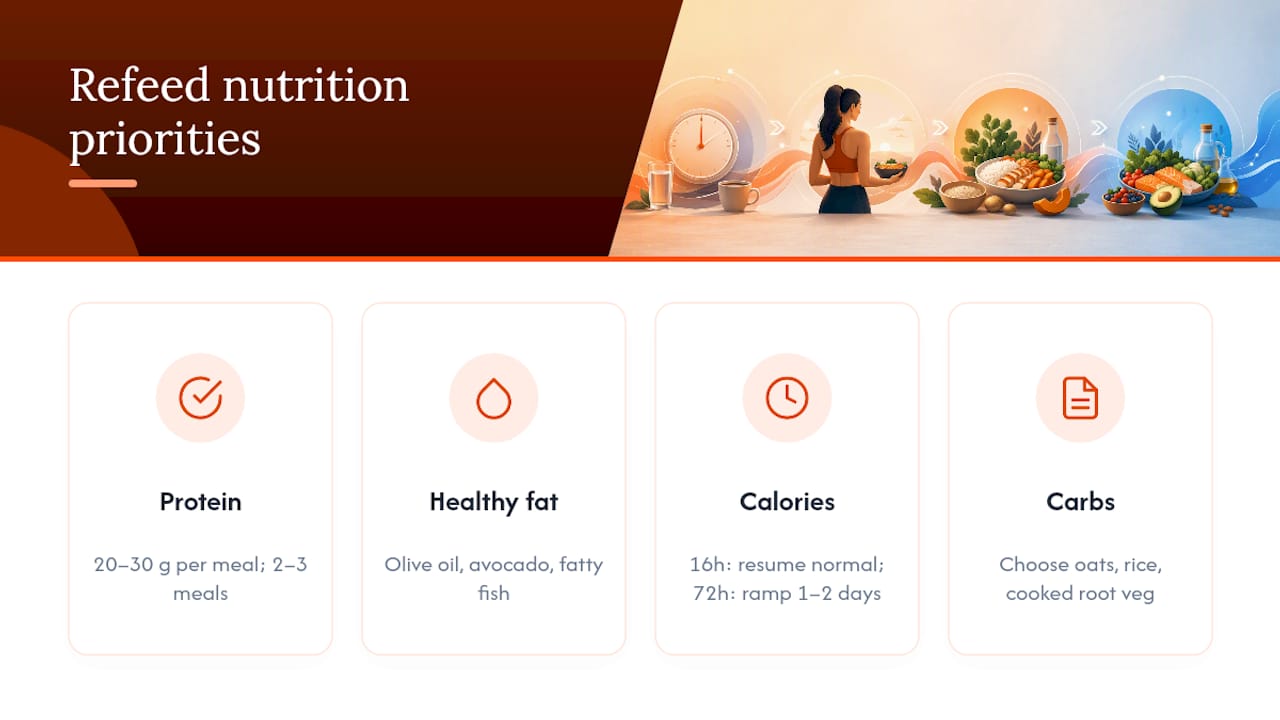
The point of a refeed isn’t just avoiding a stomachache, it’s giving your body what it needs to recover fully from the fast. Protein deserves priority in your first day back, since it helps preserve muscle tissue and steadies blood sugar better than a carb-heavy plate does. A rough target for most healthy adults is 20 to 30 grams of protein per meal once you’re past Phase 1, spread across two or three meals rather than crammed into one.
Fat plays a supporting role here too. A moderate amount of healthy fat, olive oil, avocado, or fatty fish, slows digestion and blunts the insulin spike that comes with reintroducing carbohydrates. That’s part of why protein and fat together outperform straight carbs as a first real meal, especially for anyone refeeding after training.
Calorie targets should scale with the length of the fast and your normal daily needs, not with how hungry you feel in the moment. Someone breaking a 16 hour fast can generally return to a normal calorie intake at the very next meal. Someone coming off 72 hours should build back toward their baseline calorie level over a day or two rather than eating a full day’s calories in one sitting.
Carbohydrates matter, but the type counts more than the quantity right after a fast. Oats, rice, and cooked root vegetables digest more predictably than sugary or highly processed carbs, which tend to spike and crash blood sugar in a system that’s still recalibrating. Balance beats restriction at this stage. The goal is steady fuel, not a perfect macro split.
Do Diabetes Or Metabolic Syndrome Change The Refeed Plan?
Yes, and the change matters more than most general fasting advice accounts for. Anyone managing diabetes or metabolic syndrome should treat the first meal after a fast as a moment that needs closer blood sugar monitoring, not just a smaller portion.
For people on insulin or sulfonylureas, breaking a fast with carbohydrates can trigger a sharper glucose swing than it would in someone without insulin resistance. Testing blood sugar before and roughly an hour after the first meal gives you real data instead of a guess, and it flags a problem while it’s still manageable. Working with the prescribing physician on timing medication around the refeed window is not optional advice here, it’s a genuine safety step, since a mismatched insulin dose against a delayed or smaller meal can push blood sugar dangerously low.
Metabolic syndrome adds its own wrinkle. Insulin resistance means a carbohydrate-heavy first meal is more likely to spike blood sugar and then crash it, which is exactly the shaky, foggy feeling that convinces people something went wrong with the fast itself. Leaning harder on protein and fat in the first two phases, and reintroducing starchy carbs more gradually than a metabolically healthy faster would need to, tends to smooth that curve out. If you’re managing either condition, loop in your physician before attempting a fast longer than 24 hours in the first place. The refeed plan for that population needs individual tailoring, and a generic protocol built for healthy adults simply doesn’t cover the same risks.
How Do You Handle Hunger And Cravings After Breaking A Fast?
The hunger that shows up right after a fast is often louder than your actual physical need for food, and that gap trips up more people than any electrolyte imbalance does. A fast doesn’t just empty your stomach, it also resets the mental relationship you have with eating, and the first meal back can feel emotionally loaded in a way a normal Tuesday lunch never does.
Give yourself a five to ten minute pause before the first bite to actually check in: are you shaky and lightheaded, which points toward blood sugar, or are you just excited that eating is allowed again? Those two feel similar but call for different responses. True hunger cues, once you’re back on a normal eating pattern, tend to build gradually rather than hit all at once, so a sudden urgent craving right at the end of a fast is worth slowing down around rather than chasing immediately.
Cravings for sugar or fried food in that first window are common and mostly psychological rather than a sign your body specifically needs those foods. Planning your first meal in advance, before hunger is running the show, removes a lot of that decision pressure. If fasting has ever tangled with disordered eating patterns for you, that’s worth addressing directly with a professional rather than working around it alone; resources like eating disorder support services exist specifically for that overlap. For everyone else, the goal is simple: eat because your body needs fuel, not because your brain is relieved the waiting is over.
What Should Your Diet Look Like After The Refeed Window Closes?
The days right after a fast are not the whole story. What you do once you’re back to normal eating determines whether the fast actually produced lasting benefit or just a temporary reset.
Protein intake matters just as much on day 10 after a fast as it did on day one. Many people who fast regularly find that anchoring meals around a protein source first, then building carbs and fats around it, keeps blood sugar steadier across the following weeks, not just during the refeed itself. That pattern also tends to reduce the intensity of hunger swings the next time you fast.
Fiber deserves a slower reintroduction than people usually give it. Ramping raw vegetables, legumes, and whole grains back up over several days rather than all at once, keeps digestion comfortable and avoids the bloating that sends people back to bland, low-nutrient food out of frustration. Meal-prep planning ahead of your next fasting cycle makes this transition easier, since you’re not improvising what to eat while also managing hunger.
Hydration habits built during the fast, tracking water and electrolytes consistently, tend to fall off fast once normal eating resumes. Keeping at least some of that awareness going supports the metabolic flexibility that regular fasting is supposed to build in the first place. If intermittent fasting is part of your ongoing routine, starting with a structured beginner plan for your next cycle keeps the whole pattern sustainable instead of a one-time event you have to recover from every time.
Why Does Mindful Eating Matter So Much Right After A Fast?
Eating slowly after a fast isn’t a wellness cliché here, it’s a practical safeguard against overeating and digestive distress. Your stomach has had less to process for hours or days, and food arriving quickly gives your body less time to signal fullness before you’ve already eaten past comfortable.
Chewing thoroughly and pausing between bites gives your digestive system a fighting chance to keep up, especially in Phase 1 and 2 when portions are supposed to stay small. Eating in front of a screen or while distracted makes it far easier to blow past a small planned portion without noticing, which is exactly how a modest first meal turns into stomach pain twenty minutes later.

Paying attention to actual fullness cues, rather than finishing a plate because it’s there, also helps you catch early warning signs like nausea or unusual fatigue before they escalate. That awareness matters most in the first 24 hours, when your body is still recalibrating electrolyte and blood sugar levels behind the scenes. A rushed, distracted refeed is one of the more common reasons people end up with GI symptoms they blame on the fast itself, when the real cause was simply eating too fast, too much, too soon.
A Grounded Take On Refeeding Risk
Most intermittent fasters handling a 16 to 48 hour fast will do fine with a gentle, common-sense refeed. The real caution belongs to multi-day fasts, where a slower ramp and honest self-screening matter more than any specific food choice. Track how you feel, don’t panic, and adjust the pace, not the fundamentals.
— Tony Lindsay
Plan Your Refeed Before You Break The Fast, Not During It
Most refeed mistakes happen because people improvise at the exact moment they’re hungriest and least patient. Some fasting apps give fasters structured refeed templates, habit prompts, and symptom logging built into fasting tracking tools, so the ramp-up plan can be ready when needed.

This isn’t a replacement for medical care. If you meet any of the refeeding syndrome risk criteria covered earlier, a clinician and lab work come first, always. But for the far more common case, a healthy adult finishing a 16 to 72 hour fast, having a pre-built checklist and a place to log hydration, meals, and how you’re feeling removes most of the guesswork that leads to a rushed, uncomfortable refeed. Fasters who follow a structured plan tend to stick with the process longer simply because they’re not reinventing it every single time. Start a trial of the ForgeFast App and set up your first refeed template before your next fast even begins.
Where To Read More On Refeeding Safety
For deeper clinical detail beyond what fits here, these sources cover the science and the practical protocol side in more depth.
Cleveland Clinic’s overview of refeeding syndrome, covering diagnosis and clinical management
The peer-reviewed PubMed review on refeeding syndrome risk and features
BodySpec’s practical refeed protocol for fasts ranging 16 to 72+ hours
This article is general information, not a substitute for advice from a qualified doctor. Consult a qualified healthcare professional about your own circumstances before acting on anything here.
Sources
FAQ
How long should you refeed after fasting?
Refeeding usually takes several hours to a couple of days for fasts under two days, and longer for fasts extending multiple days. The exact timeline depends on your fast length, tolerance, and any underlying risk factors for refeeding syndrome.
Can I eat eggs after a 3-day fast?
Yes, soft-cooked eggs are one of the better first-food choices after a 3-day fast because they’re easy to digest and protein-forward. Keep the portion small, one or two eggs, and pair them with broth or a small serving of cooked vegetables rather than a large mixed plate.
Will I get refeeding syndrome after a 3-day fast?
Refeeding syndrome is uncommon after a 3-day fast in an otherwise healthy adult with no major risk factors. Risk rises with a low BMI, chronic illness, alcohol use, or prior malnutrition, and Cleveland Clinic recommends medical supervision for anyone in those categories before resuming full meals.
How many hours of fasting will reset your body?
There’s no single fasting duration that produces a universal “reset,” since metabolic changes like glycogen depletion and a shift toward ketosis happen gradually and vary by individual. What matters more than chasing a specific hour count is refeeding carefully afterward, using tools like the ForgeFast App to track how your body actually responds across fasting cycles.
Recommended
Comments