Structured Fasting Athletic Lifestyle: Your 2026 Guide


A structured fasting athletic lifestyle is the practice of integrating planned fasting windows into an athlete’s daily routine to support fat loss, muscle preservation, and mental clarity without sacrificing performance. The most widely used framework is periodized fasting, which aligns eating windows with training phases rather than applying a single rigid schedule year-round. Research confirms the 16:8 intermittent fasting protocol improves insulin sensitivity by up to 31% and reduces body fat by 3–5% over 12 weeks while maintaining muscle mass. That result is only achievable when fasting is matched to training intensity, not applied blindly.
What is the best fasting schedule for athletic performance?
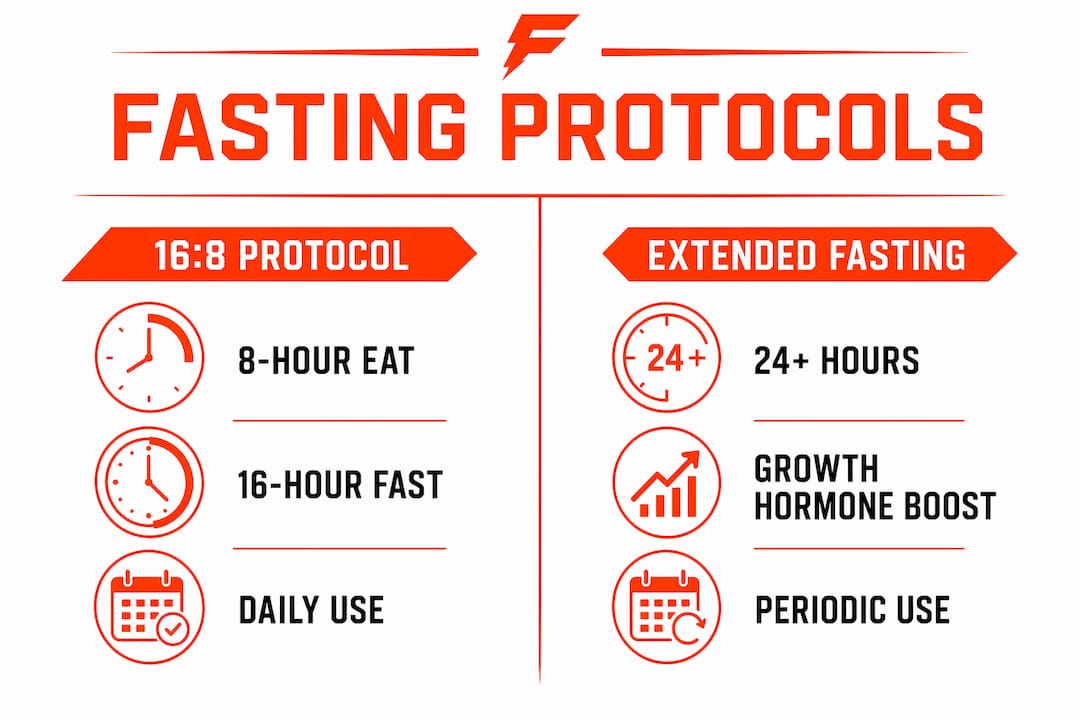
The 16:8 protocol is the most practical fasting schedule for athletes in 2026. You eat within an 8-hour window, typically noon to 8 pm, and fast for the remaining 16 hours. This structure fits naturally around morning training sessions and allows enough time to hit protein and calorie targets before the window closes.
The physiological case for 16:8 is strong. Fasting periods lower circulating insulin, which shifts the body toward fat oxidation. Fasted training enhances fat oxidation but can impair high-intensity output in athletes who have not yet developed metabolic flexibility. That distinction matters. An athlete running sprint intervals at 90% effort needs available glycogen. An athlete doing a 45-minute aerobic session can often perform well in a fasted state.

Extended fasting, meaning 24 hours or more, is a different tool entirely. Extended fasting boosts growth hormone pulses but carries real risks of muscle loss if not managed carefully. Sports nutrition professionals recommend extended fasts only for advanced athletes on full rest days, not on training days.
Pro Tip: Schedule your eating window to open within 30 minutes of finishing your hardest training session. This positions your biggest meal at the point of maximum nutrient uptake.
Key scheduling considerations for athletes:
16:8 (noon to 8 pm): Best for most athletes. Supports morning training in a fasted or lightly fed state.
14:10: A gentler entry point for athletes new to fasting or in heavy training blocks.
24-hour fasts: Reserved for advanced athletes on full rest days only.
Training timing: Training at or just before the eating window with small pre-workout nutrition supports better strength output.
Fasted cardio: Effective for fat oxidation during low-intensity sessions; avoid during high-intensity days.
A typical IF training week runs 4–5 sessions, with the eating window from noon to 8 pm. That structure gives you a full morning for training and a clear window for recovery nutrition.
How to meet protein and calorie needs during eating windows
Protein distribution is the most common failure point for athletes practicing intermittent fasting. Total daily protein of 1.6–2.2g per kilogram of body weight is necessary to preserve muscle during fasting. Hitting that number matters less than how you distribute it.
Muscle protein synthesis requires breaking daily protein into 3–4 boluses of 25–50g during the eating window. Eating one large protein meal and calling it done does not stimulate muscle protein synthesis the same way. The body can only use so much protein per sitting for muscle building, and the rest gets oxidized for energy.
Here is a practical meal structure for an 80kg athlete targeting 160g of protein daily within a noon to 8 pm window:
Noon (post-training meal): 50g protein. Examples: 200g chicken breast, 2 eggs, Greek yogurt. Pair with complex carbohydrates like brown rice or sweet potato to replenish glycogen.
3 pm (mid-window meal): 40g protein. Examples: cottage cheese, canned salmon, or a whole-food protein shake using whey or casein.
6 pm (main dinner): 50g protein. Examples: 250g lean beef, lentils, or tofu with vegetables and a fat source like olive oil or avocado.
7:30 pm (closing snack): 20–25g protein. Casein-based options like Greek yogurt or cottage cheese work well here because casein digests slowly overnight.
Pro Tip: Avoid “dirty fasting,” which means consuming caloric beverages like lattes or protein shakes during the fasting window. Even small caloric intake blunts the hormonal benefits of fasting, particularly growth hormone secretion.
Fasting’s main goal for athletes is hormonal optimization, especially enhanced growth hormone secretion, which aids recovery and body composition when paired with nutrient-dense feeding windows. That means the quality of what you eat inside the window is not optional. Micronutrient gaps are a real risk. Research on elite athletes using 16:8 shows the protocol did not significantly alter total energy or macronutrient intake, but it did increase the risk of micronutrient deficits without targeted sports nutrition education.
How do you periodize fasting for different training phases?
Periodized fasting is the practice of adjusting your fasting protocol based on your training macrocycle, meaning off-season, pre-season, in-season, and recovery phases. Periodized fasting aligned with macrocycles helps prevent Relative Energy Deficiency in Sport (RED-S), a condition where chronic low energy availability impairs hormones, bone density, and immune function. RED-S is not just a problem for endurance athletes. Strength athletes who fast aggressively during heavy training blocks face the same risk.
Elite athletes cycle fasting periods based on season phases, emphasizing fueling for the work required to prevent performance declines. That principle is the foundation of periodized fasting for competitive sports.
Training phase | Recommended fasting approach |
Off-season (low intensity) | 16:8 or 18:6 fasting; extended fasts on rest days acceptable |
Pre-season (building volume) | 14:10 or 16:8; prioritize carbohydrate availability around sessions |
In-season (peak intensity) | Shorten or suspend fasting; focus on fueling for competition |
Active recovery | 16:8 with reduced calorie targets; no extended fasts |
For endurance athletes, fasted training during base-building phases builds fat oxidation capacity. For strength athletes, fasted training during hypertrophy blocks risks muscle protein breakdown if protein targets are not met within the eating window. The solution is not to abandon fasting but to adjust training volume and eating window length based on weekly training load.
Adults targeting fat loss alongside athletic performance benefit from 45–60 minutes per session, 4 times weekly, for at least 14 weeks. That training volume is compatible with a 16:8 fasting schedule when eating windows are timed correctly.
Off-season: Use fasting to improve body composition and metabolic flexibility.
Pre-season: Shift to shorter fasting windows; add a small pre-workout meal if sessions exceed 75 minutes.
In-season: Prioritize performance over fasting. Fuel before and after competition.
Recovery weeks: Return to 16:8 with lower calorie intake to support tissue repair without excess fat gain.
What are the most common fasting mistakes athletes make?
Performance decline during fasting is almost always a sign of one of three problems: insufficient calorie intake, poor protein distribution, or fasting during the wrong training phase. Identifying which problem applies to you determines the fix.
“Increased fat oxidation during fasted training may not translate to improved performance without metabolic flexibility developed through periodized nutrition.” — Intermittent Fasting for Athletes
Strict fasting during high-intensity training phases often leads to RED-S due to insufficient nutrient timing and energy availability. The warning signs include persistent fatigue, strength plateaus, disrupted sleep, and mood changes. If you see two or more of those signs together, fasting is working against you, not for you.
Here are the four most common mistakes and their fixes:
Fasting through heavy training blocks. Fix: Shorten the fasting window to 14:10 or add a small pre-workout meal of 20–30g carbohydrates and 15–20g protein 45 minutes before training.
Eating protein in one or two large meals. Fix: Distribute protein across 3–4 meals within the eating window in 25–50g portions. This directly supports muscle protein synthesis.
Ignoring micronutrient intake. Fix: Prioritize vegetables, legumes, and whole grains within the eating window. Consider a blood panel every 3–4 months to catch deficits early.
Applying the same fasting schedule year-round. Fix: Periodize your fasting protocol with your training macrocycle. Fasting is a tool for specific phases, not a permanent state.
Tracking is non-negotiable. Log energy levels, training performance, and recovery quality weekly. If strength drops over two consecutive weeks while fasting, adjust the protocol before the decline compounds. The psychology of controlled hunger also plays a real role. Athletes who understand why hunger spikes occur during fasting adapt faster than those who treat every hunger signal as a crisis.
Key Takeaways
A structured fasting athletic lifestyle works best when fasting windows, protein distribution, and training phases are aligned rather than treated as independent variables.
Point | Details |
Use 16:8 as your baseline | The 16:8 protocol improves insulin sensitivity and reduces body fat while preserving muscle mass. |
Distribute protein across 3–4 meals | Eat 25–50g protein per meal within the eating window to sustain muscle protein synthesis. |
Periodize fasting with training phases | Shorten or suspend fasting during peak intensity phases to prevent RED-S and performance loss. |
Avoid fasted high-intensity training | Fasted training benefits fat oxidation but impairs output during high-intensity sessions without metabolic adaptation. |
Track performance weekly | Monitor strength, energy, and recovery to catch protocol mismatches before they compound. |
Why fasting is a tool, not a lifestyle identity
Athletes who get the most from fasting treat it as a training variable, not a personality trait. I have seen athletes hold onto a 16:8 schedule through a competition week because they identified as “an intermittent faster,” and they paid for it with flat performances and slow recovery. Fasting does not care about your identity. It responds to context.
The athletes who thrive long-term with fasting are the ones who stay curious about their own data. They notice when sleep quality drops, when rep counts stall, when mood shifts. Those signals are the protocol telling you something. Listening to them is not weakness. It is the actual skill.
One thing I push back on consistently is the idea that fasting requires perfect discipline to work. The research does not support that. What it supports is consistency over rigidity. A 14:10 window you maintain through a hard training block beats a 16:8 window you abandon after two weeks of miserable workouts. Start with what you can sustain, then extend as your metabolic flexibility improves.
The mental side of fasting is underrated in athletic circles. Managing hunger, resisting the urge to eat out of habit rather than need, and staying focused during fasted morning sessions all build a kind of mental discipline that transfers directly to competition. Forgefastmethod addresses this directly, building resilience in both the body and the mind rather than treating fasting as a purely physical intervention.
— Tony
Start building your fasting framework with Forgefastmethod
Knowing the principles is step one. Applying them consistently to your specific training schedule, body weight, and performance goals is where most athletes need support.

Forgefastmethod is built for exactly that. The ForgeFast method combines evidence-based fasting protocols with a structured lifestyle framework that accounts for training phases, mental resilience, and long-term habit formation. The ForgeFast app lets you plan fasting windows, track protein distribution, and monitor performance metrics in one place. If you want to go deeper into the science and application, the ForgeFast fasting book covers the full methodology from biological foundations to practical scheduling. Your fasting protocol should fit your athletic life, not the other way around.
FAQ
What is periodized fasting for athletes?
Periodized fasting is the practice of adjusting fasting protocols based on training phases, such as using longer fasting windows during off-season and shorter windows or no fasting during peak competition periods. The goal is to match energy availability with training demand to prevent RED-S and sustain performance.
Does intermittent fasting hurt athletic performance?
Intermittent fasting does not hurt performance when matched to training intensity. Fasted training can impair high-intensity output in non-adapted athletes, but a 16:8 protocol timed correctly around sessions supports fat loss and muscle maintenance without performance loss.
How much protein do athletes need during intermittent fasting?
Athletes need 1.6–2.2g of protein per kilogram of body weight daily during intermittent fasting. That protein should be distributed across 3–4 meals of 25–50g each within the eating window to support muscle protein synthesis.
Can strength athletes benefit from structured fasting?
Strength athletes benefit from structured fasting during off-season and low-intensity phases. During hypertrophy or strength blocks, fasting windows should be shortened and protein targets met precisely to avoid muscle protein breakdown.
What is the 16:8 fasting protocol?
The 16:8 protocol means fasting for 16 hours and eating within an 8-hour window, typically noon to 8 pm. Research shows it improves insulin sensitivity by up to 31% and reduces body fat by 3–5% over 12 weeks while maintaining lean mass.
Recommended
Comments