Start a 16/8 Schedule: Copyable Windows and a Two Week Test

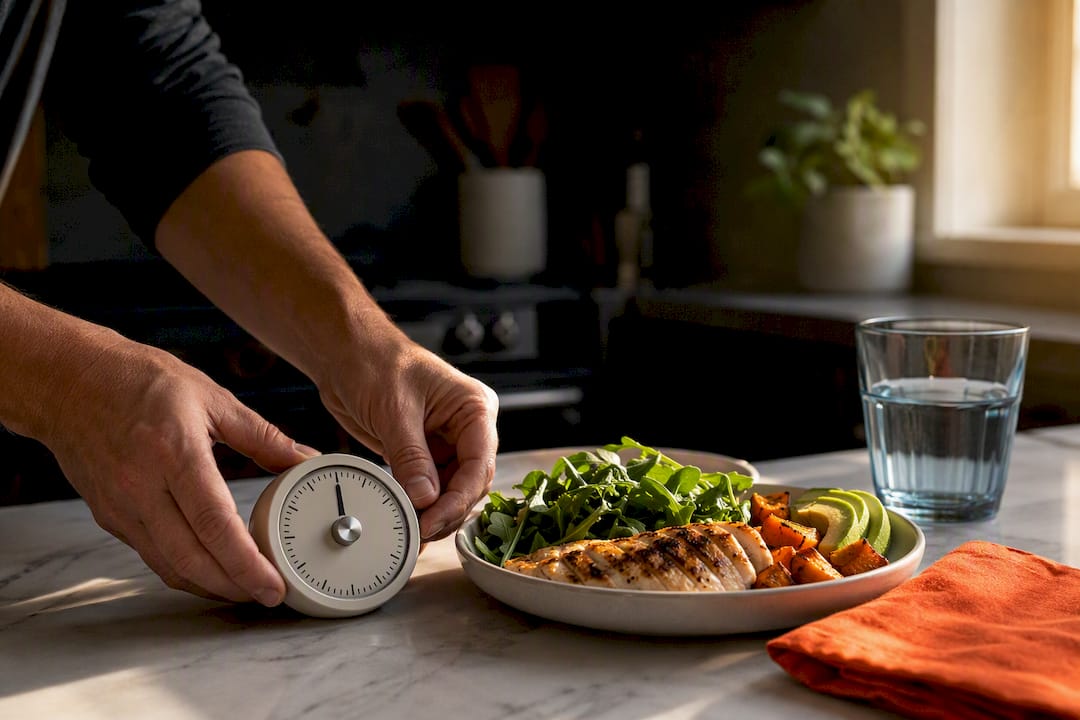
16/8 means fasting for 16 hours and eating during an 8-hour window each day. The simplest way to start is to pick an 8-hour block that overlaps with sleep, like noon to 8 p.m., and stick with it for two weeks before judging results. That’s it. No calorie counting, no supplements, just a consistent clock.
TL;DR:
Choosing a consistent 8-hour window that overlaps with sleep and fits your routine increases adherence more than trying to optimize the exact timing.
Starting with a gradual progression from 12:12 to 14:10 and then 16:8 improves long-term sustainability and reduces early dropout risk.
During fasting hours, only calorie-free drinks like water, black coffee, and unsweetened tea won’t break your fast, while foods with calories will.
The best eating window varies by individual, but common options are noon to 8 p.m., 10 a.m. to 6 p.m., or 7 a.m. to 3 p.m., tailored to sleep, work, and social needs.
Consistently following your chosen schedule for at least two weeks, tracking energy and sustainability, is key to seeing potential benefits.
Table of Contents
What Does a 16/8 Schedule Actually Involve?
The rule is simple: 16 hours of fasting, 8 hours of eating, every day. It’s the most studied version of time-restricted eating, which is why most beginner guides point here first instead of stricter protocols. During the fasting hours, a small set of drinks won’t break your fast, while anything with calories will.
What you can drink while fasting:
Water (still or sparkling, no additives)
Black coffee
Unsweetened tea, hot or iced
Cream in your coffee, a splash of juice, or a sugar-free energy drink with sweeteners can still trigger a digestive response that arguably undermines the fast. When in doubt, stick to plain water. The exact clock hours matter far less than showing up at the same time daily. Your body adapts faster to routine than to the specific window you chose, so consistency beats precision every time.
How Do You Pick the Best 8-Hour Window?
Your ideal window depends on three things: when you sleep, when you work, and when you’d rather not be hungry in public. A few rules of thumb make the decision easier.
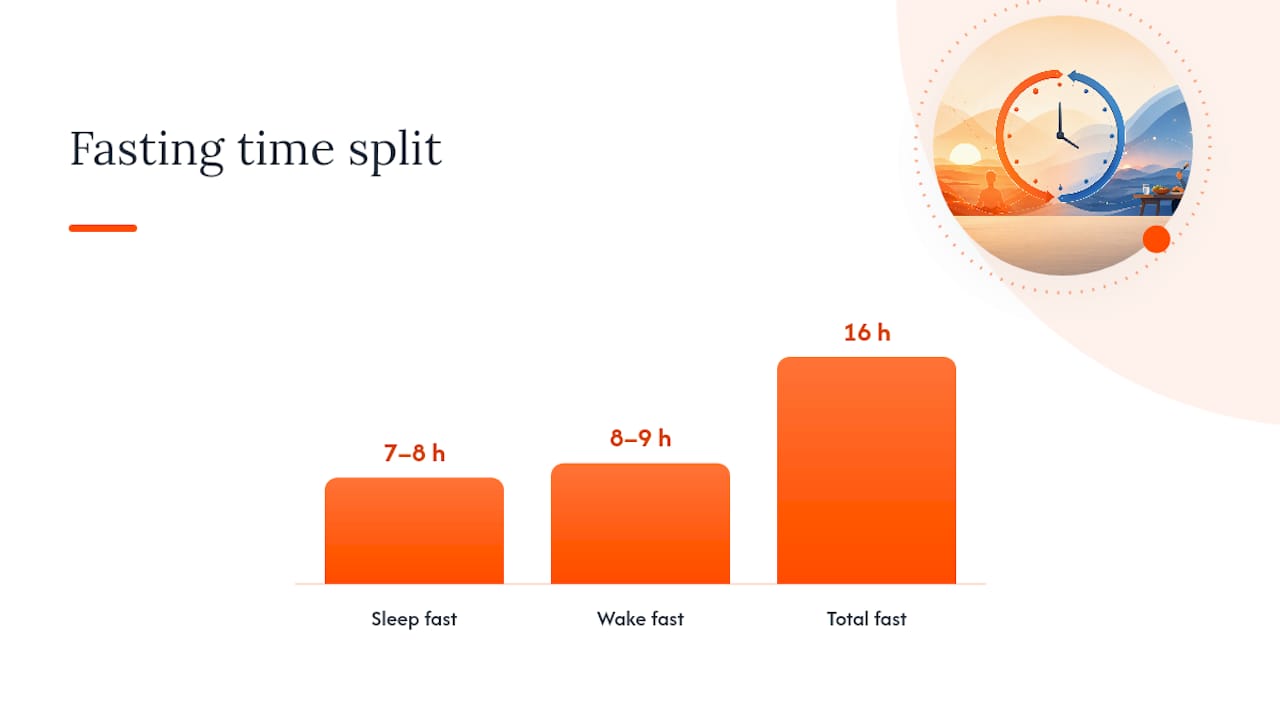
Overlap the fast with sleep. Roughly seven or eight of your sixteen fasting hours happen while you’re unconscious, so the remaining wake time to fast feels shorter than it sounds.
Finish eating 2 to 3 hours before bed. This helps normalize blood sugar overnight and tends to improve sleep quality.
Match your window to your workout. If you train in the morning, an earlier eating window lets you refuel sooner. Evening lifters often prefer a later window that ends after their session.
Account for your social calendar. If dinners with friends or family are non-negotiable, build the window around that meal rather than fighting it.
Shift workers and people with rotating schedules can still do 16/8. Anchor the window to your sleep block instead of the clock, whether that’s 3 a.m. to 11 a.m. or 9 p.m. to 5 a.m.
Pro Tip: If you can’t decide between two windows, pick whichever one lets you eat dinner with the people you live with. Adherence beats optimization every time.
What Are the Best 16/8 Fasting Schedules to Try?
Copy one of these directly. Each fits a different lifestyle, and none requires guesswork.
Noon to 8 p.m. The default for office workers. Skip breakfast, eat lunch as your first meal, and finish dinner before 8.
10 a.m. to 6 p.m. Suits early risers or people who train first thing and want to eat sooner after a workout.
7 a.m. to 3 p.m. A front-loaded window that some research suggests may offer a modest metabolic edge for glucose control, though it requires a genuinely early dinner, so it’s not for everyone with an evening social life.
2 p.m. to 10 p.m. Works for late risers or anyone whose social meals happen at night, though eating this close to bedtime works against the advice to stop 2 to 3 hours before sleep.
These are drawn from the most commonly used windows in fasting research and practice. If your current schedule doesn’t fit neatly into one, shift your window by 30 to 60 minutes every few days until you land on one of these or something close to it.
What Should You Eat During the 8-Hour Window?
The window is not a license to eat whatever fits. Build each main meal around three things: a protein source, a fiber source, and a healthy fat. That combination keeps you full longer and prevents the energy crash that sends people straight back to the pantry.
A few templates that work without much thought:
Lunch: Grilled chicken, a big pile of greens, olive oil, and a side of quinoa or brown rice.
Dinner: Grilled fish, roasted vegetables, and a scoop of rice.
Snack: Greek yogurt with berries, or a handful of nuts with an apple.
Prioritize whole foods over ultra-processed ones, which digest fast and leave you hungry before your window closes. Stay hydrated throughout the day, not just during the eating hours, and keep caffeine earlier in the window if it affects your sleep. If meal planning feels like the hard part, a resource on why meal prep matters for fasting success can save you the daily decision fatigue.
Pro Tip: Eat your largest, most protein-heavy meal first when you break your fast. Starting with a salad or fruit alone often leaves you hungry again within the hour.
What Mistakes Do Beginners Make With 16/8?
Most people who quit 16/8 in the first week make one of these four errors.
Jumping straight to 16 hours. Experts recommend a gradual progression, like starting at 12:12, moving to 14:10, then arriving at 16:8 after a week or two.
Overeating inside the window. An 8-hour eating period isn’t an invitation to eat 8 hours’ worth of snacking. Stick to two or three structured meals instead of grazing.
Ignoring headaches or low energy. These usually trace back to dehydration or low electrolytes, not the fast itself. Add sodium, magnesium, or potassium through food or a sugar-free electrolyte mix.
Pushing through severe symptoms. Dizziness, fainting, or extreme fatigue are signals to stop and talk to a clinician, not signs you need to try harder.
What Happens in the First Few Weeks of 16/8?
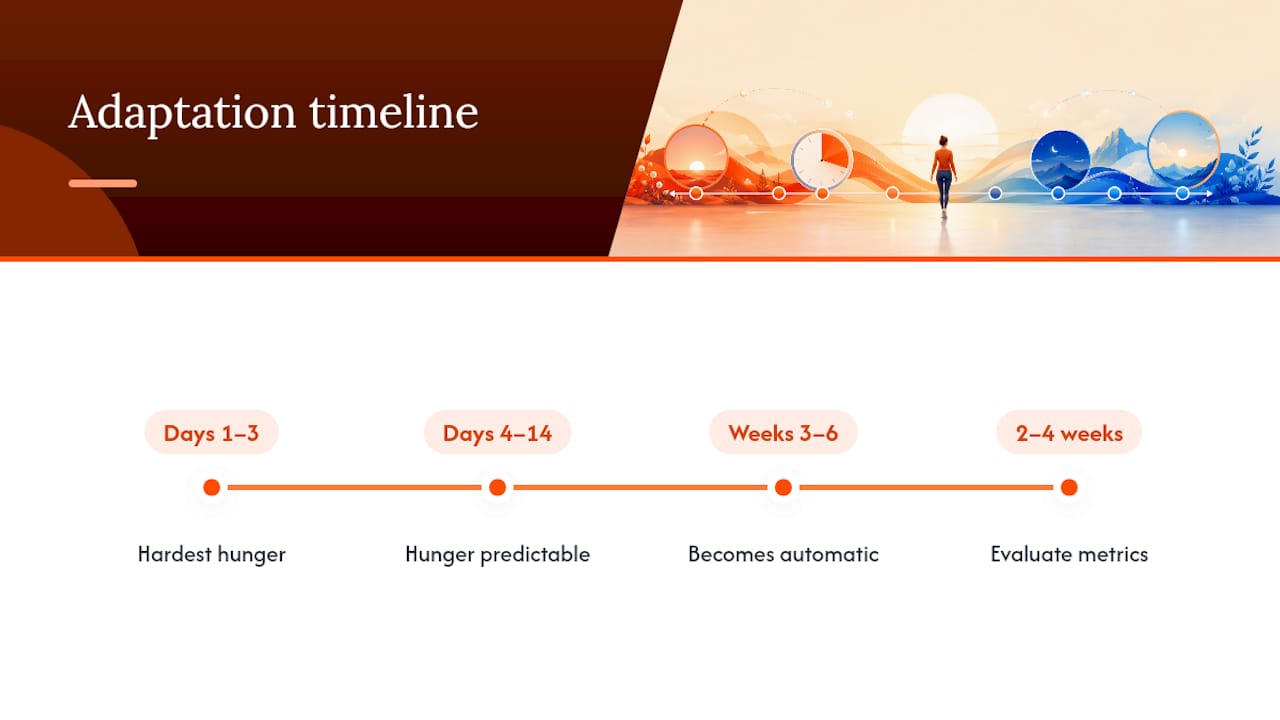
The first three days are the hardest. Hunger tends to peak in this window as your body adjusts to the new eating rhythm, and short walks or a change of scenery help more than willpower does.
By day four through two weeks, hunger usually stabilizes and starts arriving at predictable times instead of randomly. Somewhere around weeks three to six, the schedule starts feeling automatic rather than effortful, and you may notice a modest, measurable shift in weight or energy. Track energy, sleep quality, and how consistently you’re hitting your window rather than obsessing over the scale daily. Give any window a full two to four weeks before deciding it isn’t working.
Who Should Talk to a Doctor Before Trying 16/8?
16/8 isn’t right for everyone, and some people need medical guidance before starting.
Pregnant or breastfeeding individuals
Anyone with a history of disordered eating
People with type 1 diabetes
Anyone taking medication for diabetes or blood pressure, since fasting changes how those drugs affect you
Older adults and anyone underweight should approach fasting cautiously and loop in a clinician first, since the research on time-restricted eating shows benefits vary by individual and aren’t guaranteed for every body type.
How Does ForgeFast Help You Stick With 16/8?
Picking a window is the easy part. Staying on it for months is where most people fall off, which is the exact gap ForgeFast is built to close. The app pairs a sample schedule with habit sequencing and reminders, so the window you chose in week one doesn’t quietly dissolve by week four.
Habit tracking tied to your chosen eating window, not a generic timer
Coaching content aimed at the psychological side of fasting, not just the biological one
Structured resources on meal timing tools and fasted workout strategy for readers ready to go deeper
If the first two weeks convince you 16/8 fits your life, structured support tends to matter more than motivation.
The One Thing to Do Next
Pick one window from this guide. Follow it for two weeks. Track only two things: your energy and whether the schedule felt sustainable. That’s the whole test.
An Editorial Take on Starting 16/8 the Right Way
Most fasting advice overcomplicates a genuinely simple idea. Readers get buried in fasted cardio theories, autophagy claims, and window-optimization debates before they’ve even tried eating on a schedule for a week. The research supports a much plainer conclusion: 16/8 works when it’s consistent, and it fails when people treat the exact hours as more important than showing up daily.
Where conventional advice falls short is the ramp-up. Too many guides tell beginners to jump straight into 16 hours on day one, then act surprised when half of them quit by Thursday. A 12:12 to 14:10 to 16:8 progression isn’t a compromise. It’s the difference between a habit that survives a bad week and one that doesn’t.
If there’s one thing to prioritize first, it’s picking a window you can defend on your worst day, not your best one. The person who fasts noon to 8 p.m. every single day, including the day their kid gets sick or the meeting runs long, will outperform the person chasing a theoretically perfect 7 a.m. to 3 p.m. window they abandon by February.
— Tony Lindsay
Make Your 16/8 Schedule Stick With ForgeFast
Choosing a window is easy. The part that actually determines whether 16/8 works for you is whether you’re still following it in month three, and that’s where most people lose the thread without noticing. ForgeFast is built specifically for that gap.

The app combines fasting-window tracking with habit coaching that addresses the psychological aspects of maintaining a schedule, not just the biological one. It offers guidance on sequencing habits, reminders tied to the chosen eating window, and educational content focused on metabolic health rather than generic diet advice. The design targets users who find that fasting apps which only count down a timer may not support sustained adherence beyond initial weeks. If you’re ready to turn this guide into an actual habit instead of a plan you meant to start, visit ForgeFast to explore starter resources and begin a trial.
Sources
This article is general information, not a substitute for advice from a qualified doctor. Consult a qualified healthcare professional about your own circumstances before acting on anything here.
FAQ
What is the best schedule for 16/8 intermittent fasting?
There’s no single best schedule. Noon to 8 p.m. is the most common starting point, but 10 a.m. to 6 p.m. and 7 a.m. to 3 p.m. work equally well if they match your sleep and work hours.
What are common mistakes with 16/8 fasting?
The biggest ones are jumping straight to 16 hours instead of ramping up gradually, overeating inside the window, and ignoring dehydration as the cause of headaches or fatigue.
Can I eat anything during intermittent fasting on 16/8?
During the fasting hours, only calorie-free drinks like water, black coffee, and unsweetened tea are allowed. During the 8-hour window, whole foods with protein, fiber, and healthy fats work best, though there’s no strict food ban.
How much weight can I lose in a month with 16/8 fasting?
Weight loss from time-restricted eating tends to be modest and varies by individual, so there’s no fixed number to expect. Tracking energy, sleep, and consistency over the first month is a more reliable signal than the scale alone.
Recommended
Comments