5:2 Diet for Beginners: 500/600 Calorie Fast Days, Meal Ideas & Habits


The 5:2 diet means eating normally five days a week and cutting intake to about 500 calories (women) or 600 calories (men) on two non-consecutive days. It works for weight loss the same way any calorie deficit works, and randomized trials show results comparable to continuous daily dieting. It is not right for everyone, and pregnant people, anyone with a history of disordered eating, or people managing diabetes with medication should talk to a clinician before starting.
TL;DR:
Fasting days should be spaced at least one full day apart to prevent overeating caused by hunger and support sustained calorie deficit.
Most studies show similar weight loss results between 5:2 fasting and continuous calorie restriction, with adherence being a key factor for success.
Fast-day meals work best when centered on lean protein, fibrous vegetables, and water-rich foods, avoiding creamy sauces, sugary drinks, and refined carbs.
Side effects like headaches and fatigue can be mitigated by proper hydration, pacing, and scheduling demanding tasks on non-fasting days.
People with pregnancy, breastfeeding, eating disorders, certain medications, or serious health conditions should consult a healthcare professional before starting.
Table of Contents
How to Follow the 5:2 Diet as a Beginner
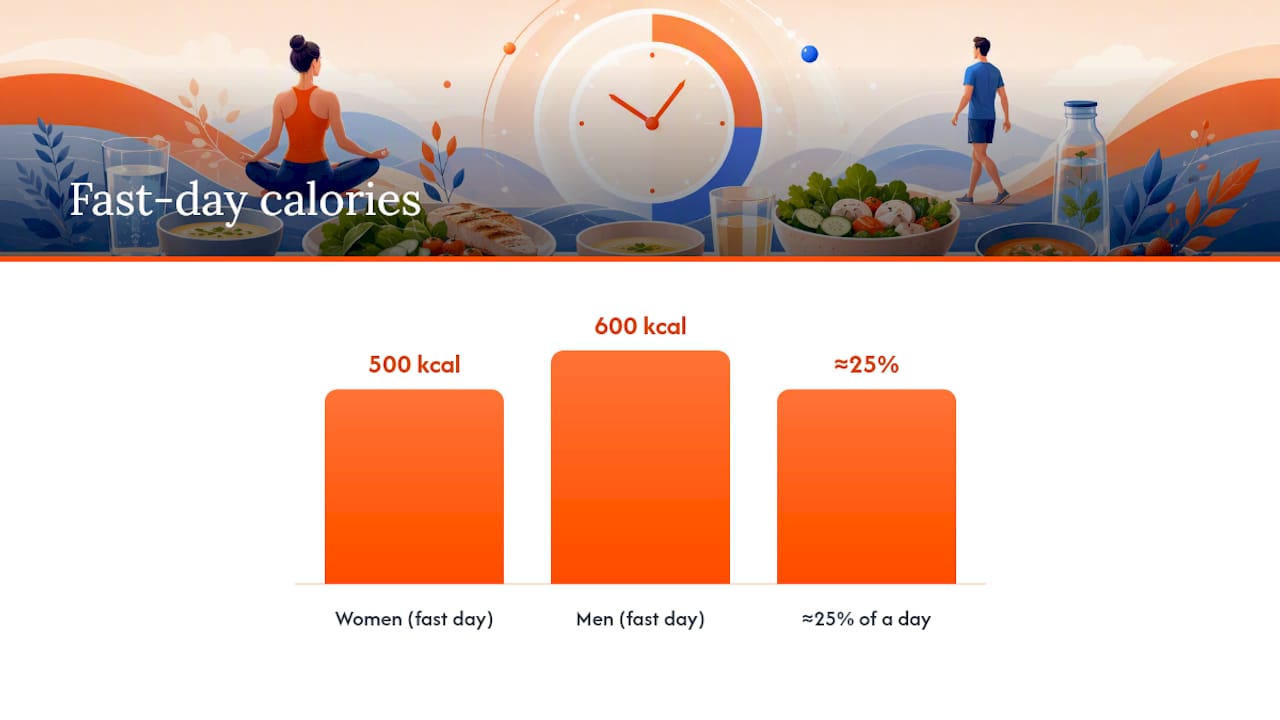
Fast days cap intake at roughly 500 kcal for women and 600 kcal for men, which works out to about 25% of a typical day’s calories. The other five days, you eat normally, not as a reward binge, just regular meals without special restriction.
Pick your two fasting days first. They can’t run back to back. Most people do Monday and Thursday, or Tuesday and Friday, leaving at least one full day of normal eating between them. That gap matters more than people realize. It gives your body time to recover and cuts your odds of overeating out of sheer hunger the next day.
Here’s a simple way to start:
Choose your two non-consecutive days based on your week. Pick days with fewer social meals or big work events.
Ease in during week one. Start fast days around 900 to 1,000 calories instead of jumping straight to 500 or 600.
Structure your fast-day eating. Some people do better with two larger meals; others prefer three small ones spread out. Test both.
Track loosely, not obsessively. A basic calorie app is enough. You don’t need to weigh every gram.
Step down gradually to the full 500/600 kcal target over two to three weeks as your body adjusts.
Pro Tip: Log your fast-day meals the night before. Deciding what to eat when you’re already hungry is how a 500-calorie day turns into a 900-calorie day.
What the Research Says About Weight Loss and Health Effects
Clinical trials comparing the 5:2 approach to standard daily calorie cutting find similar weight-loss outcomes when total weekly calories match. The 5:2 method doesn’t have some metabolic trick that continuous restriction lacks. It just gives people a different way to hit the same deficit, one that some find easier to sustain than dieting every single day.
Short-term data links intermittent fasting to modest improvements in blood sugar, cholesterol, and blood pressure, though the Mayo Clinic notes long-term effects remain unclear.
A few things temper the enthusiasm:
Most supporting studies run weeks to months, not years, so nobody can say with confidence what happens after five years on this pattern.
Alternative-day fasting sometimes edges out 5:2 slightly in short-term trials, but the difference is small and study durations are still limited.
Adherence drives results more than the specific method. A 5:2 plan you actually follow beats a stricter plan you abandon in three weeks.
The honest takeaway: expect gradual, manageable weight loss, not a dramatic transformation, if you hold a real weekly deficit.
Fasting-Day and Non-Fasting-Day Meal Ideas
Fast-day meals work best built around lean protein, fibrous vegetables, and water-rich foods that fill you up without spending your calorie budget. Dietitian guidance from MD Anderson points to soups, grilled fish, and vegetable-heavy plates as reliable fast-day staples. Skip creamy sauces, sugary drinks, and refined carbs. They cost you calories fast without much staying power.
A few fast-day meal combinations that stay under budget:
Vegetable soup (broth-based, not cream) with a small portion of grilled chicken, around 250 to 300 calories.
A protein shake plus a large mixed-greens salad with lemon dressing, roughly 300 calories.
Baked white fish with steamed broccoli and a small sweet potato, about 350 calories.
Two scrambled eggs with spinach and tomatoes, around 220 calories.
On non-fasting days, eat balanced whole foods, no special rules, just reasonable portions of protein, carbs, and fat. The mistake people make here is treating normal days like a reward, which quietly cancels out the fast-day deficit.
For weekly meal-prep templates that make fast days easier to plan ahead, meal prep strategies built for fasting days can save you from last-minute decisions, and printable meal-planning templates give you a structure to shop and prep around.

Managing Hunger, Headaches, and Other Fast-Day Side Effects
Fatigue, headaches, and dizziness are the most commonly reported side effects on fast days, and pacing and hydration help blunt most of them. Sip water steadily through the day instead of chugging it all at once, and consider an electrolyte drink if you start feeling lightheaded.
A few fixes that actually help:
Black coffee or plain tea is fine on fast days and can ease hunger pangs without adding calories.
Schedule demanding tasks for non-fasting days when possible; save fast days for lighter workloads.
Stop and eat something if you feel faint, shaky, or notice signs of low blood sugar, that’s your body telling you to break the fast, not push through it.
Plan your first post-fast meal in advance so you don’t overcorrect with a huge, calorie-dense binge.
Pro Tip: Keep a piece of fruit or a small handful of nuts on hand for fast days. If dizziness hits, eating something small beats white-knuckling it until dinner.
Who Should Avoid the 5:2 Diet or Check With a Doctor First
Some groups face real risk from restricting calories two days a week, and this is where professional guidance matters most. Bastyr University’s guidance on intermittent fasting flags several groups who should steer clear without medical supervision.
Pregnant or breastfeeding people need consistent daily nutrition, not calorie cycling.
Children and teens are still growing and shouldn’t restrict calories this way.
Anyone with a history of an eating disorder should avoid structured fasting patterns entirely.
People on insulin or medications that can cause low blood sugar need a clinician’s input before changing eating patterns.
Underweight individuals have no calorie buffer to safely cut from.
Some people also notice menstrual-cycle changes on fasting protocols. If your cycle becomes irregular, that’s a signal to pause and talk to a doctor, not push through.
Transitioning Off the 5:2 Diet Without Regaining the Weight
The biggest risk after reaching your goal weight isn’t the diet itself, it’s what happens the week after you stop. Most people who regain weight do it by abandoning structure entirely instead of easing off gradually.
A smarter transition looks like dropping from two fasting days to one for a few weeks, watching how your weight and hunger respond. Some people settle into a permanent one-day-a-week pattern as maintenance, which keeps a mild calorie buffer without the full commitment of two fast days.
Others stop fasting completely and shift to portion awareness on all seven days instead. Either path works, but the mistake is stopping cold and reverting to old eating habits on the same day you hit your target weight. Your metabolism and appetite need a few weeks to recalibrate, and sudden increases in calories, especially from processed and calorie-dense foods, are what drive rebound weight gain.
Track your weight weekly for the first month after transitioning, not daily. Daily fluctuations from water weight and digestion will only frustrate you and don’t reflect real trends. If you see a steady upward creep over three or four weeks, that’s your signal to reintroduce one fasting day rather than waiting until you’ve regained everything you lost.
Mistakes That Undermine Your 5:2 Results
The single most common mistake is overeating on non-fasting days to “make up for” the deficit, which erases the weekly calorie math the whole diet depends on. Five days of eating like it’s a reward cancels out two days of restriction fast.
Scheduling fasting days back to back is another frequent error. It ignores the recommendation to space fast days apart, and it usually backfires with worse fatigue and a stronger urge to binge afterward.
Some beginners also jump straight to 500 or 600 calories in week one instead of easing in, which sets them up for a miserable first experience and an early quit. Others fixate on precise calorie counting to the point of exhaustion, when a loose, consistent estimate works just as well for most people. And a surprising number of people forget hydration entirely on fast days, mistaking thirst for hunger and eating when a glass of water would have solved the problem.
Finally, treating the 5:2 diet as a short-term fix rather than a sustainable pattern sets up disappointment. The people who see lasting results treat it as a long-term rhythm they can adjust, not a 30-day sprint with an end date.
Exercise and Physical Performance on Fasting Days
Training on a 500 or 600-calorie day feels different, and it’s worth planning around rather than ignoring. Light to moderate activity, walking, yoga, easy cycling, tends to be well tolerated on fast days. High-intensity training or heavy lifting is where people notice the biggest drop in performance, since glycogen stores are already running low.
A practical approach is scheduling your hardest workouts on non-fasting days and keeping fast days for lighter movement or full rest. If you’re an athlete or train seriously, consider syncing your fasting days with your existing lower-intensity or rest days rather than forcing a hard session on 500 calories.

Some people report training just fine on fast days once they’ve adjusted over a few weeks, as the body adapts to running on lower glucose availability. But that adaptation period varies widely, and pushing too hard too soon is a common way people end up dizzy or exhausted mid workout. Listen to your body’s signals rather than following a rigid schedule that ignores how you actually feel that day.
The Mental Side of Fasting: Staying Motivated
The hardest part of the 5:2 diet usually isn’t physical, it’s the mental grind of choosing restriction twice a week when nobody’s forcing you to. Motivation dips are normal, especially around week three or four when the novelty wears off and fast days start feeling routine instead of exciting.
Setting small, specific goals helps more than vague ones like “lose weight.” Aiming for “complete four fast days without breaking early” gives you something concrete to track and feel good about. Some people also find it helps to reframe fast days mentally, not as deprivation, but as a scheduled reset, the same way a rest day works for muscles.
Social pressure is another underrated factor. Fast days that fall on days with dinner plans or work lunches are harder to stick to, which is why choosing your two days with your actual calendar in mind matters more than picking them at random. Expect some weeks to go better than others, and don’t treat one missed fast day as a reason to quit the whole approach.
ForgeFast’s Take: Making Fasting a Habit, Not a Willpower Contest
The 5:2 diet’s biggest failure point isn’t the calorie math, it’s the psychology of repeating restriction on a schedule for months. Some fasting approaches treat fasting as a habit-building exercise, using tracking, small milestones, and environmental triggers rather than relying on raw willpower to survive fast day nineteen.
Behavior-change research backs this up: tracking, micro-goals, and consistent environmental cues turn intermittent fasting into a routine rather than a constant negotiation. Pair your fasting days with existing anchors, same days each week, same morning routine, and the decision fatigue drops fast. For a more detailed weekly framework, ForgeFast’s guide to intermittent fasting schedules for busy professionals breaks down how to fit this around a demanding job without white-knuckling every Tuesday.
— Tony Lindsay
Want Structure Instead of Guessing Your Way Through 5:2?
Following a 5:2 diet guide gets you the framework, but the part most people struggle with is staying consistent once the first few weeks of motivation fade. Some programs build the habit layer around fasting that a generic meal plan can’t: daily tracking, behavior coaching, and structured protocols designed to help users push through plateaus and motivation dips.

If you’re deciding whether a subscription fits, think about how you handled setting your own fasting schedule and hunger management while reading this guide. If tracking calories and staying accountable on your own sounds like the hard part, that’s precisely what ForgeFast’s coaching and habit tools are built to handle. Check out the ForgeFast fasting protocol to see current trial options and how the structured coaching framework works before you commit to anything.
Where This Guide’s Information Comes From
Cleveland Clinic defines the core 5:2 calorie targets and scheduling rules.
Mayo Clinic covers short-term health effects and safety caveats.
PubMed trial data compares 5:2 outcomes against continuous calorie restriction.
MD Anderson Cancer Center provides dietitian-backed fast-day meal guidance.
This article is general information, not a substitute for advice from a qualified doctor. Consult a qualified healthcare professional about your own circumstances before acting on anything here.
Sources
Recommended
Comments