Intermittent Fasters: 1–2 Tbsp Apple Cider Vinegar, Evidence & Safety

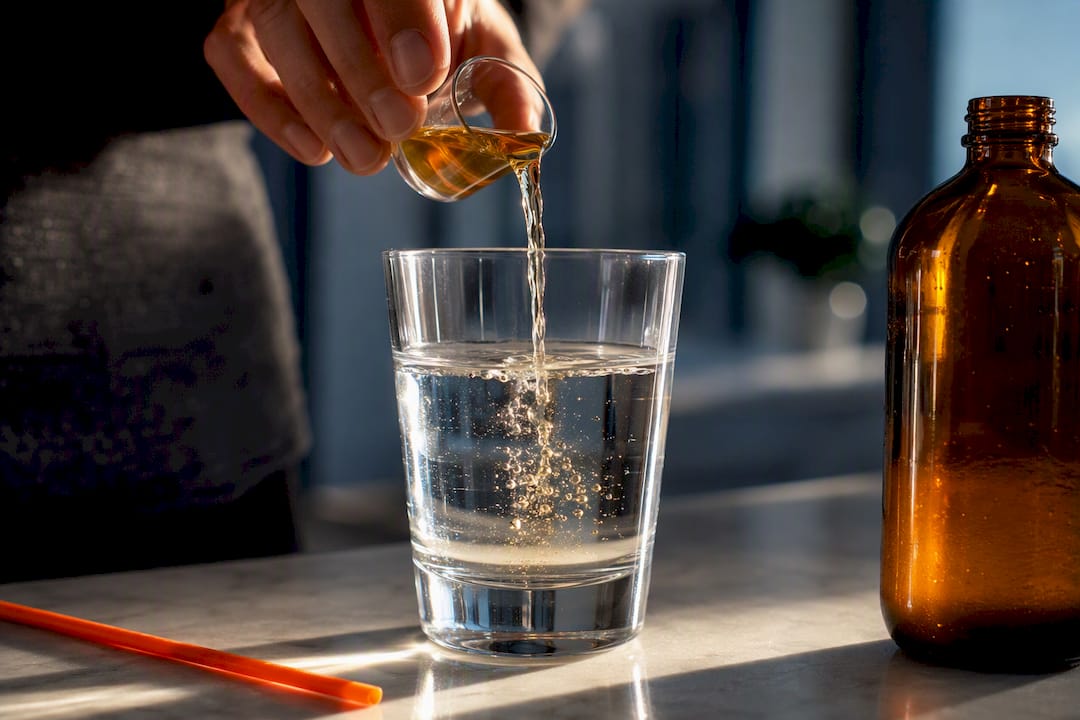
For most people, a tablespoon or two of diluted apple cider vinegar during intermittent fasting won’t meaningfully raise insulin or knock you out of ketosis, so it typically doesn’t break a fast in any practical sense. The bigger risks aren’t metabolic. They’re your teeth, your throat, and whatever medication you’re already taking. Dilute it, skip the sweetened versions, and check with a clinician if you’re on insulin or diuretics.
TL;DR:
Drinking one to two tablespoons of diluted apple cider vinegar during fasting does not significantly impact insulin levels or ketosis for most people.
The main risks involve dental enamel, throat irritation, and interactions with medications like insulin and diuretics, making dilution and medical consultation advisable.
Most benefits observed in studies, such as reduced fasting blood glucose and modest weight loss, come from small doses of 2 to 30 mL daily, with effects being generally modest and not guaranteed.
Sugary ACV drinks and gummies can contain enough carbohydrates to break a fast, so it’s best to avoid these if fasting strictly.
Consistent use and personal tracking of hunger, energy levels, and glucose response are the best ways to determine if ACV supports individual fasting goals.
Table of Contents
How Apple Cider Vinegar Affects Fasting Physiology
A tablespoon of apple cider vinegar (ACV) carries roughly 3 calories and less than a gram of carbohydrate, a figure confirmed by USDA nutrient data. That’s not enough substrate to trigger a real insulin response. Your pancreas releases insulin in proportion to incoming glucose, and there’s essentially no glucose here to respond to. Anyone worried about what insulin actually does during a fast can rest easy on that front: diluted ACV, taken alone, isn’t asking your body to do anything a true fast wouldn’t already have it doing.
The acetic acid in vinegar does something more interesting than sit inertly in your stomach, though. It slows gastric emptying, which is part of why vinegar taken with meals tends to blunt the glucose spike that follows. Some trials have used doses of 15 to 30 mL a day and recorded modest improvements in post-meal glucose and weight. That same slowing effect on gastric emptying is likely behind the appetite suppression a lot of fasting practitioners report.
Where things can go sideways is the delivery method, not the vinegar itself.
Straight ACV shots contain almost nothing that could trigger a metabolic shift.
Sugary “ACV drinks” or gummies often contain enough carbohydrate to functionally end a fast.
Large doses, taken repeatedly through the day, haven’t been studied enough to rule out cumulative effects.
Many of the human trials behind these findings are small and short, so treat the appetite and glucose benefits as a real but modest signal, not a guarantee.
What the Clinical Evidence Actually Shows
The strongest evidence available comes from an umbrella review published in May 2026, which pooled multiple meta-analyses of randomized controlled trials on vinegar consumption.
By the Numbers: What the May 2026 Umbrella Review Found
Fasting blood glucose: down 9.40 mg/dL
Post-meal glucose: down 14.59 mg/dL
HbA1c: down 0.70%
Body weight: down 1.06 kg
Systolic blood pressure: down 2.94 mmHg
Certainty varied across these outcomes, meaning some effects (like the glucose numbers) rest on firmer ground than others (like the blood pressure change). Trials feeding into this evidence generally used doses between 2 and 30 mL of vinegar per day, and many individual studies had small sample sizes, a limitation Harvard T.H. Chan School of Public Health points out directly when cautioning against overreliance on ACV for metabolic outcomes.
Here’s what the research doesn’t support, no matter how often you see it claimed online:
There’s no credible mechanism behind ACV as a “detox” agent. Your liver and kidneys handle that job without help.
Long-term weight outcomes across studies are inconsistent. Some trials show a modest drop; others show nothing durable once the study ends.
None of this evidence positions ACV as a replacement for diet, exercise, or medical management of type 2 diabetes.
How to Take Apple Cider Vinegar While Fasting
Getting the dose and timing right matters more than most people assume.
Measure it. Stick to 1 to 2 tablespoons (15 to 30 mL) per day. This is the range used in most of the trials behind the benefits above.
Dilute it every time. Mix that dose into 8 to 12 ounces (240 to 350 mL) of water. Undiluted vinegar is harsh enough to cause real damage, which the next section covers.
Pick your timing based on your goal. Taking it earlier in your fasting window tends to help more with appetite control. Taking it right before your first meal leans into the post-meal glucose benefit. You don’t get both maximized at once, so decide which problem you’re actually solving.
Skip the novelty formats. Gummies and bottled “ACV shot” drinks often carry added sugar that will end your fast in the way you were trying to avoid. Capsules are a reasonable alternative if the taste is the barrier, but follow the label dose exactly since concentration varies by brand.
Pro Tip: If appetite control during the fasting window is your main goal, take your ACV dose about 30 minutes before your usual hunger peak hits, not first thing in the morning out of habit.
Who Should Be Careful With ACV During a Fast
The acid in ACV is the same acid that gives it its bite, and it doesn’t stop being acidic once it’s in your body. Undiluted vinegar can erode tooth enamel and irritate the esophagus over time, which is why WebMD recommends diluting it, drinking through a straw, and rinsing your mouth with water afterward.
The medication interactions matter more than the enamel risk for a lot of people. ACV can interact with insulin and with potassium-lowering diuretics, and there’s a documented risk of hypokalemia when vinegar is combined with drugs that already lower potassium. That’s not a reason to panic, but it is a reason to talk to your doctor before adding daily ACV if you’re managing diabetes with medication or taking a diuretic for blood pressure.
A few groups should be more cautious than average:
People with gastroparesis or slow gastric emptying, since ACV further delays stomach emptying and can worsen nausea or bloating.
Anyone with GERD or an active stomach ulcer, given the acidity.
Pregnant individuals, who should check with their provider before adding any new supplement routine.
If you notice new throat discomfort, worsening reflux, or unusual fatigue after starting ACV, stop and talk to a clinician rather than pushing through.
Making ACV Work With Your Routine, Not Against It
The safest version of this habit is boring, and that’s the point. Mix 1 tablespoon of ACV into a full glass of water, drink it through a straw to protect your enamel, and rinse your mouth with plain water afterward. Space it away from any medication by at least an hour unless your doctor says otherwise.
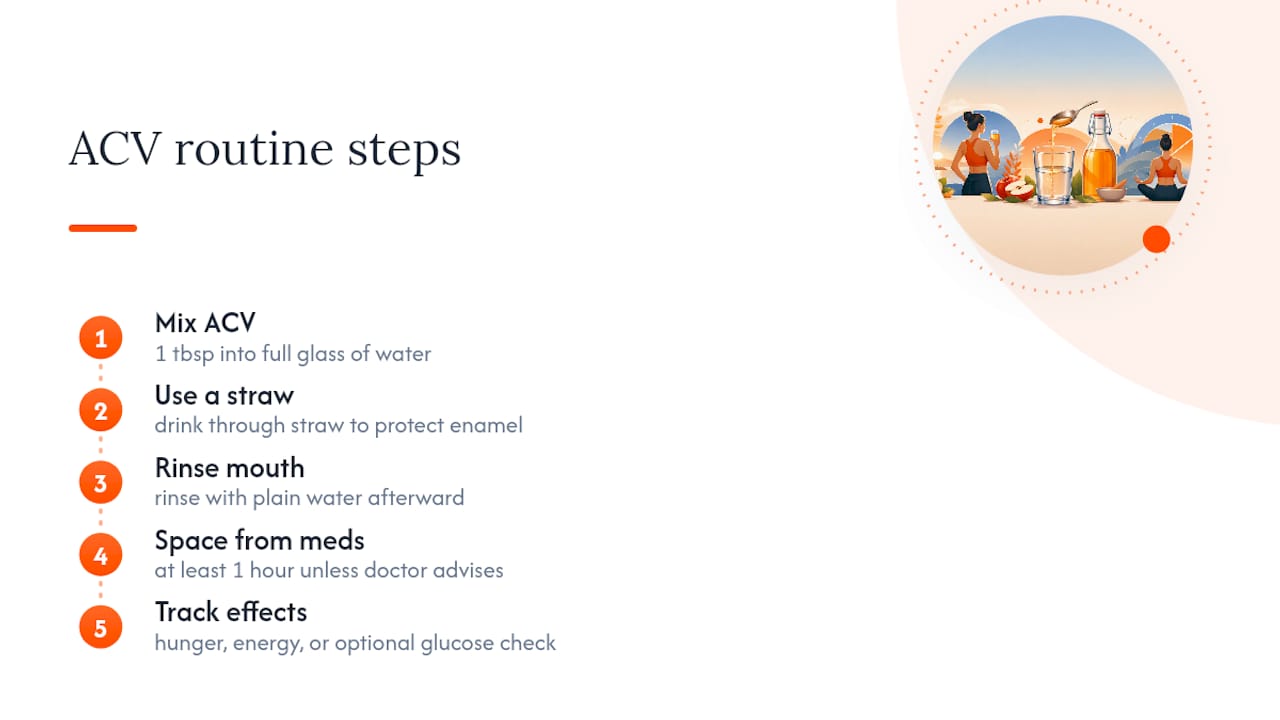
If you want to know whether it’s actually doing anything for you personally, track it. A simple hunger log, a note on energy levels, or an optional glucose check before and after a two-week trial will tell you more than any headline claim. A blood pressure and glucose log makes this easier to see at a glance.
Pro Tip: Skip anything marketed as an ACV “cleanse” mixer with added juice or sweetener. It defeats the purpose and can quietly break the fast you’re trying to protect.
How ForgeFast Thinks About ACV in a Fasting Routine
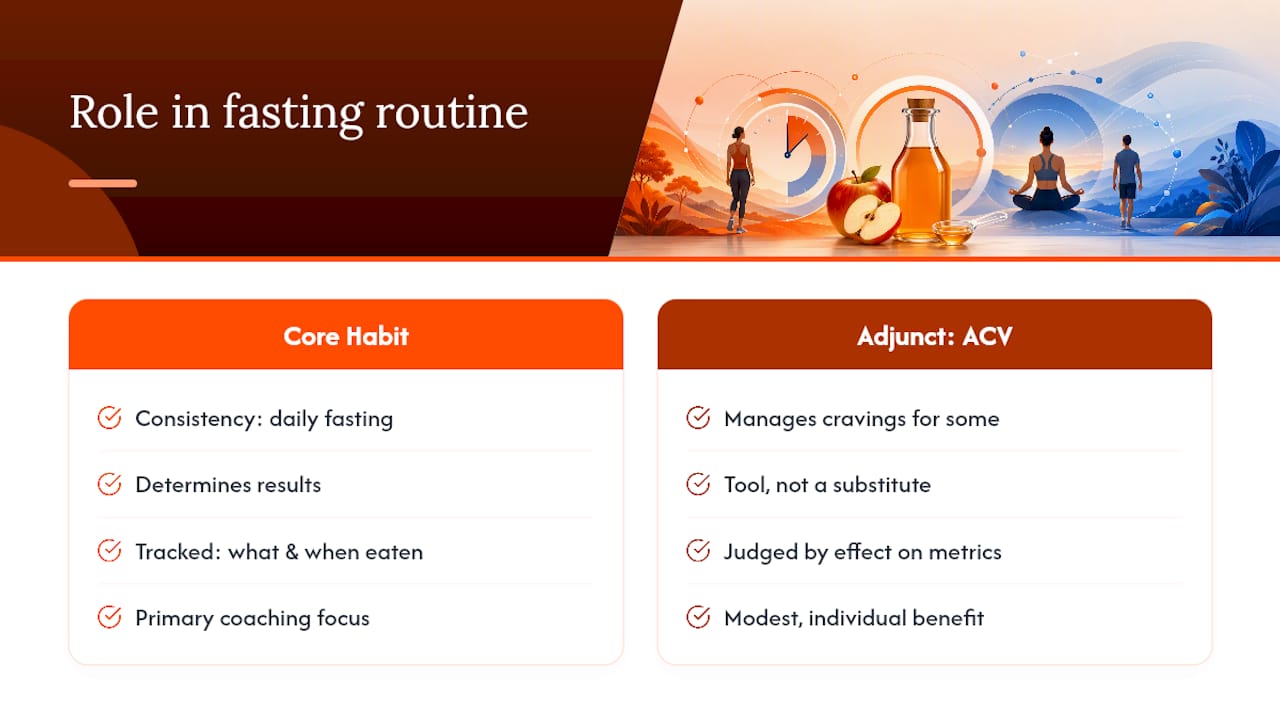
ForgeFast treats apple cider vinegar the way it treats most small interventions: as a tool that supports the habit, not a substitute for one. The behavior that actually determines results is consistency, showing up for your fasting window day after day, and ACV’s real value is helping some people manage cravings long enough to get there.
That’s a modest claim on purpose. ForgeFast’s coaching framework builds around tracking what you eat, when you eat, and how your body responds, so an adjunct like ACV gets evaluated the same way any other input does, by whether it moves your actual numbers, not by how it’s marketed.
The Bottom Line on ACV and Fasting
Small, diluted doses of ACV don’t break a fast for most people, and they may modestly help with appetite and post-meal glucose control. Start with one diluted serving, skip anything sweetened, and track how you respond for two weeks before deciding it’s worth keeping. If you take insulin or a diuretic, talk to your doctor first. For a more structured way to track how habits like this affect your results, ForgeFast’s fasting program builds monitoring directly into its daily framework.
A Small Tool, Not a Shortcut
Apple cider vinegar earns its place in a fasting routine the same way any small habit does: by being tested, not assumed. The evidence backs a modest appetite and glucose benefit, nothing more dramatic, and that honesty is worth more than another detox promise. Try it, measure it, and let your own numbers decide if it stays.
— Tony Lindsay
Sources
FAQ
Is It Good to Take Apple Cider Vinegar on an Empty Stomach?
Taking diluted ACV on an empty stomach is generally fine for most people and may help curb appetite, but it can increase throat or stomach irritation for those prone to reflux, so always dilute it first.
What Is the Best Liquid to Drink When Fasting?
Plain water is the safest baseline during a fast; black coffee, plain tea, and diluted apple cider vinegar in water are common additions that don’t meaningfully add calories or carbohydrates.
Does Apple Cider Vinegar Break Autophagy?
There’s no direct evidence that a small diluted dose of ACV disrupts autophagy, since the amount of calories and carbohydrate involved is negligible, though sweetened ACV drinks with real sugar content could plausibly interfere.
Does Apple Cider Vinegar Take You Out of Ketosis?
Plain diluted ACV contains about 3 calories and under a gram of carbs per tablespoon, which is far too little to push most people out of ketosis on its own.
Recommended
Comments