Biohacking with Fasting: Your 2026 Science Guide


Biohacking with fasting is the deliberate use of timed eating protocols to trigger biological states that improve metabolism, cognitive function, and long-term health. The practice draws on well-established mechanisms: ketosis, autophagy, and hormonal regulation. These are not fringe concepts. Yoshinori Ohsumi won the 2016 Nobel Prize in Physiology or Medicine for his work on autophagy, the cellular self-cleaning process that fasting activates. Understanding what is biohacking with fasting means understanding how your body shifts from burning glucose to burning fat, and how that shift produces measurable benefits beyond weight loss.
What is biohacking with fasting, and how does it work biologically?
Biohacking with fasting works by forcing your body through a process called metabolic switching. After 12–16 hours without food, your liver depletes its glycogen stores and switches to fat oxidation, producing ketone bodies that fuel the brain more efficiently than glucose. That shift is the foundation of every serious fasting protocol used in biohacking.
Autophagy runs parallel to this process. When insulin drops during a fast, cells activate a recycling program that breaks down damaged proteins and organelles. Fasting activates autophagy, reducing oxidative stress and inflammation while promoting cellular repair linked to aging resistance. Think of it as your body’s internal maintenance crew, finally getting to work once the constant stream of meals stops interrupting them.

The hormonal picture is equally significant. Fasting lowers insulin, which directly improves the body’s ability to use stored fat. Research shows intermittent fasting lowers fasting insulin by 13.25 mU/L and reduces fasting glucose by 0.15 mmol/L. Those numbers translate to meaningfully better insulin sensitivity and lipid metabolism over time.
Growth hormone also rises during fasting periods. Higher growth hormone supports muscle preservation and fat mobilization simultaneously. This is why experienced biohackers report maintaining lean mass while losing body fat, a combination that standard caloric restriction rarely delivers cleanly.
Pro Tip: Track your fasting window from your last meal, not from when you go to sleep. Many people undercount their actual fast length by 2–3 hours.
Marker | Effect of Fasting |
Fasting insulin | Decreases, improving insulin sensitivity |
Fasting glucose | Decreases, supporting metabolic health |
Growth hormone | Increases, aiding fat mobilization |
Autophagy activity | Increases after 12–16 hours without food |
Inflammatory markers | Decrease with consistent fasting practice |
What are the most popular fasting protocols for biohacking?
The 16/8 protocol is the most widely practiced entry point. You fast for 16 hours and eat within an 8-hour window, typically skipping breakfast and eating from noon to 8:00 PM. It fits most work schedules without requiring major lifestyle restructuring. The metabolic switching threshold of 12–16 hours means the 16/8 method reliably triggers fat oxidation every single day.
The 5:2 method takes a different approach. You eat normally five days a week and restrict calories to roughly 500–600 on two non-consecutive days. This suits people who prefer flexibility during the week but can tolerate two structured low-intake days. The trade-off is that the two restricted days require real discipline and meal planning.
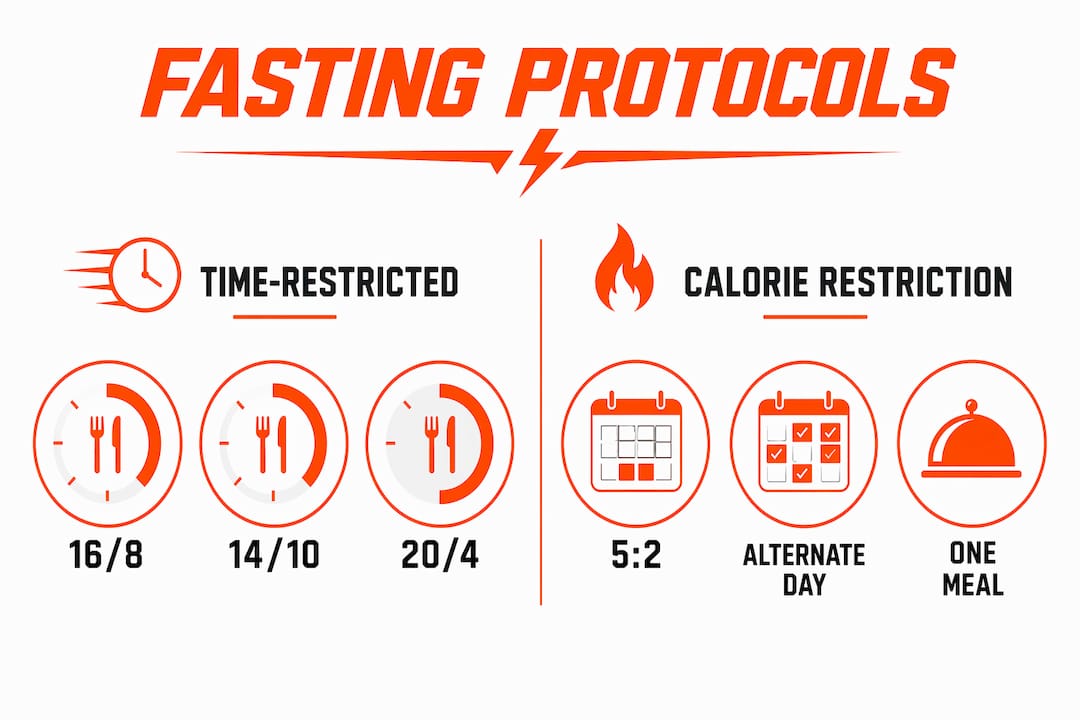
Alternate-day fasting is the most aggressive of the three. You alternate between normal eating days and full or near-full fasting days. The metabolic impact is significant, but adherence rates drop sharply beyond the first few weeks. Most practitioners find it unsustainable as a permanent lifestyle, though it can work well for short-term metabolic resets.
Choosing the right protocol depends on your schedule, stress load, and current metabolic health. A person with a demanding physical job should not start with alternate-day fasting. Someone new to fasting biohacking should begin with 12/12 (equal fasting and eating windows) for two weeks before moving to 16/8.
Common mistakes to avoid when starting:
Breaking the fast with high-sugar foods, which spikes insulin and cancels the metabolic benefits
Drinking caloric beverages like lattes or juice during the fasting window
Cutting calories too aggressively during eating windows, which triggers muscle loss
Expecting results in under two weeks and abandoning the protocol too early
Ignoring electrolytes, which causes the fatigue and headaches often blamed on fasting itself
Pro Tip: Start your first fasting attempt on a busy workday. Distraction is the most underrated tool for getting through the first few fasting windows.
How to maximize fasting benefits with nutrition and lifestyle
The quality of what you eat during your eating window determines whether fasting biohacking actually works. Fasting’s health impact depends heavily on nutritional quality during eating windows. Poor food choices during a feeding window do not just reduce benefits; they can negate them entirely by keeping insulin elevated and inflammation high.
Prioritize these during your eating window:
Protein: Aim for adequate protein at every meal to preserve muscle mass during the fasted state. Eggs, fish, poultry, and legumes all work well.
Healthy fats: Avocado, olive oil, and nuts support satiety and provide fat-soluble vitamins without spiking insulin.
Low-glycemic carbohydrates: Sweet potatoes, leafy greens, and berries provide fiber and micronutrients without the blood sugar rollercoaster.
Electrolytes: Sodium, potassium, and magnesium deplete during fasting. Replenish them with mineral-rich foods or a simple electrolyte supplement.
Sleep and stress management are not optional add-ons. Poor sleep undermines fasting effectiveness, and improving sleep hygiene should come before any nutritional intervention. A person sleeping five hours a night and fasting 16 hours will see far less benefit than someone sleeping eight hours and fasting 14. Cortisol from poor sleep drives insulin resistance, which directly opposes what fasting is trying to achieve.
Circadian rhythm alignment adds another layer of precision. Eating earlier in the day, when insulin sensitivity peaks, produces better metabolic outcomes than eating the same foods late at night. Shifting your eating window to 10:00 AM to 6:00 PM instead of noon to 8:00 PM can meaningfully improve results without changing the fasting duration.
Continuous glucose monitors and wearables give you real-time feedback on how specific foods and meal timing affect your blood sugar. That data removes guesswork and lets you personalize your protocol based on your own physiology rather than generic recommendations. This is where fasting biohacking separates itself from standard dieting.
What are realistic expectations when biohacking with fasting?
Fasting biohacking produces results, but not overnight. Consistent adherence for at least 30 days is the minimum threshold to evaluate meaningful physical and cognitive effects. People who quit after two weeks are usually stopping right before the adaptation phase completes.
The first week is the hardest. Hunger during early fasting is largely psychological, not physiological. Initial fasting phases trigger psychological hunger driven by habitual glucose dependence, not actual caloric need. Once your metabolism shifts toward fat burning, that habitual hunger signal fades significantly. Most practitioners report the transition feeling complete by days 10–14.
Common challenges and how to address them:
Mental fog in the first week. This is normal during metabolic switching. Stay hydrated, add electrolytes, and reduce cognitive demands during the adaptation period.
Energy dips in the afternoon. Often caused by electrolyte loss, not caloric deficit. A pinch of sea salt in water resolves this for most people.
Social eating pressure. Fasting windows that end by 8:00 PM accommodate most dinner plans. Flexibility in window timing reduces social friction without breaking the protocol.
Plateau after initial weight loss. Intermittent fasting produces steady weight loss of about 0.5 to 1 pound per week. That pace is sustainable. Expecting faster results leads to unnecessary protocol changes.
Hormonal disruption in women. Some women experience cycle irregularities with aggressive fasting. Starting with shorter fasting windows and monitoring symptoms is the right approach. Consult a clinician if irregularities persist.
Pro Tip: Keep a simple daily log of energy, hunger, and sleep quality for the first 30 days. Patterns in that data will tell you more about your protocol than any generic fasting app.
For a deeper look at how fasting interacts with your hormonal system, the fasting and hormonal optimization guide covers the mechanisms in practical detail.
Key Takeaways
Biohacking with fasting works because it triggers metabolic switching, autophagy, and hormonal shifts that no supplement or diet alone can replicate at the same depth.
Point | Details |
Metabolic switching is the core mechanism | Fat oxidation begins after 12–16 hours of fasting, fueling both body and brain more efficiently. |
Nutrition quality determines outcomes | Poor food choices during eating windows cancel fasting benefits by keeping insulin elevated. |
30 days is the minimum evaluation window | Meaningful physical and cognitive changes require consistent adherence for at least one month. |
Sleep must come before fasting | Poor sleep drives cortisol and insulin resistance, directly opposing what fasting achieves. |
Personalized tracking accelerates results | Continuous glucose monitors and wearables let you optimize fasting windows based on your own data. |
Why I think most people approach fasting biohacking backwards
Most people start fasting and immediately obsess over the eating window length. They go straight to 18/6 or alternate-day fasting before their sleep is consistent, their stress is managed, or their nutrition quality is anywhere close to adequate. That sequence almost guarantees a bad experience.
The evidence on foundational biohacking is clear: sleep hygiene and stress management come first. I have seen people add two hours to their fasting window and get worse results because their cortisol was already elevated from poor recovery. The fasting window is not the lever you think it is when the rest of your lifestyle is working against it.
The other mistake I see constantly is treating fasting as a weight loss shortcut rather than a metabolic training tool. The AMA’s guidance on intermittent fasting is worth reading here: no clear evidence shows fasting is inherently superior to other dietary approaches for weight loss alone. What makes fasting powerful is the biological state it creates, not the caloric restriction it produces. If you approach it as a calorie-cutting trick, you will miss most of the benefit.
Start with 12/12. Get your sleep to seven or eight hours. Eat real food during your window. Track your energy and hunger for 30 days before changing anything. That boring, patient approach produces the mental clarity and metabolic flexibility that people who chase aggressive protocols never seem to find.
— Tony Lindsay
ForgeFast: a structured path to lasting metabolic change
Building a fasting practice that actually sticks requires more than willpower. It requires structure, the right mental framework, and a protocol matched to your specific goals.

ForgeFast is built around exactly that. The program integrates intermittent fasting with a disciplined lifestyle framework that addresses both the biological and psychological sides of lasting change. Rather than handing you a generic eating schedule, ForgeFast builds the mental resilience and consistent habits that make fasting sustainable for years, not weeks. If you are ready to move past trial and error, the ForgeFast program gives you a science-backed structure to follow from day one. You can also explore flexible fasting approaches that maintain nutritional quality without rigid food rules.
FAQ
What is biohacking with fasting in simple terms?
Biohacking with fasting is the deliberate use of timed eating windows to trigger biological processes like ketosis and autophagy that improve metabolism, mental clarity, and cellular health. It treats fasting as a tool for measurable performance improvement, not just weight loss.
How long does it take to see results from fasting biohacking?
Meaningful physical and cognitive benefits require at least 30 days of consistent adherence. Early hunger and fatigue are normal and typically resolve within the first two weeks as your metabolism adapts.
Does the 16/8 fasting method actually trigger autophagy?
Autophagy begins activating after roughly 12–16 hours of fasting, which means the 16/8 protocol reliably triggers it each day. The depth of autophagy increases with longer fasts, but daily 16/8 practice produces consistent cellular repair benefits.
Can fasting biohacking improve cognitive function?
Yes. Metabolic switching to ketone production after 12–16 hours of fasting provides the brain with a more stable energy source than glucose. Many practitioners report sharper focus and better decision-making clarity once they pass the initial adaptation phase.
Is intermittent fasting safe for everyone?
Intermittent fasting is not appropriate for everyone, including pregnant women, people with a history of eating disorders, and those with certain metabolic conditions. The Cleveland Clinic recommends treating biohacking as an evidence-based lifestyle integration and consulting a clinician before starting any fasting protocol.
Recommended
Comments