Carbohydrate Strategy for Fasting Athletes: What Works
- Tony Lindsay
- 3 days ago
- 14 min read

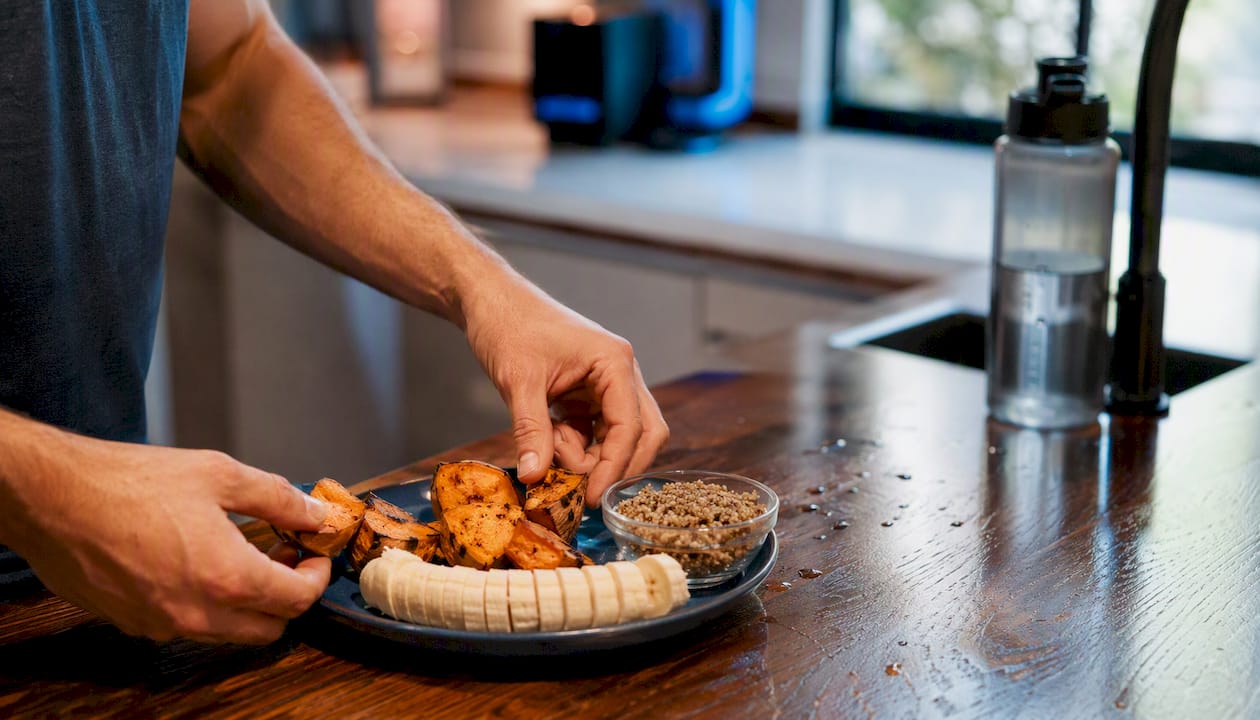
If you fast or run a ketogenic-style diet and still want to race or train hard, the answer is a periodized, “fuel for the work required” carbohydrate strategy: keep most days low-carb to protect your metabolic goals, but load carbohydrate deliberately around your hardest sessions and races. This isn’t a compromise. It’s how you get both outcomes without sabotaging either one.
Three numbers matter more than anything else in this guide. First, eat 1 to 4 g·kg−1 of body mass in the 1 to 4 hours before a hard session, scaling the amount to how much time you have to digest. Second, during exercise lasting over an hour, take in 30 to 90 g·h−1 of carbohydrate (up to 90 g·h−1 only with a mixed glucose-fructose source). Third, if you have a race or key session lasting longer than 90 minutes, start a 48-hour carb-loading window beforehand rather than trying to fuel it cold off a fasted or low-carb baseline.
Pre-session: 1–4 g·kg−1, timed 1–4 hours out
In-session: 30–90 g·h−1, using multiple carbohydrate sources above 60 g·h−1
Pre-event (>90 min): trigger a 48-hour, ~10 g·kg−1·day−1 carb-load
One dose-response trial found that 10 g·kg−1·day−1 over the final 48 hours before competition produced muscle glycogen levels of 635.5 mmol·kg−1 dry mass, noticeably higher than lower intakes, with only mild extra fullness reported. None of this replaces individualized medical guidance. If you have diabetes, a history of disordered eating, or another condition affected by fasting or high-carbohydrate protocols, work with a clinician or sports dietitian before adopting any of these numbers.
Key Takeaways
A periodized “fuel for the work required” strategy, not blanket fasting or blanket carb-loading, is what preserves both your metabolic goals and your top-end performance.
Point | Details |
Fuel hard sessions specifically | Eat 1–4 g·kg−1 in the 1–4 hours before intervals, tempo work, or races. |
Match in-session dose to duration | Use 30–60 g·h−1 for efforts under 2.5 hours and up to 90 g·h−1 with mixed carb sources for longer, harder events. |
Load carbs 48 hours before big events | Target roughly 10 g·kg−1·day−1 for two days pre-race based on the 2026 dose-response trial results. |
Reserve fasting for easy days | Save low-carb or fasted training for aerobic recovery sessions, not for intervals or races. |
Track and adjust with structured support | Use a habit-tracking framework like ForgeFast to log outcomes and refine your fasting windows around real training data. |
Table of Contents
Why Carbohydrate Timing Still Matters When You Fast or Follow a Ketogenic Approach
How Much Carbohydrate Should You Eat Before, During, and After Exercise?
Carbohydrate-Loading Protocols for Events Longer Than 90 Minutes
Combining Intermittent Fasting or Keto With a Performance Fueling Plan
What Recent Research Changes About Fasting and Carbohydrate Practice
Training Your Gut to Handle Carbohydrate While Fasting or Low-Carb
Why Carbohydrate Timing Still Matters When You Fast or Follow a Ketogenic Approach
Your body stores carbohydrate in two places that behave very differently under fasting. Liver glycogen keeps your blood sugar stable between meals and depletes within 12 to 24 hours of not eating. Muscle glycogen is your local fuel tank for the muscles doing the work, and it responds almost entirely to what you’ve eaten and how you’ve trained, not to the clock on your last meal.
Here’s the part most fasting guides skip: when you go without food for days, your muscles don’t just run low on glycogen. They actively downregulate their ability to burn the carbohydrate they still have. A 2024 study in Nature Communications tracked people through six days of fasting and found a marked increase in an enzyme called PDK4, which shuts down the PDH enzyme complex responsible for converting glucose into usable energy during exercise. The practical result was a 10 to 15% drop in peak oxygen consumption and high-intensity endurance capacity, even though the athletes’ muscle glycogen stores weren’t fully empty. Their bodies simply lost the machinery to burn it fast.
That finding reframes the whole conversation. Long fasts don’t just run you low on fuel. They dial down your engine’s ability to use fuel at all, and that decline shows up specifically in the intensity zones where races are won or lost.
Six or seven days of fasting can knock 10 to 15% off your top-end aerobic capacity, not because you ran out of glycogen, but because your muscles temporarily lost the enzymatic pathway that burns carbohydrate efficiently under load.
This is why “fuel for the work required” beats a rigid, one-size-fits-all rule. Instead of fasting or keto-adapting on every single day regardless of what’s on the training schedule, you match carbohydrate availability to the demand of that specific session. Easy aerobic work barely dents glycogen and tolerates low-carb states fine. Intervals, tempo efforts, and races are exactly where the PDK4/PDH story above becomes a performance problem, so those are the sessions that earn deliberate carbohydrate support.
How Much Carbohydrate Should You Eat Before, During, and After Exercise?
Precise dosing beats vague advice like “eat some carbs before you train.” The amounts below come from established sports-nutrition research and apply whether you’re fasting daily, cycling ketogenic phases, or eating on a normal schedule but training at high intensity.
Before exercise (1 to 4 hours out): aim for 1 to 4 g·kg−1 of carbohydrate. The timing rule is simple: the closer you are to your start time, the smaller and simpler the meal needs to be. Four hours out, a mixed meal with complex carbohydrate (rice, oats, potatoes) works well. One hour out, stick to something simple and low-fiber, like a banana or a small serving of dates, to avoid GI distress mid-session.
During exercise (over 60 minutes): the research on carbohydrate intake during exercise supports 30 to 60 g·h−1 for moderate efforts under 2.5 hours, and up to 90 g·h−1 for longer, harder efforts, provided you use a glucose-fructose blend. Single-source glucose caps out around 60 g·h−1 because the gut can only absorb so much through one transporter. Mixing glucose and fructose activates a second transport pathway, which is how ultra-endurance athletes tolerate 90 g·h−1 without their stomachs revolting.
After exercise (0 to 4 hours): if you have another hard session within 24 hours, prioritize roughly 1.0 to 1.2 g·kg−1 in the first four hours to accelerate glycogen resynthesis. If your next hard session is 48 hours or more away, or your goal is fasting adaptation rather than rapid turnaround, a smaller, lower-carb recovery meal is fine.
Scenario | Carbohydrate Target | Timing Window |
High-intensity intervals or race | 1–4 g·kg−1 pre + 60–90 g·h−1 during | 1–4 h before, ongoing during |
Long steady endurance (>90 min) | 1–2 g·kg−1 pre + 30–60 g·h−1 during | 1–2 h before, ongoing during |
Recovery or easy aerobic day | Minimal to none required | No fixed window |
Quick turnaround (next hard session <24 h) | 1.0–1.2 g·kg−1 post | Within 0–4 h after |
High-intensity intervals: fuel heavily before and during; this is not the session to run fasted.
Long steady endurance: moderate carbs work fine, and this is where fasted or low-carb execution is most tolerable.
Recovery days: use these as your low-carbohydrate, metabolic-flexibility days by design.
Carbohydrate-Loading Protocols for Events Longer Than 90 Minutes
If your race or key session runs past 90 minutes, treat carbohydrate loading as a distinct, scheduled protocol, not an afterthought the night before. The strongest current evidence points to a 48-hour window at roughly 10 g·kg−1·day−1, which is higher than the classic advice many athletes grew up with.
The 2026 dose-response study compared 6, 8, and 10 g·kg−1·day−1 over the final two days before simulated competition. The 10 g·kg−1 group hit 635.5 mmol·kg−1 dry mass of muscle glycogen, versus 506.1 for the 8 g·kg−1 group and 460.9 for the 6 g·kg−1 group. GI symptoms didn’t meaningfully worsen at the higher dose beyond a sense of fullness, which tells you the ceiling for tolerable carb-loading may be higher than older protocols assumed.
For a 70 kg athlete, 10 g·kg−1·day−1 works out to 700 grams of carbohydrate a day for two days. That’s roughly 3 cups of cooked rice, two bagels, a couple of bananas, and a sports drink or two spread across the day. It sounds like a lot because it is a lot, which is exactly why this only makes sense as a short, planned window rather than a daily habit for someone otherwise practicing fasting or a ketogenic diet.
Loading at 10 g·kg−1·day−1 for 48 hours isn’t about eating everything in sight. It’s a precise, temporary override of your normal eating pattern, timed to fill the specific fuel tank your race will empty.
Some athletes do better with a longer, more gradual 36 to 48-hour ramp rather than a hard two-day switch, especially if they’ve been strict keto or fasting for weeks. If you fasted earlier in race week, taper your training volume during the loading window (this is not the time for a long run) and lean on lower-fiber carbohydrate sources like white rice, ripe bananas, and sports drinks to avoid GI discomfort from a sudden fiber and volume increase. General consumer carb-loading guidance suggests similar food-based approaches in the 10 to 12 g·kg−1·day−1 range work for shorter loading windows, which lines up with the trial data above.
Combining Intermittent Fasting or Keto With a Performance Fueling Plan
You don’t have to choose between fasting discipline and performance. You have to decide, session by session, which one takes priority. This is where periodization does the real work, and ForgeFast’s own approach to structured fasting for athletic lifestyles is built around exactly this kind of weekly windowing rather than an all-or-nothing rule.
Identify your two or three highest-priority sessions each week (intervals, race-pace efforts, long tempo work) and schedule your eating window so a meal lands 1 to 4 hours before them.
Reserve fasted or low-carb training for genuinely easy aerobic days. Research on fasted training consistently shows it reduces training quality when applied to hard sessions, so save it for the sessions that don’t demand top-end output.
Place your feeding window so it straddles your key workout, not after it. An overnight fast that breaks with a pre-workout meal, then continues eating through a midday window covering your session, protects both goals.
On heavy training weeks, add a targeted carbohydrate refeed the evening before your hardest day, even if you’re otherwise keto-adapted. Emerging trial data on strategic pre-session carbs suggests this can reduce hypoglycemia risk and support performance even in athletes who are metabolically adapted to low-carb eating.
Watch for warning signs that training quality is slipping: unusually high perceived effort at normal paces, stalled interval times, or persistent afternoon fatigue. Any of these means it’s time to prioritize performance carbs over strict fasting adherence for a few days.
The mitigation rule is straightforward: if a session matters for your race outcome, don’t experiment with fasting on it. Save the experimentation for the sessions where the stakes are low and the adaptation upside is real. ForgeFast’s guide on fasting protocols for competitive athletes walks through this trade-off in more detail for anyone racing regularly while maintaining a fasting practice.
What Recent Research Changes About Fasting and Carbohydrate Practice
Two studies from the past two years sharpen what older sports-nutrition reviews only hinted at, and both point the same direction: individualize, and don’t assume fasting is free.
The Nature Communications fasting study mentioned earlier didn’t just measure a performance drop. It identified the mechanism (PDK4-driven PDH inhibition) that explains why prolonged fasting hurts high-intensity capacity specifically, while leaving maximal strength largely intact. That distinction matters for programming: a fasted athlete can probably still hit a heavy lift, but should not expect to hold VO2max-zone intervals at their usual pace.
Separately, the 2026 carbohydrate dose-response trial revises what “loading” should look like in practice. Older guidance often topped out around 8 g·kg−1·day−1 for carb-loading; the newer data shows 10 g·kg−1·day−1 produces meaningfully more stored glycogen with acceptable GI tolerance. If you’ve been under-loading relative to what your gut can actually handle, that’s the number to test.
The newest evidence doesn’t overturn classic sports-nutrition guidance so much as sharpen it: fasting’s performance cost is mechanistic and measurable, and carb-loading’s upper useful dose is higher than many athletes assume.
What this means for you: if you’re doing extended fasts (multiple days), expect a real, measurable hit to high-intensity capacity, not just a subjective feeling of sluggishness. And if you’re loading for a big event, don’t be afraid to push toward 10 g·kg−1·day−1 for the final 48 hours if your gut has been trained for it, which brings us to the next piece.
Training Your Gut to Handle Carbohydrate While Fasting or Low-Carb
Athletes who fast or eat low-carb most of the time often have gut microbiomes and enzyme systems less accustomed to processing large carbohydrate loads quickly. Showing up to race day and suddenly asking your gut to absorb 90 g·h−1 without practice is a recipe for cramping, bloating, or worse mid-race.
Start two to three weeks before your event, on your designated high-carbohydrate training days, at 30 g·h−1 during a session of at least an hour.
Add 10 to 15 g·h−1 every week, alternating between a single glucose source and a glucose-fructose blend, until you reach your target race-day dose.
Practice the exact products you plan to use on race day, at the exact intensity you plan to race at, since gut tolerance under hard effort differs from tolerance at an easy pace.
Log GI symptoms (bloating, cramping, urgency) after each session so you can identify your personal ceiling before race week, not during it.
On texture: drinks tend to be gentlest on a gut that’s used to fasting, since they require no digestion of solid matter. Gels sit in the middle, concentrated but still liquid. Solids (chews, bars, real food) demand the most digestive work and are best reserved for lower-intensity, longer events where gut blood flow is less restricted. If you’re coming off a fasted state into a session, start with a drink or diluted gel rather than a solid, and build up from there as your tolerance improves.
Pro Tip: Rinse your mouth with a carbohydrate solution even when you don’t swallow much during short, hard efforts under an hour. Research shows carbohydrate receptors in the mouth can trigger a measurable performance boost independent of what actually reaches your gut, which is useful on days your stomach simply won’t cooperate.

Personalizing Your Plan: Sample Numbers by Body Mass
Generic advice breaks down the moment you try to apply it to your own body. Here’s how the math actually works for three common body masses across three different training phases.
To put 700 grams into food terms for a 70 kg athlete: that’s roughly 2 cups of cooked oats at breakfast, a large bagel and banana as a snack, 2 cups of rice with lunch, a sports drink during an easy shakeout session, and pasta with bread at dinner. It looks like an enormous amount of food because, for two days, it is supposed to be.
Scaling carbohydrate to body mass isn’t a rounding exercise. An 80 kg athlete loading at the same absolute gram amount as a 60 kg athlete is systematically underfueling relative to their glycogen storage capacity.
Use this simple checklist to decide which direction to adjust: if you’re seeing interval times drift slower over consecutive weeks, add carbs around those specific sessions before touching anything else. If GI symptoms show up during loading, drop back one increment (from 10 to 8 g·kg−1·day−1) and extend your gut-training window before your next big event. If your goal is primarily body composition or metabolic flexibility rather than competition, you can stay closer to the recovery-week numbers most of the time and reserve the higher intakes strictly for true event weeks.
Race-Day and Training-Day Cheat Sheet
Keep these rules close at hand when you don’t have time to recalculate everything from scratch.
Easy training day: low-carb or fasted is fine; no special fueling needed.
Heavy-intensity day: eat 1 to 4 g·kg−1 in the 1 to 4 hours prior; take 30 to 60 g·h−1 during if the session runs past an hour.
Race day (>90 min): you should already be 48 hours into your carb-load; fuel at 60 to 90 g·h−1 with a glucose-fructose blend during the event.
Bonking mid-race: take a fast-acting simple sugar immediately (gel, sports drink, or even regular soda) rather than waiting for your next scheduled fueling point.
Travel or limited food options: default to sports drinks and gels over solid food, since they’re easier to source, standardize, and digest under stress. Watch your electrolyte intake too, since travel disrupts hydration habits as much as fueling ones.
Pro Tip: Pack your race-day carbohydrate products in your bag the night before, in the exact order you’ll consume them, so you never have to make a fueling decision under fatigue or race adrenaline.
Pro Tip: When in doubt on a hard day, abandon the fast. One missed fasting window costs you nothing measurable long term; one bonked key session or race costs you the outcome you trained months for.
Why Flexibility Beats Dogma in Fasting and Fueling
Strict rules are appealing because they’re simple, but the athletes who sustain both fasting and performance long term are the ones who treat their protocol as adjustable, not sacred. The research is clear that prolonged fasting costs you real high-intensity capacity, and it’s equally clear that carbohydrate needs scale with training demand, not with willpower or discipline. Trying to out-tough a physiological limitation with more strictness just gets you slower interval times and, per the bone-injury data referenced earlier, potentially more overuse issues from chronic underfueling during heavy training blocks.

What tends to separate athletes who make this work from athletes who burn out on it isn’t the specific protocol. It’s whether they treat fasting as a habit they’re building deliberately, with room to adjust, rather than a test of moral discipline they fail every time they eat carbs before a hard session. That’s the philosophy behind how ForgeFast structures its own coaching guidance: build the fasting habit methodically, protect the sessions that matter, and measure what actually happens rather than what you assume should happen.
Treat every change in this guide as an experiment with a clear metric attached, whether that’s interval pace, perceived effort, or how you feel in the back half of a race. Track it, adjust one variable at a time, and give yourself permission to keep what works even if it doesn’t match the strictest version of the diet you started with.
How ForgeFast Helps You Put This Into Practice
Doing the math above manually, week after week, is where most athletes quietly give up on periodized fueling and drift back to guessing. ForgeFast’s app was built around exactly this problem: it handles the habit-formation side of fasting (the scheduling, the psychological coaching, the consistency tracking) so you can spend your mental energy on training and racing instead of recalculating g·kg−1 targets by hand.

Inside the platform, you set your body mass and training phase, and the coaching framework helps you structure feeding windows around your hardest sessions rather than fighting your training plan for control of the clock. The behavior-tracking tools flag patterns, like slipping interval times or recurring afternoon fatigue, that often mean it’s time to shift a session from fasted to fueled. For athletes stacking a ketogenic or intermittent fasting lifestyle onto a real training calendar, that kind of structured accountability tends to matter more than any single dosing number in this article. If you want a tool like Fortivus’s AI training system that adjusts fueling recommendations to your planned session intensity, pairing it with ForgeFast’s habit framework covers both the physiological and behavioral sides of the equation.
Start with a free trial on the ForgeFast landing page and build your first periodized fasting week around one hard session, one easy fasted session, and a tracked outcome. That single week will tell you more about your own carbohydrate needs than any general guideline can.
Frequently Asked Questions
Is it safe to train fasted every day if I’m also trying to race competitively?
Daily fasted training works fine for easy aerobic sessions, but reserve your hardest days for a fed state. Research on fasted training shows high-intensity work suffers when done fasted, and chronic restriction has been linked to higher bone-injury rates in endurance athletes.
How many grams of carbohydrate do I actually need during a two-hour race?
Somewhere between 60 and 90 g·h−1, using a glucose-fructose blend rather than a single sugar source, since mixed carbohydrates absorb through two separate gut pathways and reduce GI distress at higher doses.
Can I still carb-load effectively if I’ve been strict keto for months?
Yes, but plan for a longer ramp. Athletes coming off extended low-carb eating often benefit from stretching the loading window closer to 48 hours minimum and choosing low-fiber carbohydrate sources to avoid digestive discomfort during the sudden increase.
What’s the biggest mistake fasting athletes make with carbohydrate timing?
Applying the same fasting rule to every training day regardless of intensity. The research consistently shows the performance cost of fasting concentrates in high-intensity work, so a rigid daily fast without exceptions for key sessions is the most common and most avoidable error.
Do I need to carb-load for anything under 90 minutes?
Generally no. Standard pre- and during-exercise dosing (1 to 4 g·kg−1 pre-session, 30 to 60 g·h−1 during) covers most events and training sessions under 90 minutes without a dedicated loading protocol.
This article is general information, not a substitute for advice from a qualified doctor. Consult a qualified healthcare professional about your own circumstances before acting on anything here.
Sources
The numbers and rules in this guide come from peer-reviewed trials and consensus documents, not general wellness advice, and each one addresses a different piece of the puzzle.
Individual trials each capture one slice of a complex picture. Use dose-response numbers as a starting point, then let your own logged results, not any single study, decide your final protocol.
Recommended
Comments