Creatine While Fasting: 3–5g Is Safe for Fat Loss, Skip for Autophagy


Pure creatine monohydrate does not break an intermittent fast for fat loss, ketosis, or insulin control, since it carries no meaningful calories and doesn’t spike insulin. The one exception: if you’re doing a strict water-only or autophagy-focused fast, skip supplements entirely as a conservative precaution. Take a small daily dose with water or black coffee, and focus more on consistent use than precise timing.
TL;DR:
Creatine does not trigger insulin release nor provide meaningful calories, so it generally won’t break a fast intended for fat loss or ketosis unless during strict water-only fasts.
During autophagy-focused fasting, it is safer to avoid all supplements, including creatine, due to potential amino acid signaling, especially in prolonged fasts over 24 hours.
Consistent daily dosing of 3 to 5 grams, ideally paired with your workout or first meal for better uptake, is more important than precise timing during fasting periods.
Unflavored creatine monohydrate or capsules free from added sugars or amino acids are safest for fasting, while flavored or blended products often contain carbohydrates or amino acids that can break a fast.
People with existing kidney issues, pregnant women, or those on nephrotoxic medications should consult a healthcare professional before supplementing with creatine during fasting.
Table of Contents
What Creatine Actually Does to Your Fast
Creatine works through the phosphocreatine system, a short-term energy reserve your muscles tap during brief, intense effort like a heavy set of squats or a sprint. It’s not a macronutrient. It carries no real calories, and it isn’t a protein source, so it doesn’t trigger the amino acid sensing that activates mTOR, the pathway that shuts down autophagy.
That distinction is why creatine sits in a different category than a protein shake or a spoonful of peanut butter.
Insulin: Creatine alone does not provoke a meaningful insulin release.
Ketosis: With no carbs and negligible calories, pure creatine won’t pull you out of a fat-burning state.
mTOR/autophagy: Because it isn’t an amino acid substrate in the way leucine or other essential amino acids are, it doesn’t directly flip the mTOR switch the way a meal does.
Does Creatine Break a Fast for Every Fasting Goal?
The answer depends entirely on why you’re fasting in the first place. Creatine’s biochemistry is consistent, but your goals aren’t, so the “does creatine break a fast” question really splits into three separate answers.
If you’re fasting for fat loss, better insulin sensitivity, or general metabolic health, pure creatine is compatible with your fast. It does not significantly raise insulin levels and adds no relevant calorie load, so your fasting window stays intact.
If autophagy is the whole point, take a more conservative stance. There’s no definitive evidence that maintenance-dose creatine blocks autophagy, but because creatine is derived from amino acids and some nutrient-signaling pathways respond to amino acid presence, the uncertainty is real enough that many people choose to skip all supplements during long, strict fasts.
A few situational notes worth flagging:
Extended water-only fasts (24+ hours): Treat these like autophagy fasts. Wait until you eat.
Religious fasts: Follow the specific rules of your tradition. Some prohibit anything but water, which settles the question for you.
Medically supervised fasts: Defer to your clinician’s protocol, not general fasting guidance.
How to Time and Dose Creatine During Intermittent Fasting
Most people confuse the loading phase with the maintenance phase, and that confusion drives half the bad advice online. Loading (typically 20 grams a day split into smaller doses for five to seven days) saturates your muscle creatine stores faster. Maintenance (3 to 5 grams daily) keeps them full. Long-term daily dosing matters far more than precise timing, which is genuinely good news if you’re already juggling a fasting window, a training schedule, and a job.
Here’s a simple approach that works whether you’re fasted or not:
Pick a daily anchor. Attach creatine to something you already do every day, like your morning coffee or your pre-workout routine, so it never becomes optional.
Take it near your workout when you can, but don’t stress if you can’t. The performance literature treats consistency as the dominant variable, not clock precision.
Use rest days as a checkpoint, not a skip day. Muscle saturation depends on daily intake, so rest days still need their dose.
If you want the insulin-assisted uptake boost, pair creatine with carbs at your first meal. One trial found that combining creatine with roughly 93 grams of simple carbohydrates increased muscle creatine uptake compared with creatine alone. This is optional, not required for creatine to work.
Which Creatine Products Are Actually Fasting-Safe?
The fastest way to accidentally break a fast isn’t the creatine molecule itself. It’s what’s mixed in with it.
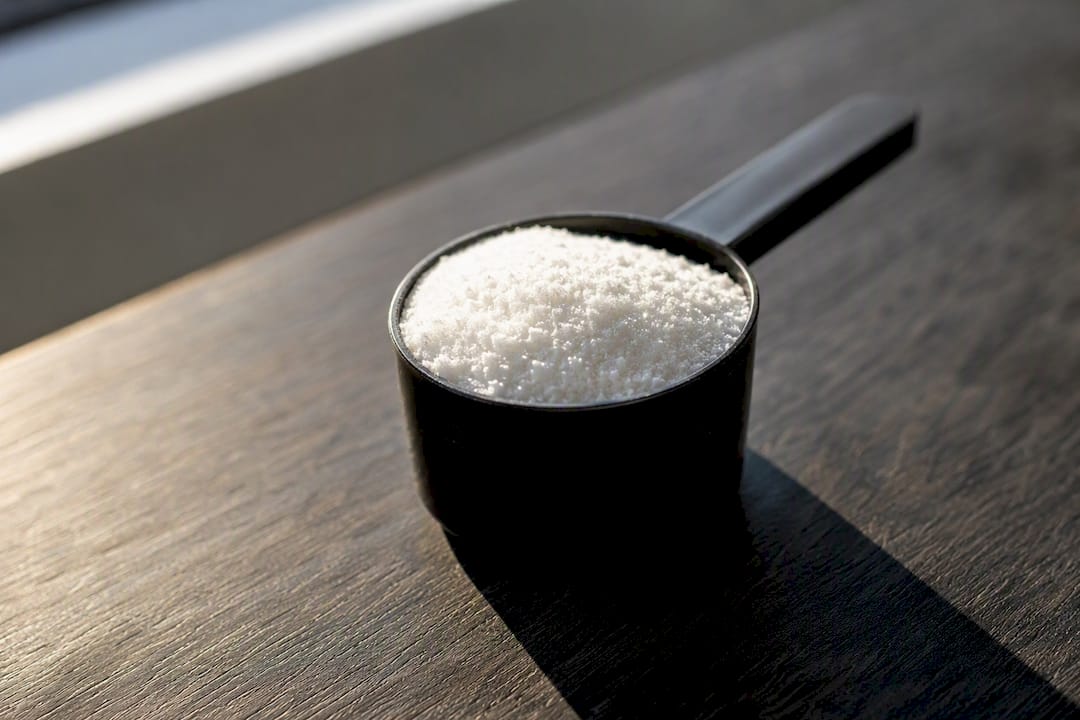
Stick to unflavored creatine monohydrate or pure creatine HCL in capsule or powder form. Single-ingredient products give you nothing to second-guess.
Watch labels for these red flags before you buy:
Dextrose, maltodextrin, or “added for taste” sugars
Any listed carbohydrate count above 0 to 1 gram per serving
BCAA or amino acid blends stacked into the same product
Flavored powders and gummies, which routinely carry sugars or amino acid blends that will break a fast
Vague “proprietary blend” labeling that hides exact ingredient amounts
Pro Tip: Look for third-party testing seals like NSF Certified for Sport or Informed Sport on the label. They confirm what’s actually in the tub, not just what the marketing copy claims.
Unflavored, single-ingredient creatine monohydrate remains the safest default for anyone tracking a fasting window closely.
Practical Tips for Taking Creatine Without Wrecking Your Fast
Mixing matters more than people assume. Plain water, black coffee, or unsweetened tea all work fine as a vehicle. Skip juice, milk, or anything with natural sugars, since those absolutely will break a fast regardless of what the creatine does.

Hydration deserves attention too. Creatine draws water into muscle cells, so fasted training days call for steady sodium and potassium intake to avoid cramping. Electrolytes without caloric sweeteners generally don’t break a fast and can meaningfully reduce lightheadedness during a fasted lift.
If creatine upsets your stomach on an empty stomach:
Switch from powder to capsules, which slow absorption slightly.
Split your 5-gram dose into two 2.5-gram doses spaced through the day.
Move your dose to your first meal if fasted mixing consistently causes discomfort.
Pairing your electrolyte routine with your training schedule, something covered in ForgeFast’s guide to electrolytes for fasted workouts, tends to solve most of the GI complaints people blame on creatine itself.
Pro Tip: If you train fasted in the morning, keep your creatine dose next to your water bottle the night before. Removing the “did I take it yet” decision is half the battle for consistency.
Is Creatine Safe for Everyone Practicing Intermittent Fasting?
Creatine has one of the longer safety track records in sports nutrition. Systematic reviews and position statements describe it as safe and effective for healthy adults, with strength gains and muscle preservation as the headline benefits.
That safety profile comes with real conditions attached, though:
If you have known kidney disease, get baseline renal function checked before adding creatine, and only proceed with your doctor’s input.
Pregnant readers and anyone on nephrotoxic medications should talk to a clinician first rather than assume general guidance applies.
Common side effects (mild bloating, water retention, occasional stomach upset) usually respond to better hydration or splitting the dose.
Healthy kidneys handle creatine’s modest increase in creatinine without issue, but that marker can confuse routine bloodwork if your doctor isn’t aware you supplement.
Sample Schedules for Common Fasting Protocols
16:8 fasting: Take creatine with water during your fasted training session, or hold it for your first meal if you’d rather pair it with carbs for uptake. Both work equally well for long-term muscle saturation.
Early-morning fasted training: Dose pre-workout in plain water if your stomach tolerates it; move to post-workout with your first meal if fasted dosing causes any nausea.
Extended fasts or autophagy-focused protocols (24+ hours): Wait until your eating window opens. The theoretical uncertainty isn’t worth the tradeoff on a fast built specifically around cellular cleanup.
Alternate-day fasting or OMAD: Treat fasting days like a 16:8 fast if the goal is body composition, and treat them like an extended fast if autophagy is the priority.
ForgeFast’s Take: Build a Rule, Not a Guessing Game
The people who stay consistent with creatine aren’t the ones with the perfect timing protocol. They’re the ones who attached it to something automatic, a coffee cup, a pre-workout shaker, a first bite of food, so the decision disappears. ForgeFast’s coaching framework leans on that same logic for fasting itself: pick one clear rule per goal (creatine only inside the eating window for autophagy, creatine pre-workout in water for performance) and stop relitigating it daily. Pair training days with a deliberate carbohydrate strategy and steady electrolytes, and the supplement question mostly solves itself.
— Tony Lindsay
Creatine and Fasting: The Short Checklist
Buy unflavored creatine monohydrate or a pure capsule form, nothing flavored or blended.
Take 3 to 5 grams daily and prioritize consistency over exact timing.
Skip supplements entirely during strict water-only or autophagy-focused fasts.
Check with a clinician first if you have kidney disease, are pregnant, or take nephrotoxic medications.
Ready to build fasting habits that actually stick alongside your training? ForgeFast’s structured intermittent fasting program pairs behavior coaching with practical protocols like this one, so supplement questions stop derailing your progress.
This article is general information, not a substitute for advice from a qualified doctor. Consult a qualified healthcare professional about your own circumstances before acting on anything here.
Sources
Recommended
Comments