Busy Professionals: Stop Fasting Bad Breath Without New Products


Fasting breath almost always comes from one of two things: your saliva production drops, letting sulfur-producing bacteria multiply, or your body shifts into ketosis and starts releasing acetone through your lungs. The fastest fix is to rehydrate with electrolytes and scrape your tongue or use a xylitol mint during your eating window. While you’re still fasting, nasal breathing and anything that gets saliva flowing again will take the edge off without breaking your protocol.
TL;DR:
Hydrating with electrolytes before fasting helps prevent dry mouth and reduces fasting-related bad breath more effectively than just drinking water.
Bacterial halitosis during fasting can persist beyond refeeding, especially if dehydration or poor oral hygiene are not addressed, while ketosis breath usually fades within a few days.
Using tongue scraping, nasal breathing, and nonalcoholic mouthwash after meals minimizes saliva loss and bacterial buildup, lowering the risk of malodor during fasting.
Saliva flow reduction, caused by stopped chewing and dehydration, is the primary driver of fasting breath, making habits that stimulate saliva more impactful than products alone.
Persistent or metallic-smelling breath after rehydration and eating suggests oral health issues requiring dental evaluation instead of fasting-related causes.
Table of Contents
What Causes Bad Breath During Fasting?
Your mouth relies on saliva to do the cleaning your toothbrush handles the rest of the day. Saliva washes away food debris, neutralizes acid, and keeps the bacterial population in your mouth in check. When you fast, that flow drops. Research on salivary changes during fasting found that flow rates can fall by up to 50%, which strips away the mouth’s natural cleansing mechanism right when you need it most.
Part of the reason is mechanical. Chewing physically stimulates your salivary glands, and when you stop eating, you stop triggering that reflex. No food, no chewing, less saliva. Dentists point to this as one of the more overlooked drivers of fasting breath, since people tend to blame it entirely on metabolism when the simple absence of chewing is doing a lot of the work.
Less saliva creates the perfect environment for anaerobic bacteria to break down proteins in your mouth and release volatile sulfur compounds, or VSCs. These are the actual molecules behind that rotten-egg smell: hydrogen sulfide, methyl mercaptan, and dimethyl sulfide. A clinical study on long-term fasting tracked breath dimethyl sulfide levels over a fast lasting roughly 10 days and found concentrations rose noticeably after the first and second days compared to baseline. That’s a fast turnaround. Your breath can change before you’ve even lost meaningful weight.
Ketosis adds a second, separate mechanism. Once your body burns through glycogen and starts breaking down fat for fuel, it produces ketone bodies, including acetone. Acetone is volatile enough to escape through your lungs, which is why ketosis produces a distinct breath odor that people often describe as fruity or like nail polish remover. This has nothing to do with bacteria. It’s a metabolic byproduct, not an oral hygiene problem.
The two mechanisms often overlap during extended fasting:
Reduced saliva flow lets VSC-producing bacteria multiply unchecked.
Ketosis adds acetone to the mix, independent of anything happening in your mouth.
Oral microbiota composition itself shifts during multi-day fasts, which can further raise malodor risk.
Dehydration compounds both problems by thickening saliva and slowing its antibacterial action.
Knowing which mechanism is dominant matters, because the fix for one won’t touch the other.
Ketosis Breath vs. Oral Halitosis: How to Tell Them Apart
The smell itself is your first clue. Acetone breath tends to have a fruity, chemical edge, something closer to nail polish remover than anything food-related. Sulfur-driven halitosis smells more like rotten eggs or spoiled cabbage, a “biological” stench rather than a chemical one. If you can smell your own breath and it reminds you of a nail salon, that’s ketosis. If it smells like something died, that’s bacterial.
Here’s a quick way to sort out which one you’re dealing with:
Check the timeline. Ketosis-related acetone breath tends to show up in the first one to two days of a longer fast and can fade as your body adapts. Bacterial halitosis tends to persist or worsen the longer your mouth stays dry, and it doesn’t necessarily resolve once you break the fast.
Do the cupped-hand test. Breathe out into your cupped hands and sniff immediately. It’s crude, but effective for a quick self-check.
Inspect your tongue. A white or yellowish coating toward the back of your tongue points to bacterial buildup, not ketosis.
Notice your saliva’s texture. If it feels thick, stringy, or minimal, xerostomia is likely playing a bigger role than ketones.
Factor in recent meals. A high-protein refeed right before you noticed the smell points toward oral bacteria breaking down that protein, not metabolic ketosis.
If it’s genuinely metabolic, no amount of brushing will fix it; only time, hydration, or breaking the fast will. If it’s oral, hygiene changes should show results within a day.
How to Prevent Fasting Bad Breath: A Daily Routine
Preventing fasting bad breath is less about any single product and more about protecting saliva flow before it drops and cleaning up what’s left when it does. Think of it as a two-part job: what you do before the fast starts, and what you do once you’re eating again.
Front-load hydration and electrolytes
The hour or two before your fasting window begins is your best opportunity to set yourself up for a drier day. Water alone isn’t enough, because plain water without electrolytes can move through you quickly without meaningfully hydrating your tissues, including your salivary glands. Front-loading sodium, potassium, and magnesium before a fast can blunt the natriuretic effect that hits during early ketosis, which is the same effect that pulls water out of your system and leaves your mouth dry. Public-health guidance on fasting and oral health specifically recommends this kind of hydration planning rather than treating it as an afterthought.
Pro Tip: Add a pinch of salt and a splash of low-sugar electrolyte mix to a big glass of water about 90 minutes before your fast starts. It’s a small habit that does more for dry mouth than any breath mint will during the fast itself.
Time your oral hygiene around your eating window
Brush and floss after your last meal, not before your fast begins on an empty routine. Add tongue scraping to that same window since your tongue’s surface, especially toward the back, is where most VSC-producing bacteria collect. A nonalcoholic mouthwash used after brushing helps without drying out the tissue further, which matters because alcohol-based rinses can actually make fasting breath worse by stripping moisture your mouth is already short on.
Choose foods that don’t feed the problem
What you eat during your window affects how your breath behaves during the fast that follows.
Favor fiber-rich vegetables and fruit, which have a mild mechanical cleaning effect as you chew.
Pick lean proteins over heavily processed or sulfur-dense options (garlic, onions, certain cured meats) if you’re fasting again soon after.
Stay generous with water-rich foods like cucumber or melon, which support hydration heading into the fast.
Cut the drying agents
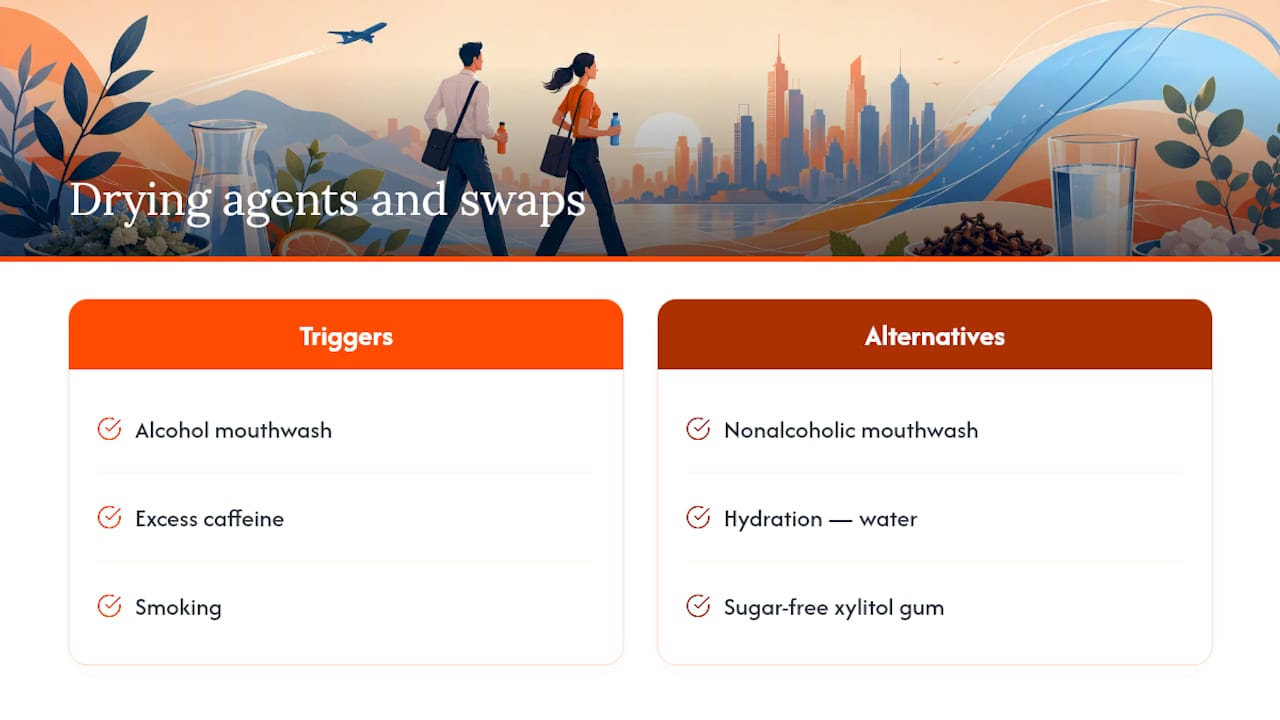
Alcohol-based mouthwash, excess caffeine, and smoking all reduce saliva production, which is exactly the wrong direction to push things during a fast. Swap alcohol mouthwash for a nonalcoholic version, and reach for sugar-free, xylitol-containing gum or mints after you eat rather than during your fasting hours, since xylitol both stimulates saliva and resists feeding the bacteria that produce VSCs. Dental guidance consistently points to tongue cleaning, hydration, and sugar-free gum after meals as the highest-value combination for reducing fasting-related odor.
Protect your mouth overnight
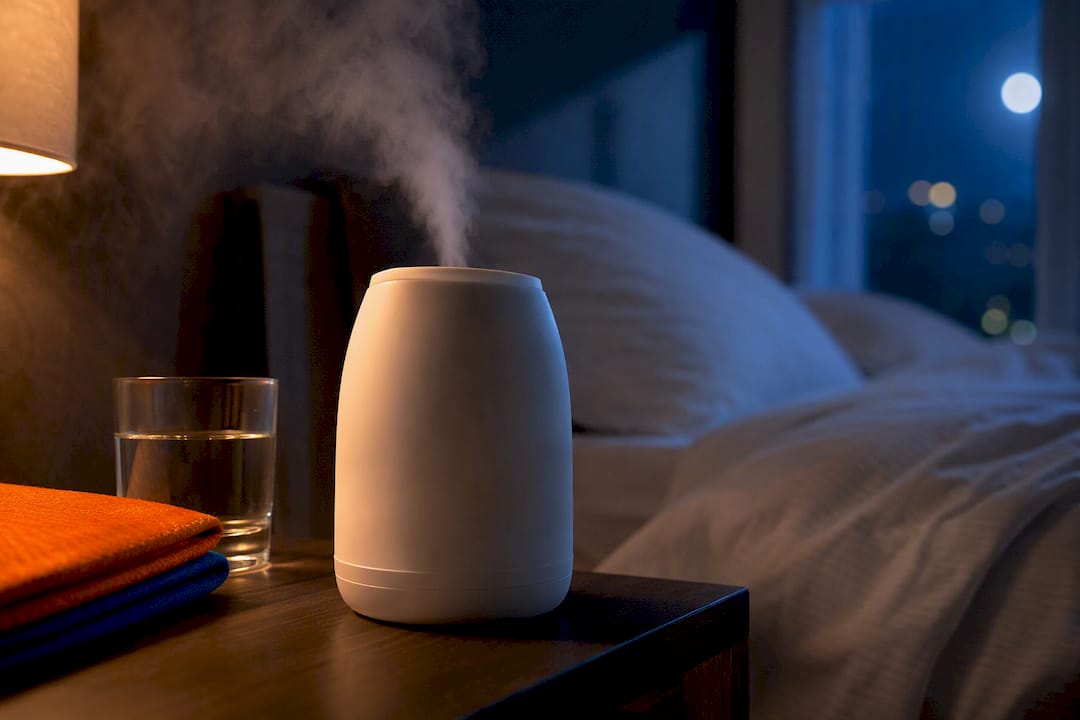
A lot of fasting breath actually gets worse overnight, since saliva production naturally drops during sleep even without fasting layered on top. Running a humidifier in your bedroom, especially in dry climates or winter months, reduces nocturnal dry mouth. Sleeping with your mouth closed, which nasal breathing supports, adds another layer of protection.
Quick Fixes for Fasting Breath That Won’t Break Your Fast
You don’t need to wait for your eating window to feel less self-conscious about your breath. A handful of interventions work in real time without introducing calories or breaking most common fasting protocols.
Breathe through your nose. Mouth breathing dries out oral tissue fast; consciously switching to nasal breathing, especially during exercise or sleep, slows moisture loss significantly.
Use a nonalcoholic moisturizing oral spray. Look for xylitol or aloe-based formulas without alcohol or added sugar; these hydrate the tissue directly instead of just masking odor.
Chew sugar-free xylitol gum or suck a xylitol mint. Most zero-calorie xylitol products don’t meaningfully raise insulin, which is why many fasting protocols tolerate them, though this varies by method and you should check the rules of the specific approach you follow.
Adjust your posture and hydration timing. Sipping water (with electrolytes, if your fasting rules allow it) throughout the day keeps saliva flow more consistent than a single large dose.
Save masking sprays for social situations only. A quick-hit breath spray can mask odor for a conversation or meeting, but it treats the symptom, not the dry mouth causing it.
None of these replace the deeper fix, which is protecting saliva flow in the first place. They just buy you comfort while the fast runs its course.
When to See a Dentist About Bad Breath
Fasting explains a lot of bad breath, but it doesn’t explain all of it. Persistent odor that doesn’t improve once you’re rehydrated and eating normally again is a signal worth taking seriously.
Watch for gum symptoms alongside the smell. Bleeding gums, visible swelling, or teeth that feel loose point toward periodontal disease rather than anything fasting-related.
Notice if the smell survives refeeding. NHS guidance on halitosis notes that in most cases the underlying cause sits in the mouth itself, and dental checkups and tongue cleaning resolve the majority of cases that don’t clear up on their own.
Book a dental exam if metallic or persistent odor continues. A dentist will typically check for cavities, gum disease, and tonsil stones, and may recommend a professional cleaning or a look at chronic sinus issues.
Tell the clinician about your fasting schedule. Mention your typical fasting window, hydration habits, and any electrolyte supplements you’re using; this context helps a dentist or doctor rule out xerostomia as the sole cause before looking elsewhere.
ForgeFast’s Approach to Preventing Fasting Dry Mouth
The behavior that actually moves the needle on fasting breath isn’t a product. It’s timing. Hydration and electrolyte intake as scheduled habits, not reactive fixes, emphasize front-loading fluids and minerals one to two hours before a fasting window starts rather than scrambling once dry mouth has already set in.
Three habit cues do most of the heavy lifting for managing this day to day:
Tongue scraping right after the last meal, before the fasting window begins, so bacteria don’t get a head start overnight.
A nasal-breathing reminder tied to daily routines, since mouth breathing during long meetings or screen time quietly accelerates dry mouth.
Using a bedroom humidifier before bed, particularly for extended or multi-day fasting protocols where nocturnal xerostomia compounds fastest.
These are small, repeatable habits rather than shopping decisions, which fits how ForgeFast structures its broader hydration strategies during intermittent fasting. The goal isn’t to mask fasting breath. It’s to remove the conditions that cause it in the first place.
The Real Lesson Behind Fasting Breath
Most advice on fasting breath treats it like a shopping problem: buy the right mouthwash, the right gum, the right spray. That’s backwards. The research points somewhere simpler. Saliva flow, not product choice, is the variable doing most of the work, and saliva flow responds to habits you build before the fast starts, not fixes you scramble for once your mouth already feels like sandpaper.
The conventional wisdom oversells ketosis as the villain when, in a lot of cases, plain old dehydration and a dry, unstimulated mouth are doing the damage. That distinction changes what you should actually prioritize. Electrolyte timing and tongue care beat breath mints every time, because they address the mechanism instead of covering the smell for twenty minutes.
If you take one thing from this, front-load your hydration and treat tongue scraping as part of your last meal, not an afterthought. Everything else, the mints, the sprays, the nasal breathing, is a supporting habit, not the main event.
— Tony Lindsay
This article is general information, not a substitute for advice from a qualified doctor. Consult a qualified healthcare professional about your own circumstances before acting on anything here.
Sources
The physiological claims in this guide draw on a clinical study tracking breath volatile sulfur compounds during multi-day fasting, which documented rising dimethyl sulfide levels alongside oral microbiota shifts. Salivary flow data comes from research on oral changes during fasting, which measured flow reductions of up to 50%. For ketosis mechanics, the Cleveland Clinic’s overview of ketosis explains the acetone pathway. General oral hygiene guidance comes from the NHS page on bad breath and practical fasting-specific tips from dentalhealth.org.
FAQ
How Do I Get Rid of Bad Breath While Fasting?
Rehydrate with electrolytes, scrape your tongue after your last meal, and use a nonalcoholic mouthwash or xylitol mint during your eating window; these address the saliva loss driving most fasting breath.
What Does Ketosis Breath Smell Like?
Ketosis breath typically has a fruity or chemical odor, often compared to nail polish remover, because it comes from acetone released through the lungs rather than bacteria in the mouth.
How Long Does Fasting Bad Breath Last?
Odor from ketosis often eases within the first few days as your body adapts, while bacterial halitosis from dry mouth can persist until you rehydrate and improve saliva flow, and it typically clears within a day or two once you address hydration and tongue hygiene.
Does an Empty Stomach Cause Bad Breath?
An empty stomach itself isn’t the direct cause; reduced chewing and lower saliva flow that come with fasting are what let odor-causing bacteria multiply in the mouth.
Recommended
Comments