Fasting Dizziness: Minute, Hour, Week Fixes for Busy Professionals


Most dizziness during fasting is temporary and comes from fluid and electrolyte shifts, not a medical emergency. Sit or lie down, sip water slowly, and if symptoms are mild with no contraindicating condition, add a small pinch of salt to it. If you faint, feel chest pain, or stay confused or lightheaded for more than an hour, stop fasting and get medical care right away.
TL;DR:
Dizziness during fasting primarily results from electrolyte imbalances, mainly sodium loss causing reduced blood volume and orthostatic hypotension.
Most symptoms occur within the first two to four weeks and tend to improve as the body adapts its sodium, glucose, and blood pressure regulation.
Immediate remedies include sitting or lying down, sipping lightly salted water, and eating a small carbohydrate-rich snack if low blood sugar is suspected.
People on blood pressure or diabetes medications, pregnant women, older adults, or those with heart or kidney issues need to consult a healthcare professional before fasting.
Gradually increasing fasting duration and optimizing hydration strategies over time helps prevent dizziness and stabilizes metabolic adjustments.
Table of Contents
What causes fasting dizziness in the first place?
Dizziness during fasting almost always starts with your kidneys, not your brain. When insulin drops during a fast, your kidneys respond by excreting more sodium and water. Less sodium in your bloodstream means less fluid retained in your blood vessels, and that translates directly into lower blood volume and lower blood pressure.
That drop sets up the most common trigger: orthostatic hypotension. Stand up too fast after sitting or lying down, and gravity pulls blood toward your legs before your blood vessels have time to constrict and push it back up. With less total volume to work with after days of lower sodium intake, that adjustment lag turns into the classic head rush, gray vision, or brief wobble when you stand.
Sodium isn’t the only mineral involved, but it’s the first domino. Once sodium losses accelerate, potassium and magnesium often follow, and both are essential for normal nerve signaling and muscle contraction, including in your heart. Low levels of either can produce dizziness, muscle cramps, or a fluttery heartbeat on top of whatever the blood volume drop is already causing.
Low blood sugar is a separate mechanism worth telling apart from electrolyte dizziness, because the fix is different. True hypoglycemia usually comes with shakiness, sweating, and a sudden urge to eat, while electrolyte-driven dizziness tends to show up as a head rush tied to standing or moving. As your body shifts into ketosis over the first several days of restricted eating, mild lightheadedness can also show up simply because your metabolism is recalibrating which fuel it burns.
How common is this, really? A systematic review and meta-analysis of randomized controlled trials covering 1,365 adults found dizziness reported in roughly 9.8% of intermittent fasting participants. The same analysis found numerically higher dizziness rates in fasting schedules that were not early time-restricted eating, which lines up with the idea that when you eat during the day affects how your body handles the transition.
The timeline matters as much as the mechanism. For most people, this kind of dizziness clusters in the first two to four weeks of a new fasting routine, then fades as the body adjusts how it regulates sodium, blood pressure, and glucose. A few patterns show up again and again in that adjustment window:
Dizziness on standing, especially first thing in the morning or after a long fast
Mild headache alongside the lightheadedness, often relieved by fluids and salt
Symptoms that ease within the same fasting cycle once you eat or hydrate
A gradual decline in frequency over successive weeks as the body adapts
What should you do the moment dizziness hits?
Treat an episode as a short sequence, not a single fix. Here’s the order that actually works, based on what’s driving the symptom and how fast each intervention takes effect.
Sit or lie down immediately. Getting horizontal or at least seated takes gravity out of the equation and gives your blood pressure a chance to stabilize before you do anything else.
Sip water slowly, not in gulps. If your symptoms are mild and you don’t have high blood pressure, kidney disease, or another condition where sodium intake needs medical oversight, add a small pinch, about a eighth to a quarter teaspoon of salt per liter, to the water. That’s enough to help your body retain fluid without overloading your sodium intake.
Eat a small snack if this feels like low blood sugar rather than a head rush. Shakiness, sweating, and hunger point toward glucose, not volume. A few bites of something with a little carbohydrate and protein will settle that faster than water alone.
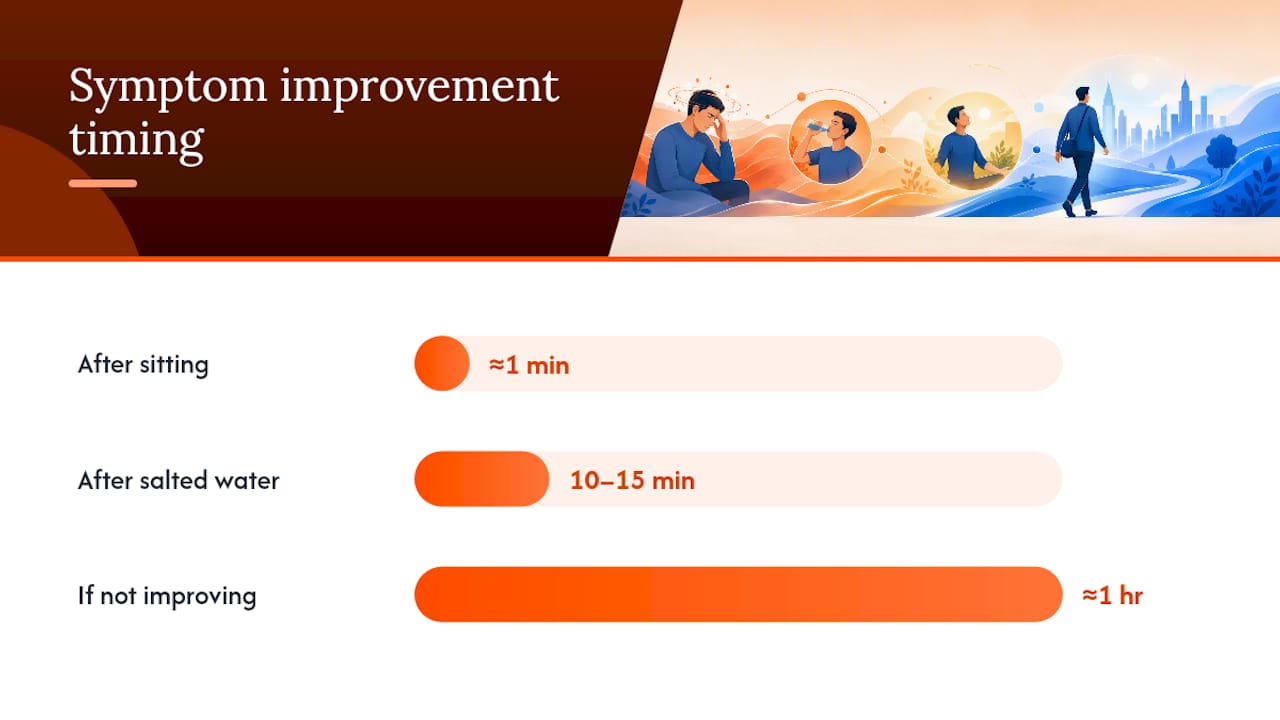
Watch the clock. Head-rush symptoms from mild volume depletion typically ease within a minute or so of sitting down, and salted water tends to settle things further within 10 to 15 minutes. If you’re not improving within an hour, or if anything more serious shows up, treat it as a signal to stop fasting for the day and seek care.
Pro Tip: Keep a small packet of salt or an electrolyte sachet within reach during your fasting window. The two minutes it saves you when symptoms start is exactly the window where an episode either resolves or escalates.
Reasonable hydration habits during your feeding window make these episodes rarer to begin with. A hydration guide hydration strategies during intermittent fasting walks through how to structure fluid and electrolyte intake around your specific fasting schedule rather than guessing.
How do you prevent dizziness on your next fast?
Prevention works in layers. What you do the same day matters, but so does what you build over weeks and months.
On the day of the fast, spread your fluid and electrolyte intake across your eating window instead of loading it all at once. Food-first sources work well for most people: a cup of broth, a meal with visibly salted food, or potassium-rich choices like potatoes, spinach, or bananas during your eating period. Electrolyte products have their place, particularly low-sugar mixes when food isn’t practical, but conservative dosing matched to your actual activity level beats a fixed high dose taken out of habit. More sodium than your kidneys need just gets excreted anyway, and overshooting is its own problem if you have blood pressure concerns.
Over days and weeks, the biggest lever is how you change your fasting window. Jumping from a 12 hour fast to an 18 hour fast overnight asks your kidneys and blood vessels to adapt faster than they’re built to. Stepping the length up gradually, adding an hour or two every few days rather than all at once, tends to produce fewer symptoms during the transition. There’s also a timing effect worth knowing about: eating windows placed earlier in the day, aligned with your natural circadian rhythm, appear to carry lower dizziness risk than windows pushed late into the evening.
A few other adjustments compound over time:
Move hard workouts to your eating window when possible, since exercising fasted amplifies fluid and sodium losses
Add extra electrolytes on hot days or heavy training days regardless of your fasting schedule
Cut back on caffeine during long fasts, since it has a mild diuretic effect that works against your sodium retention
Log symptoms by time of day, prior meal, and activity level to spot your own personal triggers
That last point is worth taking seriously. A simple symptom log, even a notes app entry with the time and what you’d eaten or drunk beforehand, often reveals a pattern within a week or two. Some people find privacy-conscious health tracking tools useful here, since it lets you keep biometric and symptom data local rather than syncing it to a cloud service. Pairing that with a wearable tracking heart rate and activity intensity can also flag whether dizziness episodes cluster around specific exertion levels. ForgeFast’s guide to intermittent fasting mistakes professionals must avoid covers several other timing errors that tend to show up alongside dizziness complaints.
Who needs to be more careful, and what are the red flags?
Certain medications turn ordinary fasting dizziness into a bigger risk. Blood pressure drugs, especially diuretics, already lower your fluid volume, and stacking that with fasting-related sodium loss can push blood pressure down further than intended. Insulin and sulfonylureas carry a different danger: fasting reduces how much glucose you’re taking in, and without a dose adjustment, these medications can drop blood sugar into genuinely dangerous territory.
A few groups should talk to a clinician before starting or continuing a fasting routine that’s causing dizziness:
People with diagnosed diabetes, especially on insulin or sulfonylureas
Anyone with existing heart disease, arrhythmia, or a history of fainting
People with kidney disease, where sodium and fluid balance are already compromised
Pregnant individuals, who have different fluid and metabolic demands
Older adults, who face a higher fall risk from any orthostatic drop
Certain symptoms mean stop fasting now, not later: fainting or near fainting, chest pain, a racing or irregular heartbeat that doesn’t settle, confusion, or dizziness that persists well beyond an hour despite fluids and rest. Harvard Health’s guidance on fasting side effects is direct on this point: dizziness in anyone taking blood pressure or diabetes medication warrants a conversation with a clinician before you keep fasting, not after weeks of pushing through it.
If you do see a doctor, bring specifics. Note when episodes happen relative to your fasting window, how long they last, and any blood pressure or glucose readings you’ve taken at home. A full medication list, including over-the-counter diuretics or supplements, helps your clinician spot an interaction you might not have considered.
Why habit structure matters more than willpower here
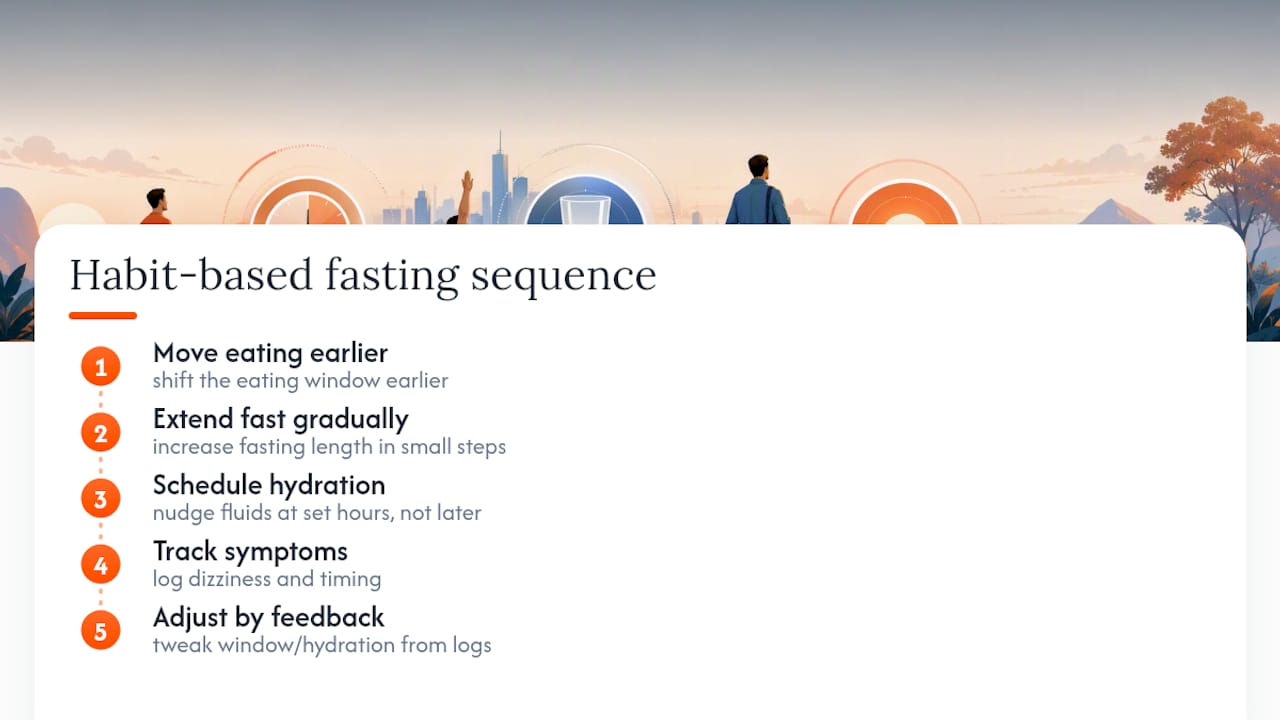
Most dizziness advice treats symptoms as something to manage after they show up. That’s backwards. The people who fast for years without recurring dizziness aren’t tougher, they’re better sequenced, moving their eating window earlier, extending fast length in small steps, and treating hydration as a schedule rather than an afterthought.
That’s the gap a structured fasting framework can address. Instead of asking someone to jump straight into a 16 hour fast, such an approach scaffolds the transition, tracking symptoms, nudging hydration at the right hours, and adjusting the eating window gradually enough that the body’s sodium and glucose regulation can keep up. The physiological shock that produces most dizziness cases isn’t inevitable. It’s usually a pacing problem, and pacing is a habit question before it’s a biology question.
— Tony Lindsay
Build a fasting routine that doesn’t fight your body
A rigid schedule with no room for adjustment is how most people end up dizzy, frustrated, and quitting within a month. An opposite approach involves structured protocols that step your fasting window up gradually, paired with habit coaching that flags hydration and electrolyte timing before symptoms start rather than after.

New users typically start with a shorter fasting window, a hydration routine built around their own schedule, and coaching nudges that adjust as their body adapts. If your last attempt at fasting ended with a head rush and a bad afternoon, that’s usually a pacing issue rather than a sign fasting isn’t for you. Check out the ForgeFast fasting program to see how a structured, gradual approach can get you through the adaptation period without the dizziness derailing your progress.
This article is general information, not a substitute for advice from a qualified doctor. Consult a qualified healthcare professional about your own circumstances before acting on anything here.
Sources
Recommended
Comments