Busy Professionals: Make Green Tea a Fasting Habit (1–3 Calorie Cups)
Yes. Plain, unsweetened green tea typically doesn’t break an intermittent fast. A standard cup carries only 1 to 3 calories, far below the threshold most fasting protocols use to define a “clean” fast, and its main compounds, EGCG and L-theanine, may actually support the metabolic goals you’re fasting for. The exceptions matter, though: sweeteners, milk, and high-dose extracts change the equation, and anyone on medication or pregnant should run this by a clinician first.
TL;DR:
Unsweetened green tea contains only 1 to 3 calories per cup, making it unlikely to break a typical intermittent fast unless mixed with sweeteners or milk.
Catechins like EGCG activate cellular pathways involved in fasting benefits, but human evidence confirming they significantly enhance autophagy remains limited.
Drinking up to three to five cups of green tea daily is generally safe during fasting, provided caffeine intake stays below 400 milligrams and is spaced out to avoid sleep disruption.
Additives such as sugar, milk, or caloric creamer break the fast, while sweeteners may or may not influence insulin, so strict fasts often exclude them.
Excessive green tea, especially on an empty stomach, can cause stomach irritation or interact with medications, so moderation and caution are advised.
Table of Contents
Green Tea Fasting: What Actually Happens in Your Body
Once you get past the “does it break my fast” question, the more interesting one is what green tea is doing while you’re fasting. A brewed cup has almost no caloric footprint, and the compounds inside it interact with the same biological switches that fasting flips.
Catechins, especially EGCG, activate AMPK (a cellular energy sensor) and appear to send inhibitory signals along the mTOR pathway, the same pathway fasting suppresses to encourage autophagy, your body’s cellular cleanup process. A mechanistic review of green tea catechins lays out this AMPK/mTOR connection clearly, though the authors are careful to note that human evidence for green tea adding meaningfully to fasting-induced autophagy is still thin. It’s a plausible mechanism, not a proven multiplier.
On the calorie question specifically: 1 to 3 calories per cup is not enough to trigger a real insulin response. Insulin release is tied to how much glucose actually hits your bloodstream, and a fraction of a gram of carbohydrate doesn’t move that needle. If you want the deeper physiology behind that threshold, how insulin governs fasting breaks down exactly why small intakes stay under the radar.
There’s also a fat-oxidation angle worth knowing:
Some trials show green tea catechins modestly boosting fat oxidation, with one study on moderate exercise reporting increases in the 10 to 17 percent range, though results vary by dose and by study design.
Smaller cohort research has linked higher green tea intake to improved metabolic responses during intermittent fasting in people with metabolic disease, but that’s associative data from limited samples, and the authors themselves call for larger randomized trials before anyone treats it as settled.
The honest takeaway: the mechanisms are real and the early signals are encouraging, but nobody has run the large, controlled human trial that proves green tea meaningfully amplifies fasting’s metabolic effects. Treat it as a complementary habit, not a biohack.
How Much Caffeine Is Too Much While Fasting?
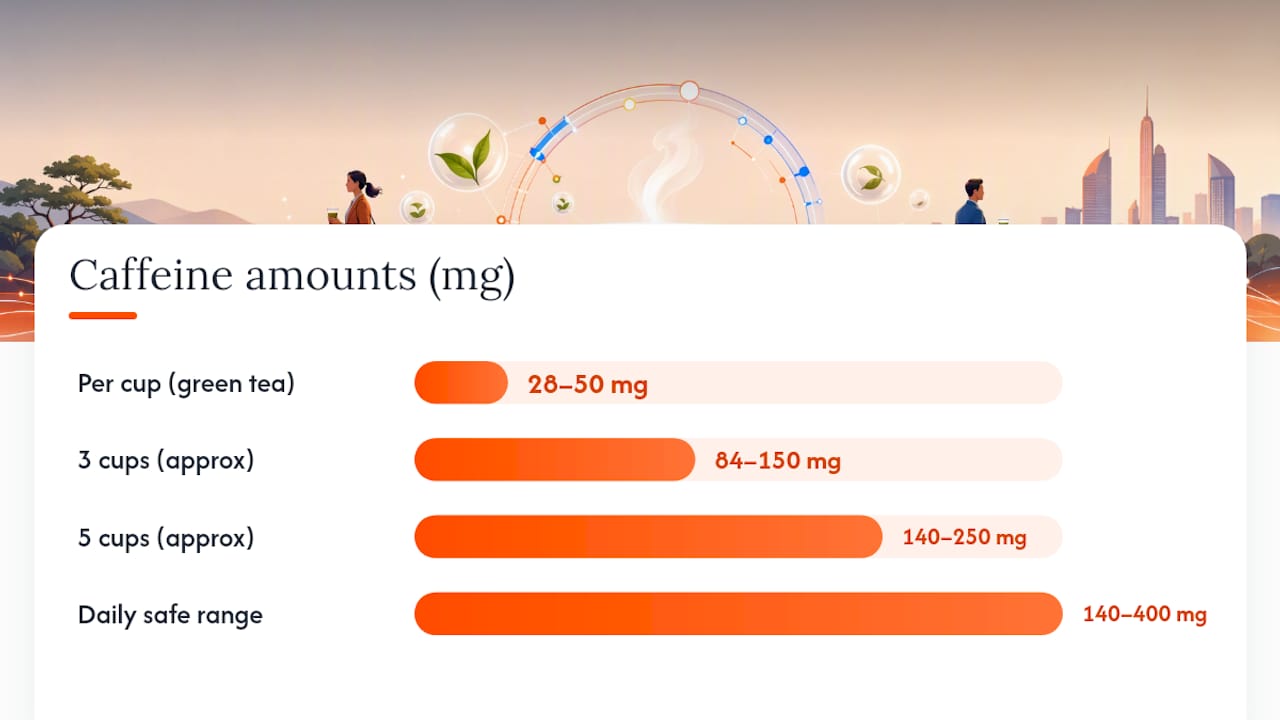
A typical cup of green tea carries somewhere between 28 and 50 milligrams of caffeine, noticeably less than coffee but not negligible if you’re drinking it back to back. Healthline’s guidance on caffeine sensitivity puts safe daily ranges anywhere from 140 to 400 milligrams depending on individual tolerance, which for most people work out to roughly 3 to 5 cups spread across the day.
Fasting already nudges cortisol upward slightly. Stack too much caffeine on top of that and you can push stress hormones higher, which sometimes shows up as jitteriness, disrupted sleep, or a fasting experience that feels harder than it should. Sleep quality matters here specifically because poor sleep undermines the same metabolic recovery fasting is supposed to support.
A few practical rules keep this in check:
Cap yourself around 3 to 5 cups of brewed green tea daily, spaced out rather than front loaded.
Stop drinking caffeinated tea 4 to 6 hours before bed.
Switch to decaf green tea or a caffeine free herbal tea in the afternoon if you’re sensitive.
Watch for a racing heart, anxious energy, or trouble falling asleep. Any of those means cut back, not push through.
Pro Tip: If you notice your resting heart rate creeping up on days you drink more tea, that’s your body telling you your personal ceiling is lower than the general guidance suggests.
Matcha, Extracts, and Additives: What Actually Breaks a Fast
Not all green tea is created equal once you start adding things to it. Here’s how the common forms stack up:
Brewed green tea, unsweetened. This is the safest default. Near zero calories, and the mechanisms discussed above apply cleanly.
Plain matcha whisked with water only. Matcha is stone ground whole tea leaf, so it delivers more catechins and caffeine per serving than steeped tea. Use a smaller portion, roughly half a teaspoon, to stay in the same fasting-friendly zone.
Concentrated EGCG extracts or supplements. These deliver catechins at doses far above what whole-leaf tea provides, and they’re more likely to irritate an empty stomach. They’re also unnecessary. Brewed tea already delivers catechins at tolerable levels for most people.
Anything with sugar, honey, milk, or caloric creamer. These break a fast, full stop. The calories are no longer negligible.
Zero-calorie sweeteners. This one splits opinion. The sweetener itself won’t spike insulin meaningfully, but some fasting purists argue that sweet taste alone can trigger a cephalic insulin response. If strict metabolic fasting is your goal, skip the sweetener during the fasting window and save flavored tea for your eating window.
Timing matters as much as content. Sip slowly during your fast to manage hunger, and consider a slightly stronger cup right as you break your fast. The catechins may help blunt the glucose spike that comes from your first meal.
Side Effects and When to Pull Back on Green Tea While Fasting
An empty stomach makes green tea’s tannins more noticeable. Tannins can irritate the stomach lining and trigger nausea or a queasy, acidic feeling, especially with strong or over steeped tea. Cold brewing overnight or steeping at a lower temperature pulls out less tannin and tends to be much gentler.
A few situations call for real caution:
If you take medication, particularly anything metabolized by the liver, check with a clinician. Green tea catechins can interact with certain drugs.
Green tea’s tannins can reduce iron absorption from food, which matters more if you’re anemic or eating iron-rich meals right after your fast.
Pregnant or breastfeeding readers, and anyone with an arrhythmia or other cardiac condition, should limit caffeine intake and get personalized guidance rather than relying on general rules.
Stop and reassess if you notice dizziness, heart palpitations, or gastric pain that worsens rather than settles.
A Simple Green Tea Fasting Routine You Can Start Today
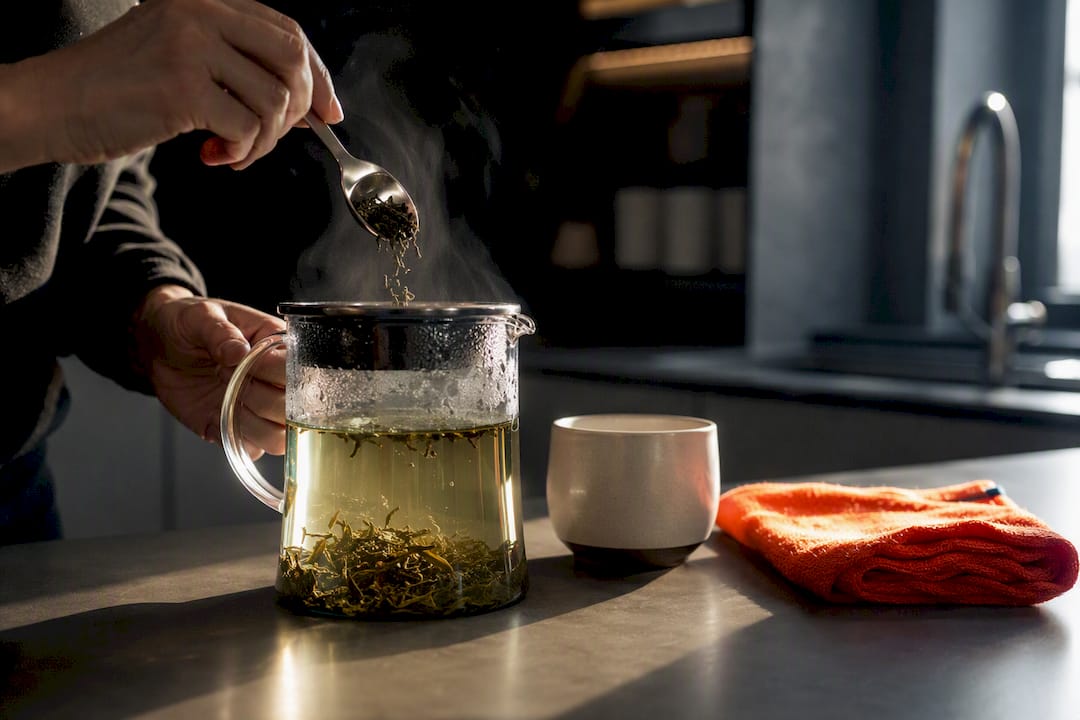
Brewing technique changes how your stomach reacts more than most people expect. Use water around 160 to 180°F, not boiling, and steep for 1 to 3 minutes. Oversteeping is usually what causes the bitter, tannin-heavy cup that upsets an empty stomach. If mornings are rushed, cold brewing overnight extracts fewer tannins and delivers a smoother cup with no equipment beyond a jar.
A workable daily rhythm looks like this:
One cup on waking, brewed light, to ease into the fasting window without shocking your stomach.
A second cup mid-fast, sipped slowly during your hungriest stretch. Small sips seem to help suppress ghrelin and support satiety, per research on tea compounds and appetite regulation.
A stronger cup, or a small matcha serving, right at the end of your fasting window if you want extra support blunting your first meal’s glucose response.
Nothing caffeinated within 4 to 6 hours of bedtime. Swap in decaf or an herbal tea instead.
Skip bottled sweetened teas and skip high-dose extracts entirely. They add risk without adding benefit over a well-brewed cup.
Pro Tip: Keep your evening tea decaf and herbal. It protects the sleep quality your metabolism depends on just as much as the fast itself.
The ForgeFast Take: Making Green Tea Part of the Habit, Not Just the Diet
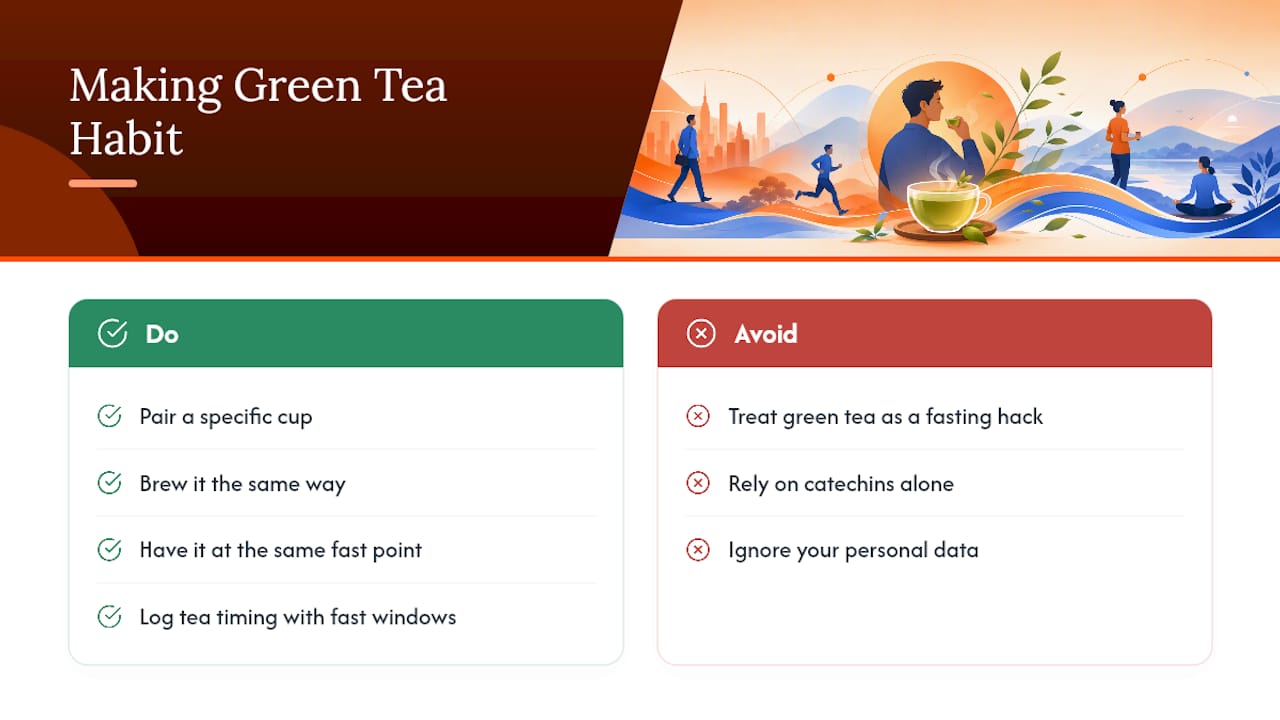
Most people treat green tea as a fasting hack. We’d rather see it treated as a habit cue. Pair a specific cup, brewed the same way, at the same point in your fast, and you get a reliable signal your brain learns to associate with “I’m handling this fast well,” which does more for adherence than any catechin ever will.
If you’re tracking your fasting windows already, log your tea timing alongside it. Within a couple of weeks you’ll usually see a pattern: whether an afternoon cup pushes your sleep later, or whether a mid-fast cup genuinely quiets your hunger. That kind of personal data beats generic advice every time, and it’s exactly the structure ForgeFast’s habit tracking is built to support.
— Tony Lindsay
Sources
Ready to turn guidance like this into an actual daily habit instead of a one-off article you forget by Thursday? ForgeFast builds structured fasting protocols with the tracking and coaching to back them, so small choices like your tea routine actually stick.
Recommended
Comments