Start Fasting Safely with a Two Week Beginner Plan


Start with a 12-hour overnight fast that includes the hours you’re asleep, then hold that pattern for about a week before extending it. That single step gets your body used to a fasting rhythm without shocking your system. Drink water, black coffee, or unsweetened tea during the fast, and check with a clinician first if you take medication or manage a chronic condition.
TL;DR:
Starting with a 12/12 fasting schedule for about a week helps your body adapt gradually and reduces the risk of feeling shaky or irritable.
Longer fasts like 14/10 or 16/8 should be introduced slowly, typically after two weeks, to improve adherence and minimize discomfort.
People on medication, pregnant or breastfeeding women, or those with chronic health conditions should consult a doctor before fasting, especially if they take blood sugar or blood pressure drugs.
Breaking a fast with a meal high in protein, fiber, and healthy fats stabilizes blood sugar and prevents cravings, unlike sugary or processed foods.
Tracking fasting hours, energy levels, sleep quality, and weekly weight can help gauge progress without obsessing over daily fluctuations.
Table of Contents
How to Start Fasting: A Two-Week Starter Plan
The mistake most beginners make is jumping straight to a 16-hour fast on day one. That’s how you end up shaky, irritable, and quitting by Thursday. A staged approach works better because it gives your appetite hormones and blood sugar time to recalibrate.
Here’s a simple sequence:
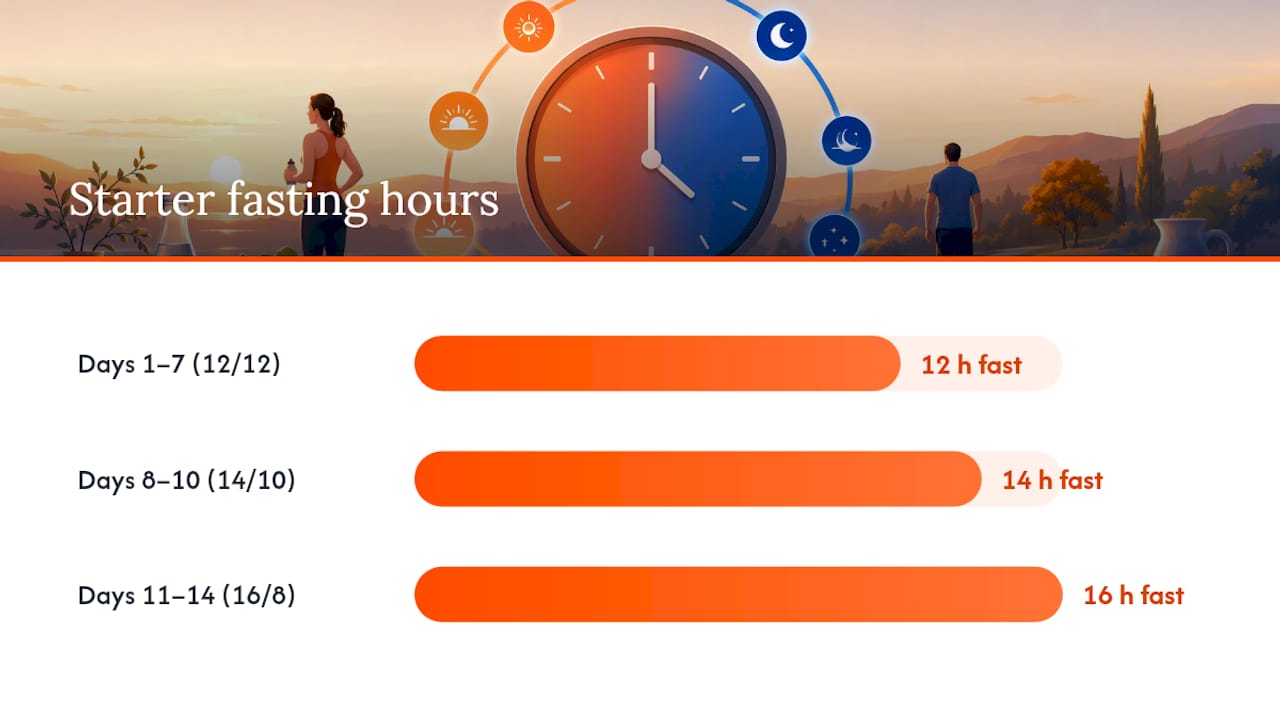
Days 1 to 7: Run a 12/12 schedule. Stop eating around 8:00 PM and don’t eat again until 8:00 AM. Most of this fast happens while you sleep, which is exactly why Johns Hopkins Medicine points to it as the easiest entry point.
Days 8 to 10: Push to 14/10. Push breakfast back two hours or move dinner two hours earlier, whichever fits your day.
Days 11 to 14: Try one or two 16/8 days. Don’t force every day into a 16-hour window right away.
Keep your hands busy during the new hungry stretch. A walk, a work call, a load of laundry, anything that isn’t standing in front of the fridge deciding if you’re actually hungry or just bored. Light movement in a fasted state is fine for most healthy adults and can even make the last hour easier to push through.
Pro Tip: Set a phone alarm for the moment your eating window opens instead of watching the clock all morning. Checking the time repeatedly makes hunger feel bigger than it is.
Which Fasting Schedule Actually Fits Your Life?
There’s no single “best” method, only the one you’ll actually repeat. Harvard Health notes that longer fasting stretches carry a higher dropout rate, mainly because they clash with work schedules and family meals.
12/12: A 12-hour eating window and 12-hour fast. Best for absolute beginners easing in without much disruption.
14/10: A slightly tighter window. Good for people who want more benefit without skipping a meal entirely.
16/8: The most popular time-restricted method, typically skipping breakfast or an early dinner. Works well once your body has adjusted through the earlier stages.
5:2: Eating normally five days a week and cutting calories sharply on two non-consecutive days. Fits people who dislike daily restriction but can handle two harder days.
Alternate-day fasting: Fasting every other day. Demanding, and generally not a starting point for beginners.
Shift workers and highly active people often do better on 14/10 or a flexible 12/12, since rigid 16/8 windows can collide with odd sleep schedules or training sessions. Pick whatever you can hold for two to four weeks straight before judging it.
Who Should Talk to a Doctor Before Fasting?
Fasting is broadly safe for healthy adults, but it changes how your body handles blood sugar, blood pressure, and electrolytes. That matters a lot if you’re on medication that assumes regular meals.
Check in with a clinician first if any of these apply to you:
You’re pregnant or breastfeeding
You have type 1 diabetes or take insulin
You have a history of an eating disorder
You take medication for blood pressure, heart disease, or blood sugar
You have a chronic kidney or liver condition
Cleveland Clinic advises talking to your prescriber about medication timing before you start, since some drugs need food to be absorbed properly or to avoid dangerous blood sugar drops. Lightheadedness, fatigue, or a racing heart during a fast can sometimes be managed with an electrolyte supplement, but severe symptoms mean stop the fast and eat.
Weight loss under intermittent fasting tends to run around 0.5 to 1 pound a week when the approach is sustained rather than pushed too hard too fast.
What Should You Eat When You Break a Fast?
The eating window is where most beginners undo their own progress. Breaking a 16-hour fast with a doughnut and a soda spikes blood sugar, triggers a second wave of hunger within the hour, and leaves you snacking all evening.
Build your first meal around:
A protein source (eggs, chicken, Greek yogurt, tofu)
A fiber source (vegetables, beans, whole fruit)
A healthy fat (olive oil, avocado, nuts)
A minimally processed carbohydrate (oats, rice, potatoes) if your window allows more than one meal
A simple plate: two eggs, a handful of spinach sauteed in olive oil, and a slice of whole grain toast. That combination keeps you full through the rest of your window instead of chasing sugar every 90 minutes.
Pro Tip: Skip artificial sweeteners during your fasting hours. Some can trigger a metabolic response that works against the fast, even though they contain no calories.
How Do You Track Progress Without Overthinking It?
You don’t need a spreadsheet. Track three things: your fasting window, your energy or mood, and how you’re sleeping. Weight is worth noting weekly, not daily, since daily fluctuation from water weight will drive you crazy for no reason.
A basic phone timer or a fasting app handles the window tracking. A one-line daily note (“Day 9, felt sharp by 11am, slept fine”) tells you more over three weeks than any chart will.
Log your actual fasting hours, not your intended hours
Rate energy and mood on a simple 1 to 5 scale
Check weight trends weekly, not daily
Note sleep quality, since poor sleep often makes fasting feel harder than it is
Give it two to four weeks before deciding whether a schedule works for you. If you’re still miserable after that window, drop back a stage rather than pushing through.
How Some Structured Fasting Programs Stage Your First Month
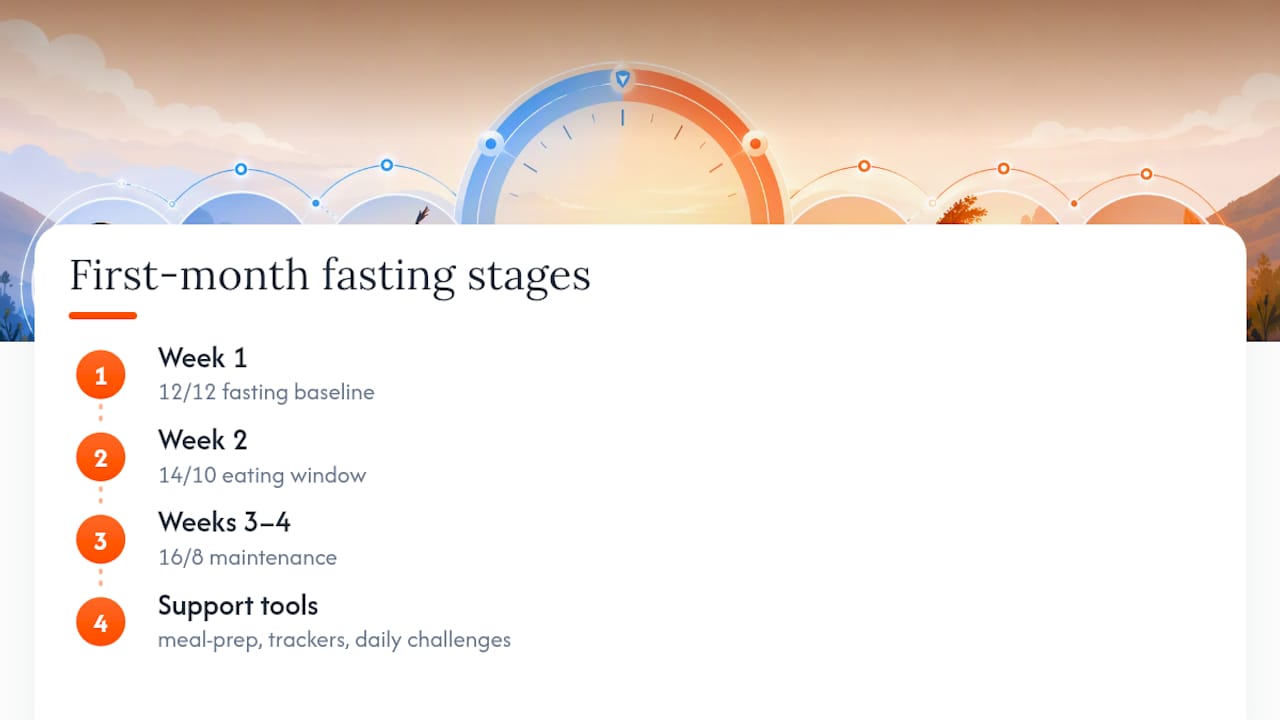
Some programs build their approach around the same staged logic outlined above, just with added structure. The framework pairs a gradual window progression with psychological coaching aimed at the mental aspects of fasting that often challenge participants.
A typical first month might move from a 12/12 baseline in week one, toward 14/10 by week two, and into 16/8 days by weeks three and four, coupled with meal-prep guidance to help manage the eating window. Trackers and daily challenges can encourage regular engagement rather than relying on willpower alone.
Realistic Expectations for Your First Month
The first week feels harder than it should, and that’s normal, not a sign you’re doing it wrong. Give any new schedule two to four weeks before judging whether it works for you.
Small, boring consistency beats a strict rule you abandon after five days. If something feels off physically, especially if you’re on medication or managing a condition, talk to a clinician before pushing further.
— Tony Lindsay
Get Guided Support for Your First Month of Fasting
Figuring out the right window, timing meals around a work schedule, and staying motivated through week one is a lot to manage alone. ForgeFast turns the plan in this article into a structured program: staged fasting windows, coaching cues for the hardest hunger moments, meal-prep guidance for your eating window, and simple trackers so you’re not guessing whether it’s working.

If you want a framework rather than a checklist, start with ForgeFast’s intermittent fasting program and try the beginner staging plan for your first month. Read the simple fasting framework for beginners if you want the full breakdown before committing. And if you take medication or manage a chronic health condition, loop in your clinician before you begin.
Sources
Johns Hopkins Medicine covers how fasting works and adjustment timelines. Cleveland Clinic outlines safety tips. Harvard Health reviews sustainability and weight-loss pacing.
This article is general information, not a substitute for advice from a qualified doctor. Consult a qualified healthcare professional about your own circumstances before acting on anything here.
FAQ
How Do I Start Fasting for the First Time?
Begin with a 12-hour fast that includes your sleep hours, hold it for about a week, then extend gradually toward 14/10 or 16/8 as your body adjusts. Give yourself two to four weeks before judging how well a schedule fits.
What Is the Correct Way to Fast?
There’s no single correct method, but the safest approach for beginners is time-restricted eating, such as 12/12 or 16/8, because most of the fast happens overnight while you sleep. Stay hydrated with water, black coffee, or unsweetened tea, and break the fast with a balanced, protein-forward meal instead of sugary food.
What Can I Drink During a Fast?
Water, black coffee, and unsweetened tea are all fine and won’t break a fast. Avoid artificial sweeteners, since some can trigger a metabolic response that works against your fasting goals.
How Long Does It Take to Adjust to Intermittent Fasting?
Most beginners need about two to four weeks to adapt, with early hunger and irritability typically fading as the body adjusts. Sticking through that early discomfort is one of the strongest predictors of long-term adherence.
Who Shouldn’t Try Intermittent Fasting Without Medical Guidance?
Pregnant or breastfeeding people, those with type 1 diabetes, anyone with a history of an eating disorder, and people on medication for blood pressure, heart disease, or blood sugar should consult a clinician before starting. Fasting changes how the body handles blood sugar and electrolytes, which can interact with certain conditions and medications.
Recommended
Comments