Meal Prep Strategies for Fasting Days That Actually Work

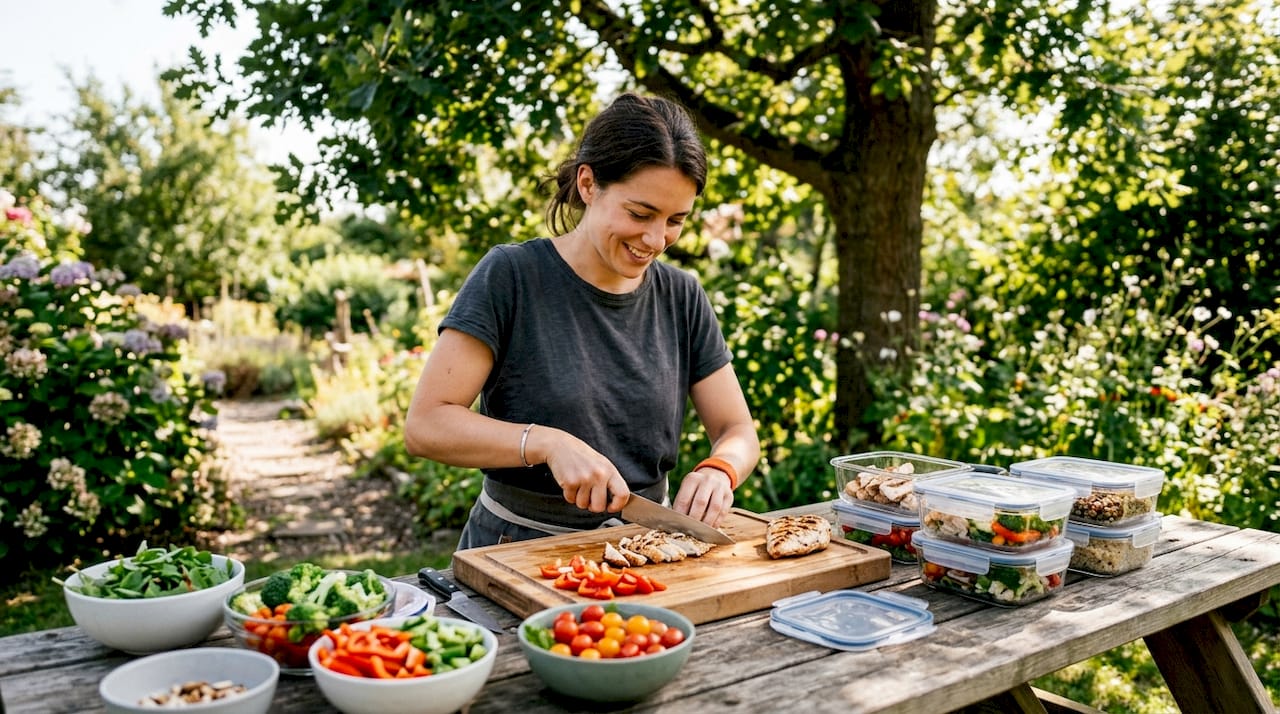
Meal prep strategies for fasting days are the single most effective way to reduce decision fatigue and protect your nutritional intake during restricted eating windows. Without a plan, hunger drives poor choices. With one, you eat with purpose. The standard guidance for intermittent fasting, including protocols like 16:8, recommends 25–35g of protein per meal to preserve muscle and stabilize blood sugar. Batch cooking, simplified meal formulas, and timed preparation are the three pillars that make fasting sustainable long-term.
1. Meal prep strategies for fasting days: start with batch cooking
Batch cooking is the foundation of every effective fasting meal plan. A single 90-minute Sunday session cooking proteins, vegetables, and grains gives you enough prepped food to cover an entire week of fasting days. That one investment eliminates daily cooking decisions when hunger is highest and willpower is lowest.
The method works best when you treat each ingredient as a building block rather than a fixed dish. Cook a large batch of chicken thighs, hard-boiled eggs, or salmon. Roast two sheet pans of vegetables. Prepare a grain like brown rice or quinoa. From those three categories, you can assemble a complete meal in under five minutes without repeating the same plate twice.
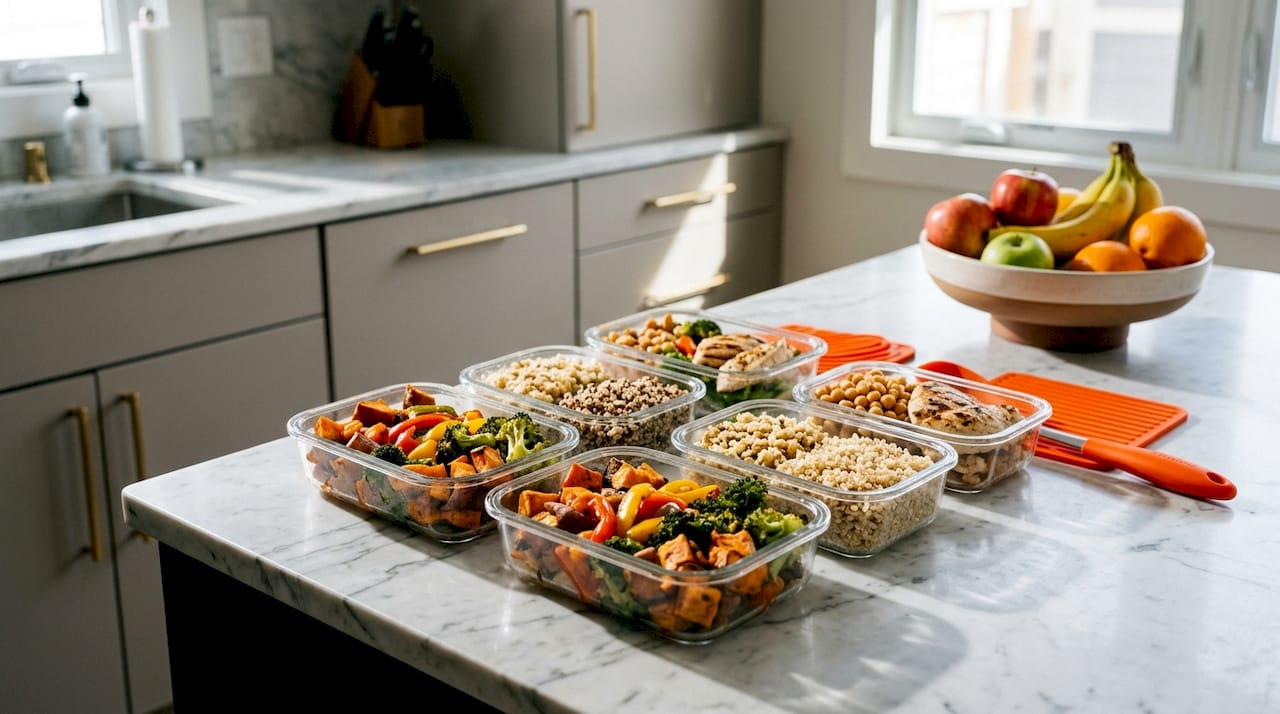
Pre-portioning is the step most people skip. Dividing meals into containers immediately after cooking removes the temptation to eat beyond your target during the eating window. It also cuts prep stress on weekdays to near zero. Think of it as making decisions once, on Sunday, so you never have to make them again at 7 p.m. on a Tuesday.
Pro Tip: Label each container with the protein content. When you can see “32g protein” on the lid, you make better choices without counting anything in the moment.
2. What to prioritize in fasting day meals
Protein is the non-negotiable anchor of every fasting day meal. Hitting 25–35g of high-quality protein per meal preserves lean muscle and keeps blood sugar stable across the eating window. Practical sources include Greek yogurt, eggs, canned salmon, chicken breast, lentils, and cottage cheese.
Fiber is the second priority. High-fiber foods slow digestion, extend satiety, and reduce the blood sugar spike that often follows breaking a fast. Vegetables like broccoli, spinach, and zucchini, combined with legumes or oats, deliver fiber without adding excessive calories. Aim to fill at least half your plate with these foods at every meal.
Hydration during fasting days is more complex than most people realize. Water-rich foods and a pinch of sea salt support electrolyte balance when you are not eating for 16 or more hours. Cucumber, celery, watermelon, and broth-based soups all count toward hydration and help prevent the fatigue and headaches that derail early fasting attempts.
Key nutritional priorities for fasting day meals:
Protein first: Target 25–35g per meal from whole food sources.
Fiber-rich carbs: Choose vegetables, legumes, and whole grains over refined options.
Healthy fats: Include avocado, olive oil, or nuts to slow digestion and extend fullness.
Electrolytes: Add sea salt to meals or drink mineral water during the fasting window.
Water-rich foods: Prioritize cucumber, leafy greens, and broth to support hydration.
3. How to break your fast without undoing your progress
The first meal after a fast sets the tone for everything that follows. Starting with small, easily digestible portions, such as bone broth, a handful of nuts, or a small portion of yogurt, prevents digestive stress and avoids the blood sugar spike that comes from eating a large meal on an empty stomach. This is not a snack. It is a deliberate primer for your digestive system.
After the starter portion, wait 15–20 minutes before eating your main meal. That pause gives your gut time to signal readiness and reduces the likelihood of overeating. People who skip this step often report bloating, discomfort, and a rebound hunger spike within an hour.
Pacing your eating window matters as much as what you eat. Spreading two meals across a 6–8 hour window, rather than eating both within 90 minutes, maintains the metabolic benefits of fasting while keeping energy levels stable. Rushed eating windows often produce the same hormonal chaos as skipping the fast entirely.
Pro Tip: Start cooking 30 minutes before your eating window opens. The smell and activity of cooking satisfies part of the hunger response and prevents impulsive snacking the moment the clock hits your start time.
Breaking your fast effectively:
Begin with bone broth, nuts, or a small portion of yogurt.
Wait 15–20 minutes before your main meal.
Spread meals across the full eating window, not back to back.
Avoid high-sugar foods as your first meal.
Drink water or herbal tea during the transition period.
4. Why repeating meal formulas is a feature, not a flaw
Intentional repetition of meal plans simplifies shopping, reduces mental load, and improves long-term fasting adherence. Most people treat variety as a virtue in meal planning. The research says otherwise. Rotating a shortlist of five to seven proven meals is more sustainable than chasing novelty every week.
The practical version of this looks like a rotating formula: two breakfast options, three lunch options, and two dinner options. You cycle through them across the week. Shopping becomes predictable. Prep becomes faster. And because the meals are already proven to work for your hunger and energy levels, you stop second-guessing every choice.
Reducing decision fatigue through simple, repeated meal plans directly improves fasting adherence. Every decision you eliminate before the eating window opens is one less opportunity for hunger to override your intentions. Repetition is not boring. It is disciplined.
Meal slot | Formula example | Protein source |
Breakfast | Eggs + greens + whole grain toast | 3 eggs (18g protein) |
Lunch | Grain bowl + roasted veg + protein | Chicken or lentils (30g protein) |
Dinner | Stir-fry + rice + leafy greens | Salmon or tofu (28g protein) |
Snack (optional) | Greek yogurt + berries | Greek yogurt (15g protein) |
Rotating these four slots across the week covers your nutritional bases without requiring daily creativity. Swap the protein source or the vegetable each week to keep it fresh without rebuilding the entire plan.
5. Choosing the right meal prep method for your lifestyle
Not every fasting meal prep approach fits every schedule. The three main methods each have a clear use case.
Batch cooking suits people with one free block of time per week. You cook everything on Sunday and assemble meals daily. The upside is maximum time efficiency. The downside is that food quality can decline by day five or six, particularly for fish and leafy greens. Store proteins and grains separately from sauces and dressings to extend freshness.
Daily fresh prep works for people with flexible schedules and a preference for hot, freshly cooked meals. You spend 20–30 minutes cooking each day rather than 90 minutes once a week. This method produces better texture and flavor but requires consistent daily effort. It is best suited to people who work from home or have predictable evenings.
Convenience-based prep uses pre-washed salad kits, rotisserie chicken, canned legumes, and pre-cooked grains to assemble meals in under 10 minutes without cooking from scratch. This is the most accessible entry point for beginners. The trade-off is higher cost and less control over sodium and additives. For people new to fasting schedules, this method lowers the barrier enough to build the habit before adding cooking complexity.
Method | Time investment | Best for | Main trade-off |
Batch cooking | 90 min once per week | Busy professionals | Food freshness by day 5–6 |
Daily fresh prep | 20–30 min per day | Flexible schedules | Requires daily consistency |
Convenience-based | Under 10 min per day | Beginners | Higher cost, less control |
The right method is the one you will actually repeat. Start with convenience-based prep if you are new to fasting meal preparation. Graduate to batch cooking once the habit is established.
6. Easing into fasting to protect your prep investment
Gradually increasing the fasting window over 4–6 days prevents the early dropout that kills most fasting attempts before meal prep even becomes relevant. Starting at 12 hours and adding one hour every two days is more effective than jumping straight to 16:8 on day one. Your prep investment only pays off if you stay consistent long enough to see results.
Starting a 16:8 schedule, when done correctly, produces 0.5–1kg of weekly fat loss without calorie overcompensation during the eating window. That result depends entirely on what you eat during those eight hours. Prepped, portioned, protein-rich meals are what make that number real rather than theoretical.
Avoid the common mistake of treating the eating window as a reward period. The eating window is a fueling window. Prepped meals enforce that mindset automatically because the decision is already made before hunger enters the picture. People who skip prep and eat freely during their window consistently undermine the metabolic work done during the fast.
Pro Tip: Track your fasting adherence and meal timing with a dedicated app. Seeing your streak builds the same psychological momentum as seeing the number on the scale move.
Key takeaways
Effective fasting meal preparation combines batch cooking, protein-first nutrition, and repeated meal formulas to reduce decision fatigue and sustain fasting adherence long-term.
Point | Details |
Batch cook once per week | A 90-minute Sunday session covers an entire week of fasting day meals. |
Hit 25–35g protein per meal | This target preserves muscle and stabilizes blood sugar during eating windows. |
Break fasts with small portions | Start with bone broth or nuts before your main meal to avoid digestive stress. |
Repeat meal formulas intentionally | Rotating five to seven proven meals reduces mental load and simplifies shopping. |
Match prep method to your schedule | Batch cooking, daily fresh prep, and convenience-based prep each suit different lifestyles. |
What I have learned after years of watching people fast
The biggest mistake I see is people treating meal prep as optional. They commit to the fasting schedule but leave the eating window to chance. That is where the plan falls apart every time. Hunger at hour 15 does not make rational decisions. Prepped food in the fridge does.
The second pattern I have noticed is that people overcomplicate their fasting day meal ideas. They search for elaborate recipes, buy unusual ingredients, and burn out within two weeks. The clients who succeed long-term eat the same seven meals on rotation and feel no shame about it. Simplicity is the strategy.
My honest recommendation: avoid the common fasting mistakes that derail most people before they build momentum. Ease into the fasting window gradually. Prep your protein first. Repeat what works. The mental discipline that fasting builds is real, but it requires structure to develop. You cannot white-knuckle your way through a 16-hour fast with an empty fridge and no plan.
— Tony Lindsay
ForgeFast and the structure behind sustainable fasting

ForgeFast is built around the insight that fasting fails without structure, not willpower. The ForgeFast method gives you a clear framework for meal timing, protein targets, and fasting window progression so you are never guessing what to eat or when. It addresses the mental side of fasting as directly as the nutritional side, which is where most programs fall short. If you are ready to build a fasting practice that holds up past the first two weeks, ForgeFast provides the structure to make it last.
FAQ
What should I eat on a fasting day?
Focus on meals with 25–35g of protein, fiber-rich vegetables, and healthy fats. These three components extend satiety and prevent blood sugar crashes during the eating window.
How much time does fasting meal prep actually take?
A single 90-minute batch cooking session on Sunday prepares enough food for a full week of fasting days. Daily assembly takes under five minutes when ingredients are prepped and portioned in advance.
How do I break a fast without feeling sick?
Start with a small, easily digestible food like bone broth or a handful of nuts before your main meal. Wait 15–20 minutes to let your digestive system adjust before eating a full portion.
Does eating the same meals every week hurt my nutrition?
Rotating five to seven nutritionally complete meals covers your macro and micronutrient needs without requiring daily variety. Intentional meal repetition improves adherence and simplifies grocery shopping.
How long does it take to see results from fasting?
A correctly followed 16:8 schedule produces 0.5–1kg of weekly fat loss without overeating during the eating window. Results depend on consistent meal prep and staying within your nutritional targets each day.
Recommended
Comments