Rest Days in Your Fasting Protocol: A Recovery Guide


Rest days are a non-negotiable component of any effective fasting protocol, not an optional reward for hard training weeks. The role of rest days in a fasting protocol is to enable muscle repair, restore glycogen, and allow your nervous system to reset so that fasting’s metabolic benefits can fully take hold. Without structured recovery, fasting and training together become a stress load your body cannot absorb. ForgeFast is built on exactly this principle: that sustainable fat loss and performance require both disciplined fasting windows and deliberate rest. This guide explains the physiology, the scheduling logic, and the common mistakes that derail even committed fitness enthusiasts.
How rest days drive muscle recovery during fasting
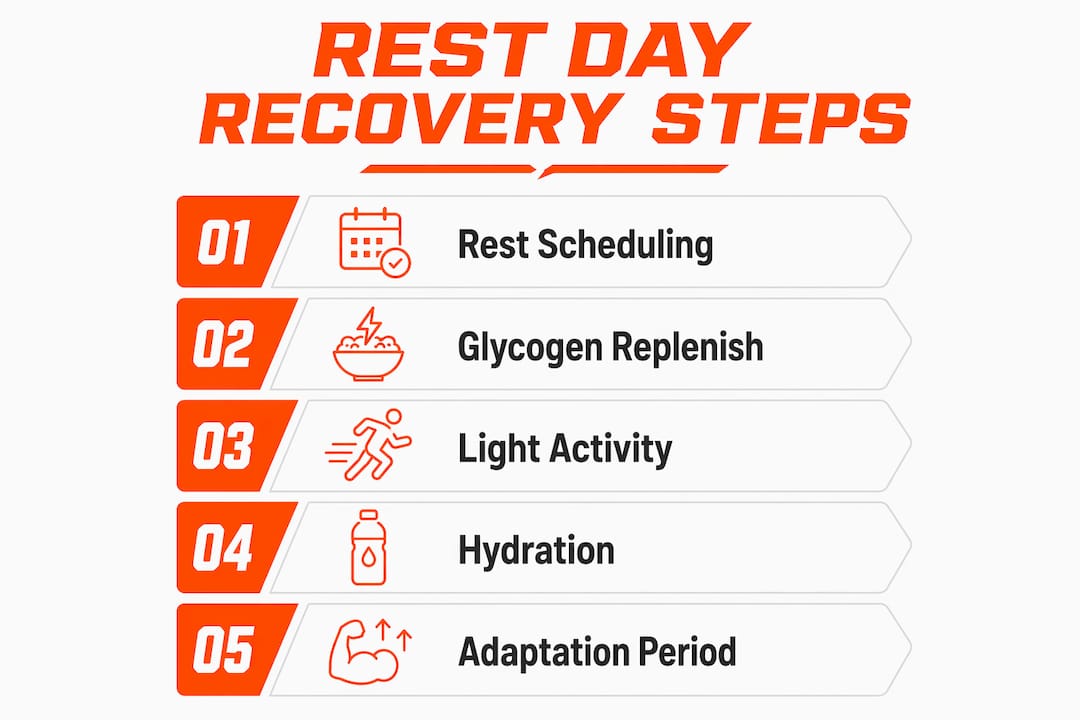
Rest days are when your body actually builds the fitness you worked for. Training creates micro-tears in muscle fibers, and repair happens almost entirely during recovery periods, not during the workout itself. When you layer intermittent fasting on top of training, that repair process depends even more on adequate rest because caloric availability is reduced during fasting windows.
Glycogen replenishment is the other critical function. Your muscles store glycogen as their primary fuel for intense exercise. Fasted training sessions draw down those stores faster than fed sessions. Rest days give your body time to reload glycogen from your feeding window, so your next training session starts from a full tank rather than a deficit.
Your nervous system needs recovery time too. Chronic training without rest elevates cortisol, causing irritability, sleep disruption, and mood swings. That matters even more during fasting, because fasting itself creates a mild hormonal stress response. Stacking training stress on top of fasting stress without rest days pushes cortisol into a range that actively undermines recovery and fat loss.
Key physiological benefits of rest days during fasting include:
Muscle repair: Satellite cells rebuild damaged fibers during rest, increasing strength and size over time.
Hormonal reset: Growth hormone peaks during sleep and rest, supporting lean mass retention during a caloric deficit.
Nervous system recovery: Reduced neural fatigue improves coordination, reaction time, and training quality on your next session.
Injury prevention: Fatigued muscles and connective tissue are far more vulnerable to strains and overuse injuries.
Experts recommend 1–3 rest days per week based on training intensity. That range gives your body enough recovery time without allowing detraining to set in.
Pro Tip: On rest days, light activity like walking or yoga keeps blood flowing to sore muscles without adding training stress. This is called active recovery, and it speeds repair without compromising your fasting window.

What are common fasting protocols and how do rest days fit?
Fasting protocols vary widely in structure, and each one interacts with rest days differently. Understanding those differences helps you schedule recovery without accidentally undermining your metabolic progress.
Time-restricted eating
Time-restricted eating (TRE) compresses your daily feeding window, typically to 8 hours, while fasting for the remaining 16. This is the most common entry point for fitness enthusiasts. Rest days fit naturally here because you maintain the same fasting window regardless of whether you train. The key adjustment on rest days is reducing total caloric intake slightly to match lower energy expenditure, without breaking your fasting schedule.
The 5:2 method
The 5:2 approach involves eating normally five days per week and restricting calories to roughly 500–600 on two non-consecutive days. Modified fasting with partial calorie intake shows better adherence and sustainability than complete water-only fasting. That adherence advantage matters because consistency over months drives results, not perfection over days. Scheduling your two low-calorie days as rest days is a practical move: lower energy output matches lower caloric intake, reducing hunger and performance risk.
Alternate-day fasting
Alternate-day fasting alternates between normal eating days and fast days. This is the most demanding protocol for active people. Placing your training sessions on feeding days and your rest days on fast days is the standard approach. It aligns energy availability with energy demand, which protects both performance and muscle retention.
Intermittent fasting requires a 2–4 week adaptation period before metabolic flexibility develops. During that window, hunger and irritability are common. Scheduling more rest days during the adaptation phase reduces total stress load and makes the transition more manageable.
Protocol | Fast structure | Best rest day placement |
Time-restricted eating | 16:8 daily window | Any day; adjust calories down |
5:2 method | 2 low-calorie days weekly | Align low-calorie days with rest |
Alternate-day fasting | Every other day fast | Fast days as rest days |
Pro Tip: If you are new to fasting, start with time-restricted eating and add rest days on your lowest-intensity training days. Build the habit before increasing fasting duration or frequency.
Why proactive rest day scheduling outperforms reactive recovery
Most fitness enthusiasts take rest days only when they feel exhausted or injured. That reactive approach is the least effective strategy. By the time fatigue is obvious, your performance has already declined and your injury risk has already spiked.
Proactive scheduling uses recovery data to decide when to rest before the body breaks down. The most reliable metric is heart rate variability (HRV). HRV measures the variation in time between heartbeats. A lower-than-baseline HRV reading signals that your nervous system is under stress and needs recovery, even if you feel fine subjectively. Scheduling rest days using recovery data like HRV and performance metrics produces better outcomes than waiting for exhaustion.
A practical proactive rest day system looks like this:
Track HRV daily using a wearable device. Note your personal baseline over two weeks.
Flag low-HRV days as rest or light activity days, regardless of your planned training schedule.
Log sleep quality and mood alongside HRV. Consistent poor sleep or irritability is a recovery signal, not a motivation problem.
Align fasting windows with recovery status. On high-stress recovery days, consider a shorter fast or a slightly larger feeding window to support repair.
Review weekly patterns. If HRV is consistently low, add a rest day to your weekly schedule rather than pushing through.
Detraining effects do not begin until after 10–14 days of complete inactivity, so 1–3 planned rest days per week carry zero risk of losing fitness. That fact removes the psychological barrier many fitness enthusiasts face when scheduling rest. You will not lose your gains by resting. You will lose them by not resting enough.
Digital tools and fasting apps now make it possible to sync fasting windows, feeding windows, and rest day planning in one place, removing the guesswork from scheduling.
How fasting and rest days together improve body composition
Fasting and rest days produce their strongest results when they work together, not in parallel. Fasting triggers a metabolic switch from glucose oxidation to fat oxidation, a process called metabolic switching. Rest days allow the hormonal and cellular repair pathways that fasting activates to complete their work without interference from new training stress.
Synchronizing feeding windows with circadian rhythms enhances insulin sensitivity and lipid metabolism. Early time-restricted eating, where your feeding window closes before evening, produces stronger metabolic benefits than late-night eating patterns. On rest days, this timing becomes even more impactful because your body is in full repair mode and nutrient partitioning is at its most efficient.
Muscle preservation during fasting depends heavily on what you eat in your feeding window. Prioritizing protein quality, fermentable fibers, and micronutrient-dense foods during refeeding supports muscle retention while fasting burns fat. Rest days are not an excuse to eat carelessly. They are an opportunity to refuel with precision.
Key habits that protect body composition during fasting and rest days:
Prioritize protein at every meal in your feeding window to support muscle protein synthesis.
Time carbohydrates around training days rather than rest days to match glycogen demand.
Avoid caloric surpluses on rest days. Maintenance calories, not excess, support recovery without adding fat.
Sleep 7–9 hours on rest days. Growth hormone release peaks during deep sleep and drives lean mass retention.
Common mistakes in fasting protocols related to rest days
The most damaging mistake fitness enthusiasts make is skipping rest days entirely. Training every day while fasting compounds stress without allowing repair. Progress stalls, injury risk climbs, and motivation collapses. The body does not adapt during training. It adapts during recovery.
Binge compensation is the second most common error. Common fasting mistakes include overeating during feeding windows, which erases the caloric deficit fasting creates. Rest days make this worse because lower energy expenditure means your body needs fewer calories, yet the psychological relief of a rest day often triggers larger meals.
Dehydration is underestimated as a fasting problem. Hydration status is the primary driver of fasting-related headaches and fatigue, outweighing the effect of food absence alone. On rest days, you may drink less water because you are not sweating through training. That reduction, combined with fasting, accelerates dehydration. Aim for consistent water intake every day, training or not. Practical hydration strategies during fasting windows make a measurable difference in how you feel and perform.
Additional mistakes to avoid:
Rigid fasting schedules that ignore recovery signals. If your HRV is low and you slept poorly, a shorter fast that day is smarter than strict adherence.
Treating rest days as cheat days. Rest supports recovery. Excess calories on rest days undermine the fat loss fasting creates.
Ignoring mood changes. If fasting consistently triggers severe irritability or binge urges, the protocol needs adjustment, not more willpower.
Pro Tip: Set a water intake reminder on your phone for every two hours during fasting windows, including rest days. Consistent hydration prevents most fasting-related headaches before they start.
Key takeaways
Rest days and fasting protocols work as a system: rest enables the repair and metabolic adaptation that fasting initiates, and skipping either element breaks the cycle.
Point | Details |
Rest days are physiologically required | Muscle repair, glycogen reload, and hormonal reset happen during rest, not training. |
Match fasting type to rest day placement | Align low-calorie fast days with rest days to protect performance and adherence. |
Use recovery data proactively | Track HRV and sleep quality to schedule rest before exhaustion sets in. |
Feeding window quality drives results | Prioritize protein and micronutrients during refeeding to preserve muscle on rest days. |
Hydration prevents most fasting side effects | Drink consistently on rest days to avoid headaches and fatigue during fasting windows. |
Rest days changed how I think about fasting
The conventional fitness mindset treats rest as weakness. I spent years believing that more training plus tighter fasting equaled faster results. The data proved me wrong, and my body confirmed it.
What I have found is that rest days are where the fasting protocol actually delivers. The fat oxidation that fasting triggers, the hormonal repair that training stimulates, the neural recovery that makes the next session productive: all of it happens when you stop. The training and fasting are the stimulus. The rest is the response.
The practical shift that changed everything for me was scheduling rest days before I needed them, not after I crashed. Using HRV as a guide rather than subjective energy levels removed the ego from the decision. Some of my best training weeks started with an unplanned rest day on a Tuesday because the data said my nervous system was not ready.
Fasting protocols also require patience that most fitness enthusiasts underestimate. The 2–4 week adaptation window is real, and it is uncomfortable. More rest during that phase is not a sign of weakness. It is the reason people who stick with fasting long enough to adapt outperform those who push through and burn out.
Technology has made this easier. Syncing fasting windows with recovery metrics through a structured app removes the mental load of constant self-monitoring. That mental clarity is itself a performance advantage.
— Tony Lindsay
ForgeFast: where fasting and recovery work together
ForgeFast is built for fitness enthusiasts who want fasting to produce lasting results, not just short-term weight loss.

The ForgeFast method integrates intermittent fasting with a disciplined recovery framework that treats rest days as a core part of the protocol, not an afterthought. ForgeFast addresses both the biological and psychological sides of fasting, helping you build the habits that sustain progress past the adaptation phase. The ForgeFast app lets you track fasting windows, feeding windows, and recovery metrics in one place, so your rest days and fasting schedule work in sync. If you are ready to stop guessing and start building a protocol that holds up over months, ForgeFast gives you the structure to do it.
FAQ
How many rest days should I take during a fasting protocol?
Experts recommend 1–3 rest days per week based on training intensity. Higher training volume requires more rest days to prevent overtraining and support fasting adaptation.
Should I fast on rest days?
Yes. Rest days are often the best fasting days because lower energy expenditure reduces hunger and the body prioritizes fat oxidation during recovery. Aligning fast days with rest days improves both adherence and metabolic results.
Will taking rest days cause me to lose fitness?
No. Detraining does not begin until after 10–14 days of complete inactivity. Planned rest days within a weekly cycle protect gains rather than erode them.
What causes headaches during fasting on rest days?
Dehydration is the primary cause of fasting-related headaches, not food absence. Drinking water consistently throughout the day on rest days prevents most fasting headaches before they start.
How long does it take to adapt to a fasting protocol?
Intermittent fasting adaptation takes 2–4 weeks. During that period, scheduling additional rest days reduces total stress load and makes the transition significantly more manageable.
Recommended
kèo nhà cái mình thấy dạo này nhiều người nhắc nên cũng tò mò bấm vào xem thử giao diện thế nào. Mình không có ngồi soi từng mục hay nội dung chi tiết, chỉ lướt qua để xem họ sắp xếp thông tin ra sao cho dễ nhìn. Ấn tượng đầu là bố cục khá thoáng, các phần được chia thành từng khối rõ ràng nên kéo xuống không bị “ngợp” chữ. Mình thích kiểu họ trình bày bảng thông tin theo cột gọn gàng, nhìn một cái là nắm được mấy dòng chính mà không phải căng mắt đọc. Menu cũng đặt chỗ dễ thấy, chuyển qua lại giữa các mục khá nhanh, không phải bấm vòng vèo,…