Protect Muscle, Bone, and Meds During Perimenopause Intermittent Fasting

Intermittent fasting can genuinely help most perimenopausal women manage weight and insulin sensitivity, but it needs adjusting for a body running on shifting hormones. The safest entry point is a gentle 12:12 or 14:10 window, progressing to 16:8 only if energy and sleep hold steady, paired with adequate protein and regular resistance training. Skip fasting entirely, or fast only under medical supervision, if you’re on insulin or sulfonylureas, pregnant or breastfeeding, managing an active eating disorder, or dealing with uncontrolled thyroid disease.
TL;DR:
Fasting windows longer than 14 hours may increase cortisol and disrupt sleep or mood, especially during hormonal shifts in perimenopause.
Visceral fat reduction and improved insulin sensitivity are the main benefits of intermittent fasting for perimenopausal women, with about 7% weight loss generally seen over six months.
Starting with a 12:12 fasting schedule for two weeks and only progressing to 14:10 or 16:8 if symptoms remain stable is the safest approach.
Fasting should be paired with at least 25-30 grams of daily protein, resistance training, and bone-supporting nutrients to avoid lean mass loss.
Women on insulin, thyroid medication, or with active health issues should consult a doctor before fasting, and monitor symptoms closely to avoid adverse effects.
Table of Contents
What Is Perimenopause Intermittent Fasting and How Does It Work?
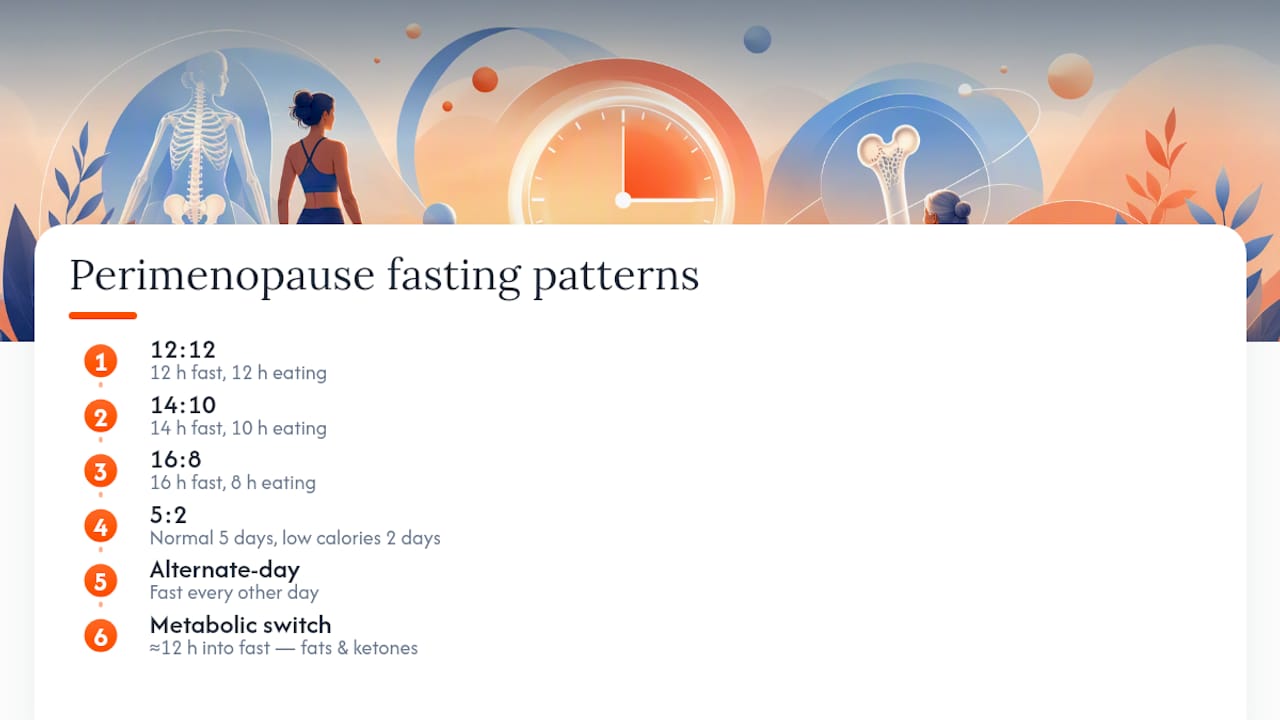
Intermittent fasting means cycling between eating windows and fasting windows rather than restricting what you eat. The common patterns are 12:12 (12 hours fasting, 12 eating), 14:10, 16:8, 5:2 (eating normally five days, restricting calories on two), and alternate-day fasting. Most plans trigger what researchers call the metabolic switch: around 12 hours into a fast, your body shifts from burning glucose to burning fatty acids and ketones for fuel.
Perimenopause complicates that switch. Estrogen decline changes how your body handles insulin and where it stores fat, often shifting weight toward the abdomen even without a change in diet. Cortisol reactivity also tends to run higher during this transition, and cortisol and insulin interact closely. A fasting window that felt effortless at 35 can trigger real stress signaling at 47, including disrupted sleep or a spike in anxiety.
None of that makes fasting off-limits. It means the physiological target changes. Instead of expecting rapid fat loss, a realistic goal is: less visceral fat around the midsection, fewer post-meal insulin spikes, and lower background inflammation. Those three levers matter more for long-term metabolic health during perimenopause than the number on the scale, and they respond to time-restricted eating even when weight loss stalls.
Does Intermittent Fasting Help With Perimenopause Weight Gain?
The clearest evidence points to two things: visceral fat reduction and better insulin sensitivity. A review of fasting trials found roughly 7% weight reduction from baseline at six months in some study cohorts, alongside measurable drops in the fat surrounding abdominal organs, the type most linked to metabolic disease.
By the numbers: Some fasting trials report around 7% weight loss at the six-month mark, though most of that data comes from mixed-age or postmenopausal cohorts rather than women actively cycling through perimenopause.
Secondary benefits show up in inflammatory markers, and some research points to modest cognitive and cardiovascular signals worth watching, though those findings are less consistent across studies. The honest caveat: very few trials isolate perimenopausal women specifically. Most fasting research pools participants across a wide age range or focuses on postmenopausal groups, so the numbers above are a reasonable estimate, not a guarantee tailored to your exact hormonal stage. Combining fasting with exercise, particularly resistance training, produces better body composition outcomes than fasting alone, which matters more in perimenopause than at almost any other life stage.
What Are the Risks of Fasting During Perimenopause?
Fasting isn’t risk-free once hormones start shifting, and the risks cluster around three systems: stress hormones, thyroid function, and lean tissue.
Cortisol is the biggest wildcard. Extended fasting windows can raise cortisol reactivity in people already dealing with poor sleep or high life stress, and elevated cortisol during perimenopause has been linked to worsened sleep, increased anxiety, and irregular periods. If your cycle becomes more erratic after starting a fasting schedule, that’s a signal to shorten the window, not push through it.
Fasting can alter thyroid hormone levels, including reductions in T3 and shifts in TSH patterns seen in structured fasting studies.
Muscle and bone loss risk rises without enough protein and resistance training, since fasting alone doesn’t distinguish between burning fat and breaking down lean tissue.
Hypoglycemia risk increases for anyone on insulin or sulfonylureas, since fasting windows extend the gap between medication dosing and food intake.
Menstrual cycle disruption can occur when fasting is combined with aggressive calorie restriction or high training volume, especially in the luteal phase when your body needs more energy availability, not less.
Stop and reassess immediately if you notice persistent dizziness, a racing heart, missed periods for more than one cycle, or mood changes that feel out of proportion to your usual stress load. Clinicians generally advise combining any fasting protocol with sufficient protein and resistance training specifically to guard against the muscle and bone loss that becomes harder to reverse after 45.
How Should You Start Intermittent Fasting in Perimenopause?
Start slower than you think you need to. The biggest mistake women make when trying intermittent fasting during perimenopause is jumping straight to 16:8 because that’s the number they saw online. Your hormones don’t care what worked for someone else.
Week 1 to 2: Begin with 12:12. Stop eating three hours before bed and delay breakfast by an hour. This alone often improves sleep quality before you touch anything else.
Week 3 to 4: If sleep, mood, and energy stayed stable, move to 14:10. Log symptoms daily, energy, hunger, sleep quality, and any cycle changes.
Week 5 onward: Only extend to 16:8 if the 14:10 window felt easy. If you have a diagnosed thyroid condition, staying at 12:12 longer is the more conservative choice.
If daily fasting feels harder than expected, switch to 5:2. Some research suggests 5:2 has better adherence than daily time-restricted eating for certain people, particularly those with unpredictable schedules.
Cycle-aware adjustment matters more than most guides admit. During the luteal phase, the one to two weeks before your period, many women need more calories and tolerate fasting less well due to rising progesterone and its effect on appetite and blood sugar. Shorten your window on high-symptom days rather than forcing consistency. On days with poor sleep, hot flashes, or unusual stress, default to the shorter 12:12 pattern instead of pushing to 16:8.
Time your fasting window to end before your workout when possible. Training in a fasted state is fine for low-to-moderate intensity work but tends to hurt performance in heavier resistance sessions once cortisol is already elevated from poor sleep.
Pro Tip: Keep a simple three-line daily log: energy (1 to 10), sleep quality (1 to 10), and any cycle or mood notes. Patterns that would take months to notice by memory alone show up in about two weeks on paper.

Nutrition and Exercise Rules to Protect Muscle and Bone
Fasting without a nutrition and training plan behind it is how women lose lean mass instead of fat. That distinction gets ignored constantly, and it’s the single biggest reason fasting backfires for women over 40.
Protein needs to be non-negotiable and front-loaded. Aim for at least 25 to 30 grams of protein at each meal within your eating window, split across two to three meals rather than one large feeding, since your body only absorbs and uses so much protein for muscle repair at once. Clinicians increasingly recommend this pairing specifically because fasting raises the risk of muscle and bone loss when protein intake falls short.
Resistance train at least two to three times a week using compound lifts (squats, deadlifts, rows) that load multiple muscle groups and stress bone.
Add weighted walking or stair work on non-lifting days, both proven to support bone density without heavy joint impact.
Prioritize calcium and vitamin D intake, and ask your doctor about testing vitamin D levels if you’re fasting through winter months with limited sun exposure.
Include an omega-3 source several times a week, either fatty fish or a quality supplement, to help offset inflammation.
By the numbers: Reviews of fasting protocols consistently pair fasting with resistance training and adequate protein as the combination that produces better body composition results than fasting alone.
Hydration during fasting windows deserves more attention than it gets. Water alone isn’t always enough once you extend past 14 hours. Add a pinch of sea salt to water or use a sugar-free electrolyte mix if you notice headaches, lightheadedness, or muscle cramps, all common signs of sodium and potassium dropping too low during longer fasts. If tracking your training load and recovery alongside fasting feels like guesswork, a nutrient timing app built for scheduling meals around workouts can take the friction out of it.
How Does Fasting Affect Thyroid Medication and Diabetes Drugs?
Thyroid medication timing is one of the most overlooked details in fasting advice. Levothyroxine needs to be taken on an empty stomach, typically 30 to 60 minutes before eating, and fasting windows can either help or complicate that depending on when you dose.
Take levothyroxine at the same time each day, ideally right when your fast begins, rather than shifting the timing to match a changing eating schedule.
If a longer fast pushes your first meal well past your usual dosing window, ask your endocrinologist whether a schedule adjustment or a follow-up TSH check makes sense, since consistent dosing with periodic lab monitoring is generally preferred over ad hoc timing changes.
If you take insulin or a sulfonylurea, do not start fasting without clinician supervision. These medications can cause dangerous blood sugar drops when meal timing shifts.
Ask about continuous glucose monitoring if you’re on diabetes medication and want to try fasting. It removes the guesswork around hypoglycemia risk.
Get baseline labs (TSH, T3, fasting glucose, and a lipid panel) before starting and recheck after 6 to 8 weeks to catch any drift early. If you’re due for other fasting blood work, confirm fasting requirements with your lab beforehand since draw-day rules can differ from your daily eating window.
When Should You Stop or Adjust Your Fasting Schedule?
Track five things weekly: sleep quality, energy levels, mood stability, strength in your workouts, and menstrual cycle regularity. A wearable that tracks sleep and heart rate can make these patterns easier to catch early, since subtle changes in resting heart rate or sleep stages often show up before you consciously feel worse.
Reduce your fasting window immediately if you notice two or more weeks of low energy, declining strength in the gym, or worsening sleep.
Call your doctor if you experience recurring dizziness, heart palpitations, or symptoms of low blood sugar, shakiness, confusion, sudden sweating, even if you’re not on diabetes medication.
Seek urgent care for fainting, chest pain, or severe confusion during a fast. These are not fasting side effects to wait out.
Pause fasting entirely if your period stops for more than one cycle without another explanation, and follow up with your doctor.
Most adjustment issues resolve by simply shortening the window, not abandoning the approach altogether.
The ForgeFast Approach to Structured, Safer Fasting
ForgeFast builds fasting protocols around habit formation rather than willpower, which is why the common intermittent fasting mistakes that derail most people, skipping protein, ignoring sleep debt, extending windows too fast, show up less often among people using a structured framework.
The platform runs on 6 to 12 week trial cycles, giving your body enough time to adapt before judging results, and pairs scheduled eating windows with resistance training reminders and daily symptom tracking. That combination addresses the exact gap most generic fasting advice leaves open: knowing when to hold steady and when to pull back. A similar structured trial format has worked well for other hormone-sensitive fasting cases, where cycle awareness matters as much as the fasting window itself. Expect gradual, monitored progress rather than a dramatic overnight shift, because that’s what the underlying physiology actually supports.
A Balanced Take on Fasting Through Perimenopause
The fasting conversation online skews toward extremes: either it’s a miracle for midlife weight gain or it wrecks your hormones entirely. Neither is accurate. The evidence supports real benefits, visceral fat reduction, better insulin sensitivity, for many women, but the trials backing those claims rarely isolate perimenopause specifically. That gap means you’re the experiment, and the smartest approach treats it that way.
Start conservative, protect protein and strength training like they’re non-negotiable, and let your own tracked data, not a generic 16:8 rule, decide what window actually fits your body this year.
— Tony Lindsay
Ready to Try Fasting Without the Guesswork?
Most fasting advice assumes you’re 28, not navigating shifting cycles, unpredictable sleep, and a body that reacts differently to stress than it did a decade ago. ForgeFast was built around habit coaching and structured protocols specifically because a rigid 16:8 rule pulled from a fitness influencer’s feed ignores everything perimenopause actually throws at you.

The program pairs scheduled fasting windows with resistance training guidance and daily tracking, so you’re adjusting based on real signals, sleep, energy, strength, cycle changes, rather than pushing through a schedule that isn’t working. It fits busy professionals who want a guided plan that emphasizes muscle and bone protection as important. If you’re on thyroid medication or managing diabetes, loop in your clinician before starting any fasting program, then explore ForgeFast’s intermittent fasting framework to start a trial built around your actual cycle instead of someone else’s.
Sources
For clinical depth, the PMC review on fasting and weight management at menopause and the MDPI narrative review on fasting and menopausal transition offer the most rigorous data. For practical, patient-facing guidance, see WebMD’s overview for women over 50, Medical News Today’s thyroid analysis, and NIH News in Health’s safety primer.
This article is general information, not a substitute for advice from a qualified doctor. Consult a qualified healthcare professional about your own circumstances before acting on anything here.
FAQ
Why is 16 hours often called the ideal fasting window?
Sixteen hours is popular because the metabolic switch to fat and ketone burning typically kicks in around the 12-hour mark, giving a 16:8 schedule a few extra hours in that fat-burning state. It’s not universally “magic,” though, and many perimenopausal women do better starting at 12:12 or 14:10 first.
How long should a 45-year-old woman fast for?
There’s no fixed number that fits everyone, but starting with a 12 to 14 hour overnight fast and extending only if sleep, mood, and energy stay stable is the safer path than jumping straight to 16 hours.
How can I lose 10 pounds during perimenopause?
Sustainable loss during perimenopause usually comes from pairing a moderate fasting window with resistance training and adequate protein rather than aggressive calorie cuts, since some fasting studies show about 7% weight reduction over six months when approached this way. A structured program like ForgeFast can help you track which combination of window length and training actually moves the needle for your body.
Will fasting get rid of menopause belly fat?
Fasting can meaningfully reduce visceral fat, the type that accumulates around the midsection during the menopausal transition, largely through improved insulin sensitivity rather than calorie restriction alone. Results tend to be gradual and depend heavily on pairing fasting with resistance training rather than fasting in isolation.
Recommended
Comments