What Breaks a Fast? The Real Rules for Coffee, Sweeteners, and More

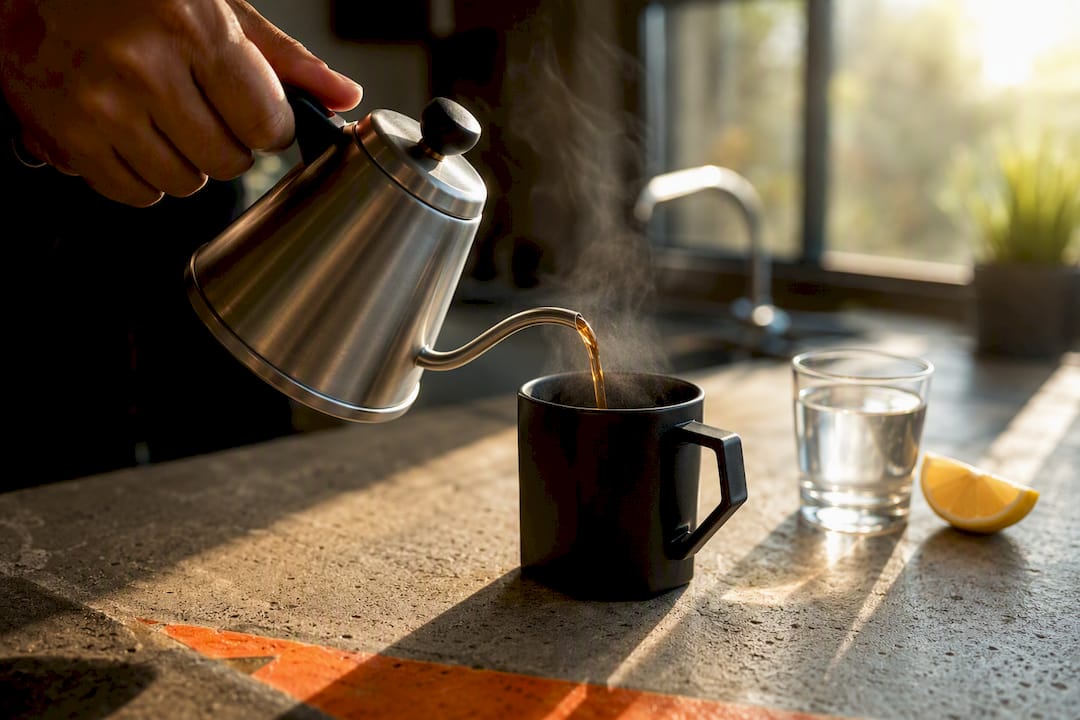
Any calorie you swallow ends your fast in the strict, technical sense. That’s the whole rule. What actually matters is whether trace calories move the needle on your specific goal, and for most people, they don’t. Here’s the quick verdict on the drinks people ask about most:
Black coffee (plain): Won’t meaningfully disrupt a weight-loss or metabolic fast for most people. A 2021 trial found it didn’t raise glucose or triglycerides compared to water.
Diet soda or drinks with noncaloric sweeteners: Technically zero calories, but appetite and insulin responses vary by person, so treat it as a gray area, not a green light.
Bone broth: Contains real calories and protein, so it breaks a fast outright, even though it’s a common tool for easing out of a long fast.
The rest of this guide walks through the evidence behind each of these calls and shows you how the rules shift depending on whether you’re fasting for fat loss, autophagy, or a lab test.
Key Takeaways
Any calorie ends a fast technically, but only autophagy-focused and medically directed fasts require true zero-calorie strictness, while weight-loss fasting tolerates trace additions like black coffee.
Point | Details |
Calories always count | Any measurable calorie intake technically ends the fasted state, regardless of source. |
Black coffee is usually fine | A small trial found no significant glucose or triglyceride change versus water for most healthy adults. |
Autophagy needs strict water-only rules | Even trace amino acids from BCAAs or protein can interfere with autophagy signaling. |
Check supplement labels | Gummies and powdered mixes often hide maltodextrin, pectin, or added sugars. |
Break fasts gently | Start with broth, eggs, or yogurt, then pace your next meal 30 to 60 minutes later. |
Table of Contents
What Breaks a Fast, and What Doesn’t Quite
The cleanest definition comes down to calories in, fast out. Any measurable calorie intake technically ends the metabolic state of fasting, because your body has to respond to incoming energy, even in small amounts. That’s the strict answer. But strict isn’t always useful, because a splash of cream and a plate of pancakes both “break” a fast in the technical sense while producing wildly different outcomes in your body.
This is where goal matters more than purity. If you’re fasting to manage weight or improve insulin sensitivity, a few stray calories from black coffee or a sugar-free electrolyte packet probably won’t undo your progress. If you’re fasting to trigger autophagy, or your doctor told you to fast before bloodwork, that same splash of cream can throw off the exact result you’re trying to protect. The rest of this article treats that distinction as the organizing principle, not an afterthought.
Which Drinks Break a Fast, and Which Are Safe?
Water and plain seltzer are always fine. Zero calories, zero insulin response, no debate. Beyond that, things get more interesting.
Black coffee is the beverage people worry about most, and the data is more reassuring than the fasting forums suggest. A small 2021 clinical trial gave ten healthy adults black coffee before a high-fat shake and found no significant difference in baseline or postprandial glucose and triglycerides compared to plain water. The sample size is small, so treat it as a coherent signal rather than proof, but it lines up with what most registered dietitians tell clients: black coffee is generally fine for weight-loss fasting, though not for fasts where the goal is autophagy or medical accuracy.
Caffeine itself does something worth knowing about: it suppresses appetite for many people, which is part of why coffee became the default fasting drink in the first place. That appetite-blunting effect is a behavioral perk, not a metabolic loophole. It doesn’t mean caffeine is calorie-free in every physiological sense, just that it doesn’t appear to spike blood sugar the way food does.
Unsweetened tea, green or black, behaves almost identically to black coffee. Same logic applies: no calories, minimal insulin disruption, fine for most goals.
Diet soda and drinks sweetened with noncaloric sweeteners are trickier. They contain no calories on the label, but some research suggests noncaloric sweeteners can trigger cephalic insulin responses or cravings in certain people, even without calories present. If your goal is straightforward weight management, an occasional diet soda during a fasting window usually isn’t a dealbreaker. If you’re chasing autophagy or trying to keep a fast metabolically “clean” for a test, skip it and stick to water.
Bone broth and caloric electrolyte drinks sit in a different category entirely. They contain protein, sodium, and often fat, so they clearly break a fast in every sense of the word. That said, broth has a legitimate role during extended fasts (24 hours or longer), where it helps replace electrolytes and takes the edge off hunger without a full meal. It’s a tool for surviving a long fast comfortably, not a way to sneak calories past your metabolism.
Quick reference for beverages:
Water, seltzer: always compatible with any fasting goal
Black coffee, unsweetened tea: compatible with weight-loss and metabolic fasting; skip for autophagy or lab prep
Diet soda, noncaloric sweetened drinks: case-by-case, generally fine for weight loss, avoid for strict fasts
Bone broth, caloric electrolyte mixes: break a fast, useful during extended fasts for comfort and sodium
Foods and Supplements That Definitely Break a Fast
Once you move from drinks to food, the rules get simpler, because almost everything solid triggers a real digestive and hormonal response. Carbohydrates spike blood sugar and insulin almost immediately. Protein does something similar, just more gradually, and it also stimulates digestive enzymes and gut hormones that your body doesn’t release during a true fasted state. Both end a fast, full stop.
Fat is a little different. It’s far less insulinogenic than carbs or protein, which is the entire premise behind “dirty fasting,” the practice of adding small amounts of butter, MCT oil, or cream to coffee during a fast. It still carries calories, so it technically breaks the fast, but the metabolic disruption is smaller than a bagel would cause. Some experienced fasters accept this trade-off deliberately when their main goal is appetite control or staying in ketosis, understanding it’s a pragmatic choice rather than a strict fast.
Protein powders, BCAAs, and collagen deserve their own callout because people assume “just a scoop” doesn’t count. It does. Even small amounts of amino acids appear to interfere with autophagy signaling, the cellular cleanup process that fasting is often used to trigger, according to reviews of fasting biology. That matters enormously if autophagy is the reason you’re fasting in the first place. If your goal is weight management and you’re using BCAAs to preserve muscle during a longer fast, that’s a separate, defensible strategy, just recognize it’s no longer a fast in the strict sense.
Gummy vitamins are one of the most commonly missed fast-breakers. Most gummies use sugar, corn syrup, or pectin as a base, all of which carry real calories and carbs. Powdered supplements and electrolyte mixes often hide maltodextrin or pectin as fillers, ingredients that read as harmless on a label but function as sugar in your bloodstream.
Common hidden fast-breakers to check for:
Gummy vitamins (sugar, pectin, or corn syrup base)
Flavored electrolyte powders (dextrose, maltodextrin, fruit concentrate)
Protein powders and collagen peptides (calories plus amino acid disruption of autophagy)
BCAA supplements (small calories, real metabolic signal)
Chewable or liquid medications with added sugar
Pro Tip: Flip the supplement bottle over before you assume it’s fast-safe. If maltodextrin, dextrose, pectin, or cane sugar appears in the first five ingredients, switch to a capsule or tablet version, or just save it for your eating window.
Creamers, Sweeteners, and Gum: The Small Stuff That Adds Up
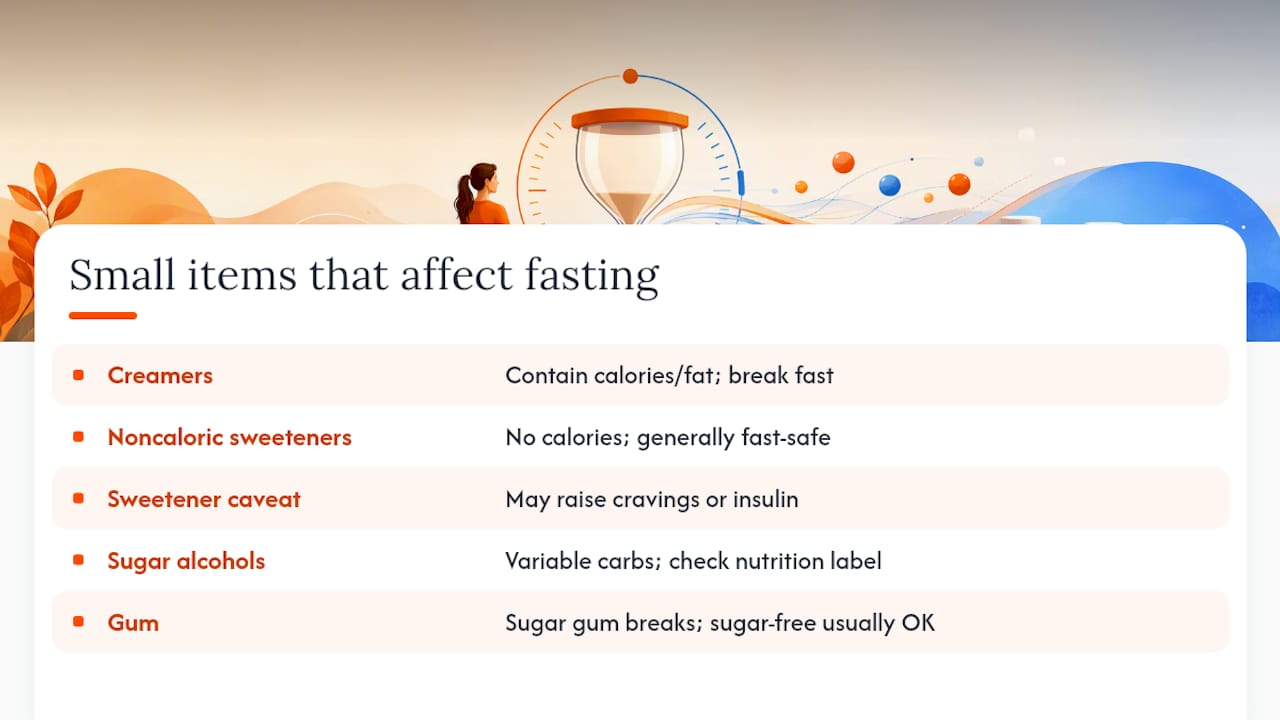
This is where fasts quietly fall apart. A splash of half-and-half feels harmless, but cream, milk, and flavored syrups all carry real calories and fat, and they end a fast the same way a full meal does, just in smaller proportions.
Noncaloric sweeteners like stevia, monk fruit, and sucralose generally don’t add calories, so they’re compatible with most weight-loss and metabolic fasting goals. The caveat: some people report increased cravings or a subtle insulin response after using them regularly, so if you notice your hunger spiking on days you use sweeteners, that’s worth paying attention to individually rather than assuming the science settles it for you.
Sugar alcohols (erythritol, xylitol, maltitol) are a different animal. Some are nearly calorie-free and don’t spike blood sugar much; others, like maltitol, carry real carbs and can affect glucose. Check the nutrition label rather than assuming “sugar-free” means “fast-safe.”
Chewing gum splits cleanly into two categories. Sugar-containing gum breaks a fast, no gray area there, since you’re swallowing actual sugar with every chew. Sugar-free gum is generally considered acceptable during fasting, since the calorie content is negligible. The one caveat: chewing anything, sweetened or not, can trigger a cephalic phase response, your body preparing for food that never arrives, which sometimes increases hunger rather than curbing it. If gum makes you hungrier, that’s your body telling you something the ingredient label won’t.
Medications, Vitamins, and Electrolytes: Safety Comes First
Never adjust a medication schedule to preserve a fast without talking to your doctor first. Some medications require food to avoid stomach irritation or to absorb properly, and skipping that instruction for the sake of a fasting window isn’t worth the risk.
Multivitamins split the same way gummies and gum do. Gummy multivitamins usually contain sugar and count as calories. Tablets and capsules typically contain negligible calories and are considered fine even during strict fasting windows, since the amount of material involved is tiny.
Electrolyte supplements vary more than people expect. Some powdered mixes include added sugars or maltodextrin as fillers, which quietly undercuts a fast you thought was clean. Look for unsweetened, zero-calorie electrolyte formulas, particularly if you’re doing longer fasts where sodium and potassium matter for how you feel.
If you’re fasting ahead of bloodwork or specifically to study autophagy, the rule tightens considerably: water only, no exceptions, unless your doctor gives you other instructions. That’s not overcaution. It’s the only way to guarantee the number on your lab report reflects your fasted state rather than whatever was in your coffee.
Pro Tip: If you’re on daily medication and fasting for health reasons, ask your pharmacist whether your specific prescription is affected by food timing, not whether “fasting” in general is safe. Drug interactions with food are specific, not generic.
Choosing Your Fasting Rules Based on Your Goal
Not every fast needs the same level of strictness, and treating them all identically is where most people either give up or sabotage their own results. Three goal categories cover almost everyone:
Weight loss and general metabolic health. This is the most forgiving category. Black coffee, unsweetened tea, and even the occasional noncaloric sweetener won’t meaningfully derail your progress. The goal here is calorie control and insulin management over the full day, not laboratory-grade purity during the fasting window.
Autophagy-focused fasting. This requires real discipline. Water only, no coffee additions, no BCAAs, since even small amounts of amino acids can interfere with autophagy signaling. If your entire reason for fasting is cellular repair, trace calories work directly against the outcome you’re chasing.
Medical testing or clinician-directed fasting. Follow the instructions you were given, exactly. Don’t improvise based on general fasting advice from an app or article, including this one, since lab protocols vary.
The practical difference shows up in your coffee cup. Coffee with a few drops of stevia keeps a weight-loss fast intact for almost everyone. Coffee with a tablespoon of cream adds real fat and calories, a defensible trade-off for appetite control, but not a fast in the strict sense, and never appropriate before bloodwork.
Timeline matters here, too. Insulin and glucose respond to food within minutes, so there’s no such thing as a “small enough” amount of sugar that avoids triggering a response entirely. The question is never whether a response happens. It’s whether that response is large enough to matter for what you’re trying to accomplish.
How to Break a Fast Without Wrecking Your Stomach
The way you end a fast matters almost as much as how you kept it. Jumping straight into a heavy, greasy, or sugar-loaded meal after 16 or more hours without food is a fast track to bloating, cramping, and a blood sugar spike that leaves you sluggish.
Start small and easy to digest. A cup of broth-based soup, some cooked vegetables, a couple of eggs, or plain yogurt gives your gut a gentle re-entry point.
Skip the extremes. High-sugar foods, fried or greasy meals, and very high-fiber dishes right out of the gate tend to cause the most discomfort.
Pace yourself. Eat a small first portion, then wait 30 to 60 minutes before adding more. Your appetite signals need a little time to catch up with what your stomach can actually handle.
Return to normal eating gradually. Most people can resume a regular meal within an hour or two of that first small bite, once the initial digestion settles.
Pro Tip: Keep your first post-fast meal boring on purpose. Save the exciting meal for later in your eating window once your digestion has had time to wake back up.
Building Habits That Make These Rules Automatic
Knowing the rules is one thing. Sticking to them at 10 a.m. when you’re staring down a flavored creamer is another. That gap between knowledge and behavior is exactly where most fasting plans quietly fail, and it’s the problem ForgeFast was built around.
Structured timers help you see exactly where you are in a fasting window, which removes the guesswork that leads to “just one splash” decisions. Trigger planning, deciding in advance what you’ll drink or do when a craving hits, works better than willpower in the moment, because the decision is already made before hunger clouds your judgment.
A few habits worth building:
Pre-plan your fasting beverage before your window starts, so you’re not improvising at your weakest moment.
Use a fasting tracker or timer to stay honest about your window instead of estimating.
Identify your specific trigger moments (the 2 p.m. slump, the post-workout craving) and have a zero-calorie substitute ready for each one.
Start Fasting With a Plan, Not Just a Rulebook
Rules about coffee and gummy vitamins only get you so far. What actually determines whether you stick with fasting long term is whether you’ve built habits that make the right choice the easy choice. That’s the gap ForgeFast is built to close, pairing fasting protocols with behavior tracking and psychological coaching so the mental side of fasting gets as much attention as the metabolic side. If you’re tired of relearning these rules every time temptation shows up, ForgeFast’s structured approach gives you the framework and the accountability to make it automatic.
The Real Problem Isn’t Coffee, It’s Inconsistency
Most of the anxiety around what breaks a fast is misplaced. People spend more energy debating whether a teaspoon of cream ruins their morning than they spend building the habits that determine whether they’re still fasting consistently six months from now. The metabolic evidence on black coffee, noncaloric sweeteners, and small fats is reassuring for anyone fasting for weight loss or general metabolic health. That’s settled enough to stop overthinking it.
Where conventional fasting advice falls short is treating every fast like it needs laboratory precision. It doesn’t, unless you’re doing bloodwork or specifically chasing autophagy. Most guides also skip the goal-first framing entirely, listing “fast-breakers” as a flat list rather than something that shifts based on why you’re fasting.
If you take one thing from this article, make it this: decide your goal before you decide your rules. A weight-loss fast and an autophagy fast are not the same practice wearing different clothes, and pretending they are is how people either quit from unnecessary restriction or undermine results they actually cared about.
— Tony Lindsay
This article is general information, not a substitute for advice from a qualified doctor. Consult a qualified healthcare professional about your own circumstances before acting on anything here.
Sources
Recommended
Comments