Breath Work, Fasting, and Mental Clarity: A Practical Guide


Breathwork and fasting are two of the most direct tools for improving mental clarity, each working through distinct but complementary physiological pathways. The role of breath work, fasting, and clarity together is to regulate the autonomic nervous system, reduce cortisol, and support the neurological adaptations that sharpen focus and lift mood. Breathwork modulates stress-response systems within minutes of practice. Fasting drives deeper metabolic and neurological changes over weeks. Combined, they produce a level of cognitive calm and focus that neither achieves alone.
What is the role of breath work, fasting, and clarity?
Breathwork improves mental clarity by directly regulating the autonomic nervous system. Slow, controlled nasal breathing stimulates the vagus nerve, which shifts the body from sympathetic overdrive (the stress state) into parasympathetic calm. That shift reduces cortisol, quiets mental noise, and creates the physiological conditions for focused thought.
The vagus nerve stimulation from controlled breathing is the core mechanism behind breathwork’s mental benefits. When cortisol drops, the prefrontal cortex, the brain region responsible for decision-making and concentration, functions more effectively. You think more clearly because your brain is no longer flooded with stress signals.

Key breathwork techniques and their effects
Three techniques stand out for mental clarity:
Box breathing (4-4-4-4): Inhale for 4 counts, hold for 4, exhale for 4, hold for 4. Used by Navy SEALs to maintain focus under pressure. It resets the nervous system quickly.
Cyclic sighing: A double inhale through the nose followed by a long exhale through the mouth. Research shows cyclic sighing reduces anxiety and improves mood significantly after one month of daily practice.
4-7-8 breathing: Inhale for 4 counts, hold for 7, exhale for 8. The extended exhale activates the parasympathetic system more aggressively, making it useful before sleep or after high-stress periods.
All three techniques share one principle: the exhale drives the calming effect. Longer exhales than inhales consistently produce the greatest reduction in stress markers.
Pro Tip: Start with just 3 minutes of slow nasal breathing before your morning coffee. That brief window, before caffeine and screens, is when breathwork produces the clearest cognitive shift.
Slow, deep breathing practiced for 15 minutes daily can reduce systolic blood pressure by up to 10 points in people with hypertension. That cardiovascular effect matters for mental clarity too. Lower blood pressure correlates with reduced cognitive load and better sustained attention throughout the day.
How does fasting affect brain function and mental clarity?
Fasting changes how the brain fuels itself and how it grows. The most significant neurological effect is an increase in brain-derived neurotrophic factor, or BDNF. BDNF is a protein that strengthens neural networks and supports learning and memory. Intermittent fasting increases BDNF levels after several weeks of consistent practice. That timeline matters: the cognitive benefits of fasting are not immediate. They build over weeks as the brain adapts.
Neuroscientist Mark Mattson’s research confirms that brain adaptations from fasting are tied directly to these neurotrophic factor increases. The brain essentially becomes more plastic, more capable of forming and reinforcing connections, during sustained fasting protocols.
Fasting’s effects on mood and anxiety
Fasting Protocol | Measured Outcome | Study Detail |
Dawn-to-dusk intermittent fasting | Reduced anxiety (GAD-7) | 336 participants, 4 weeks, P < 0.001 |
Dawn-to-dusk intermittent fasting | Reduced depression (PHQ-9) | Statistically significant decrease |
Intermittent fasting (general) | Increased BDNF | Adaptations emerge after several weeks |
Fasting with food-cue exposure | Temporary clarity reduction | Early adaptation phase sensitivity |
Four weeks of dawn-to-dusk fasting significantly decreases anxiety and depression scores in adult participants. That is not a minor effect. A statistically significant drop in both GAD-7 and PHQ-9 scores means participants felt measurably less anxious and less depressed after one month of structured fasting.
The nuance is timing and individual variation. A large meta-analysis found no meaningful cognitive difference between fasted and satiated healthy adults in most standard tests. Children and teenagers are more sensitive to fasting’s cognitive effects than adults. The time of day also matters: cognitive performance tends to dip during late-afternoon circadian troughs regardless of fasting status.
Psychiatrist Dr. Clifford Feldman notes that fasting results vary widely. While many people report mood improvements, prolonged fasting can cause cognitive impairment in others. The key variable is duration and individual metabolic response.
Pro Tip: Track your mental clarity at the same time each day during your first two weeks of fasting. You will quickly identify whether your clarity peaks in the morning fasted state or after your first meal, which tells you exactly when to schedule your most demanding cognitive work.
How do you safely combine breathwork and fasting for better focus?
Combining breathwork with fasting produces the strongest results when you time each practice deliberately. The fasted state, particularly in the morning before the first meal, is when breathwork has the most noticeable effect on mental clarity. Cortisol is naturally elevated in the morning, and breathwork directly counteracts that spike.
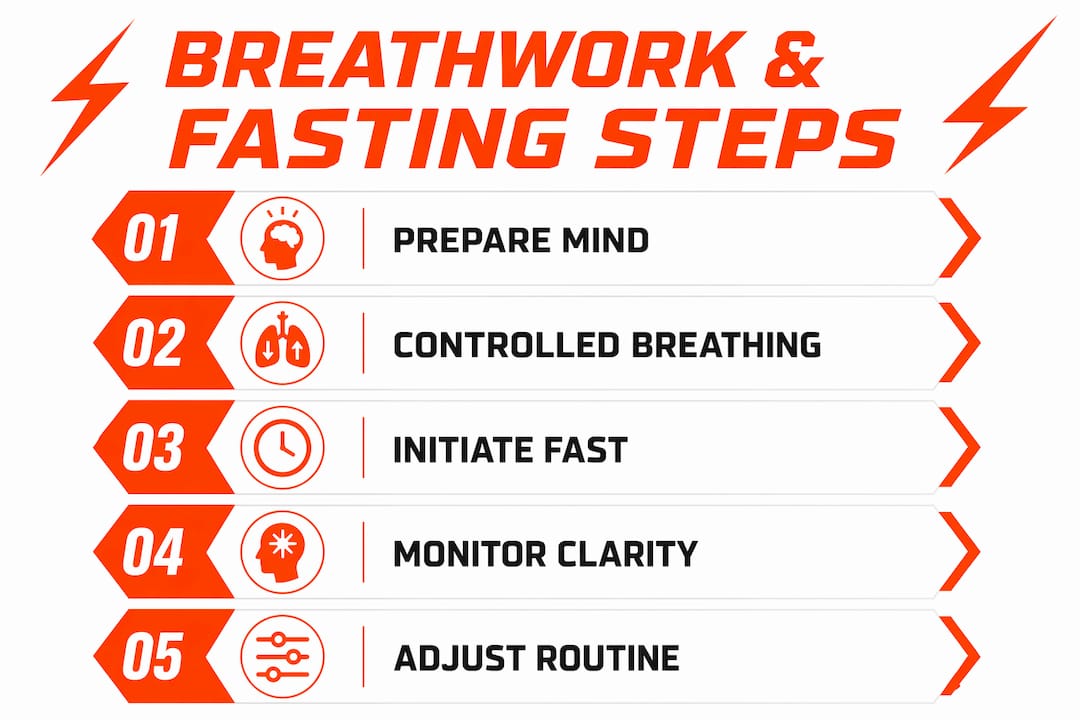
Follow this sequence for a practical daily protocol:
Wake and hydrate first. Drink 16 ounces of water before any breathwork. Dehydration amplifies stress signals and reduces the effectiveness of breathing exercises.
Practice breathwork before breaking your fast. A 5-minute session of box breathing or cyclic sighing in the fasted state primes the nervous system for calm focus. This is when the parasympathetic shift feels most pronounced.
Use gentle techniques during fasting windows. Avoid intense breathwork like Wim Hof or hyperventilation-based methods while fasting. These techniques raise adrenaline and can cause lightheadedness when blood sugar is lower. Stick to slow, nasal, diaphragmatic breathing.
Schedule demanding breathwork after your first meal. If you want to practice longer or more intensive sessions, do so within an hour of eating. Your blood glucose is stable, and your body handles the physiological demands more safely.
Build consistency before intensity. Start with 3 to 5 minutes of breathwork daily for two weeks before extending sessions. The mind-body fasting approach works best when both practices become habitual rather than occasional.
Fasting can increase the brain’s sensitivity to food-related cues during the early adaptation phase. This temporary clarity reduction is manageable. Keep food out of sight during fasting windows and avoid cooking smells or food media. Breathwork sessions during these moments actively redirect attention and reduce the cognitive pull of hunger cues.
What are the common myths about breathwork and fasting for clarity?
Several misconceptions prevent people from getting real results from these practices. Addressing them directly saves weeks of frustration.
“Fasting always hurts cognitive performance.” A large review found no universal cognitive decline in healthy adults from fasting. The effect depends on age, timing, and the type of cognitive task being measured. Most adults maintain normal performance during standard fasting windows.
“Breathwork requires forceful or rapid breathing.” Forced, rapid breathing increases stress rather than reducing it. Effective breathwork is gentle, quiet, and nasal, engaging the diaphragm rather than the chest. If you feel dizzy or anxious during breathwork, slow down immediately.
“You need long sessions to see benefits.” Sessions of 3 to 5 minutes daily produce measurable improvements in stress and mood within a month. Consistency matters far more than duration.
“Results are immediate.” Breathwork produces a noticeable shift within minutes. Fasting’s cognitive benefits, particularly those tied to BDNF increases, take several weeks to emerge. Expecting instant results from fasting leads to early abandonment.
“These practices work for everyone the same way.” Individual variation is real. People with a history of eating disorders, blood sugar regulation issues, or anxiety disorders should consult a physician before starting any fasting protocol. Breathwork is generally safe but should be approached carefully by anyone with cardiovascular conditions.
The mental clarity habits that produce lasting results share one trait: they are built gradually, not forced. Patience is not optional here. It is the mechanism.
Key Takeaways
Breathwork and fasting improve mental clarity through distinct but reinforcing physiological pathways, and combining them deliberately produces stronger cognitive and emotional results than either practice alone.
Point | Details |
Breathwork acts fast | Even 3 to 5 minutes of slow nasal breathing reduces cortisol and shifts the nervous system toward calm focus. |
Fasting builds over weeks | BDNF increases and mood improvements from intermittent fasting emerge after several weeks of consistent practice. |
Timing the combination matters | Morning breathwork during the fasted state produces the clearest cognitive shift for most people. |
Gentle technique beats intensity | Forced or rapid breathing increases stress; diaphragmatic nasal breathing is the most effective method. |
Individual variation is real | Fasting effects differ by age, timing, and metabolic health; track your own response before drawing conclusions. |
Why I think most people approach these practices backward
Most people I talk to start with the hardest version of both practices at once. They jump into a 16:8 fasting window on day one and add Wim Hof breathing on an empty stomach, then wonder why they feel anxious and foggy by noon. That is not a failure of the practices. That is a failure of sequencing.
What I have found, both personally and from watching others work through structured fasting protocols, is that breathwork needs to come first. Even two weeks of daily 5-minute breathing sessions before you change your eating window will make the fasting adaptation dramatically easier. Your nervous system learns to self-regulate before it faces the metabolic stress of fasting. The transition feels less like deprivation and more like a natural state.
The other thing most articles miss: the cognitive benefits of fasting are not about being in a fasted state. They are about the metabolic flexibility you build over weeks of consistent practice. That flexibility, the ability to run efficiently on both glucose and ketones, is what produces the sustained mental clarity that people describe as “feeling sharp all day.” You cannot rush it. You can only build it.
If you are serious about fasting for busy schedules, start with breathwork. Let it stabilize your stress response first. Then layer in the fasting protocol. The results compound in a way that neither practice produces alone.
— Tony Lindsay
How ForgeFast supports your fasting and breathwork practice
ForgeFast is built around exactly this kind of structured, progressive approach to fasting and mental clarity.

The ForgeFast method integrates intermittent fasting with a disciplined lifestyle framework that addresses the mental side of fasting, not just the eating window. The platform provides structured fasting schedules, habit-building frameworks, and the psychological scaffolding that makes breathwork and fasting sustainable over months, not just weeks. For people who want to build real metabolic flexibility and lasting cognitive clarity, ForgeFast offers a method grounded in both biological science and behavioral psychology. The ForgeFast app helps you track fasting windows, monitor your progress, and stay consistent with the daily practices that produce results.
FAQ
What is breathwork and how does it improve mental clarity?
Breathwork refers to intentional breathing techniques, such as box breathing or cyclic sighing, that regulate the autonomic nervous system. These techniques reduce cortisol and stimulate the vagus nerve, producing calm focus within minutes of practice.
How long does it take for fasting to improve cognitive function?
Fasting-related cognitive improvements, particularly those tied to BDNF increases, typically emerge after several weeks of consistent intermittent fasting. Mood and anxiety improvements have been measured after four weeks of structured fasting protocols.
Can you do breathwork while fasting?
Yes, gentle nasal breathwork is safe and effective during fasting windows. Avoid intense or hyperventilation-based techniques while fasted, as these can cause lightheadedness when blood glucose is lower.
Does fasting cause cognitive decline?
A large meta-analysis found no universal cognitive decline in healthy adults from standard fasting protocols. Effects vary by age, time of day, and the type of cognitive task; children and teenagers show greater sensitivity than adults.
How often should you practice breathwork for mental clarity?
Daily sessions of 3 to 5 minutes produce measurable improvements in stress and mood within one month. Consistency across days matters more than the length of any single session.
Recommended
Comments