Fasting and Sleep Quality: What the Science Shows

Fasting and sleep quality are directly linked through circadian biology, hormonal balance, and neurological function. Early time-restricted eating (TRE), defined as confining meals to an 8 a.m.–4 p.m. window, significantly improves sleep efficiency and reduces nighttime awakenings in women with obesity. Ramadan-style intermittent fasting improves Pittsburgh Sleep Quality Index scores while cutting depression and anxiety levels. The relationship between fasting and rest is not one-size-fits-all, but the evidence consistently favors early eating windows and circadian alignment over late-night feeding patterns. Understanding the science gives you a real edge in structuring your fasting schedule for better sleep.
How does fasting and sleep quality change with different schedules?
The timing of your eating window determines whether fasting helps or hurts your sleep. Early TRE (8 a.m.–4 p.m.) produces statistically significant gains in sleep efficiency, fragmentation index, and awakening length. That means fewer interruptions and longer unbroken stretches of rest, measured by actigraphy rather than self-report.
Late TRE does not deliver the same results. Eating later in the day pushes caloric intake closer to bedtime, which disrupts melatonin secretion and keeps the digestive system active during hours the body expects to wind down. Studies comparing early and late eating windows consistently show the early window wins on objective sleep metrics.
The 16:8 fasting pattern, one of the most common intermittent fasting schedules, shows a more neutral effect. Medical-grade wearable data from a 2025 study found no significant changes in total sleep time, awakenings, or sleep latency for people following a 16:8 protocol. That finding matters because it tells you the fast itself is not the problem. The eating window placement is what drives outcomes.
Ramadan-style fasting, which restricts eating to specific hours around dawn and dusk, shows mixed but generally positive effects. PSQI scores improved significantly after four consecutive weeks of dawn-to-dusk fasting, alongside measurable drops in depression and anxiety. However, a systematic review found that 57.1% of studies reported worsening subjective sleep quality during Ramadan, even when physiological markers improved. That gap between how people feel and what the data shows is one of the most important nuances in this field.
Fasting schedule | Eating window | Sleep outcome |
Early TRE | 8 a.m.–4 p.m. | Improved efficiency, fewer awakenings |
Late TRE | Midday or later | Minimal sleep benefit, possible disruption |
16:8 intermittent fasting | Flexible window | Stable sleep architecture, neutral effect |
Ramadan-style fasting | Dawn to dusk | Improved PSQI scores, mixed subjective reports |
Pro Tip: If you are using a 16:8 protocol and want better sleep, shift your eating window earlier rather than extending it later. An 8 a.m.–4 p.m. or 9 a.m.–5 p.m. window aligns better with your body’s natural light cycle.
Why circadian alignment is the key to sleep improvement during fasting
Circadian alignment is the single most important variable in the fasting-sleep relationship. Your body runs on a roughly 24-hour internal clock that governs melatonin production, cortisol release, and core body temperature. Eating out of sync with that clock disrupts all three.

Late-night eating suppresses melatonin, the hormone that signals your brain to prepare for sleep. When you eat close to bedtime, your digestive system signals wakefulness at exactly the wrong time. Aligning your eating window with daylight hours removes that interference and lets melatonin rise naturally as evening approaches.
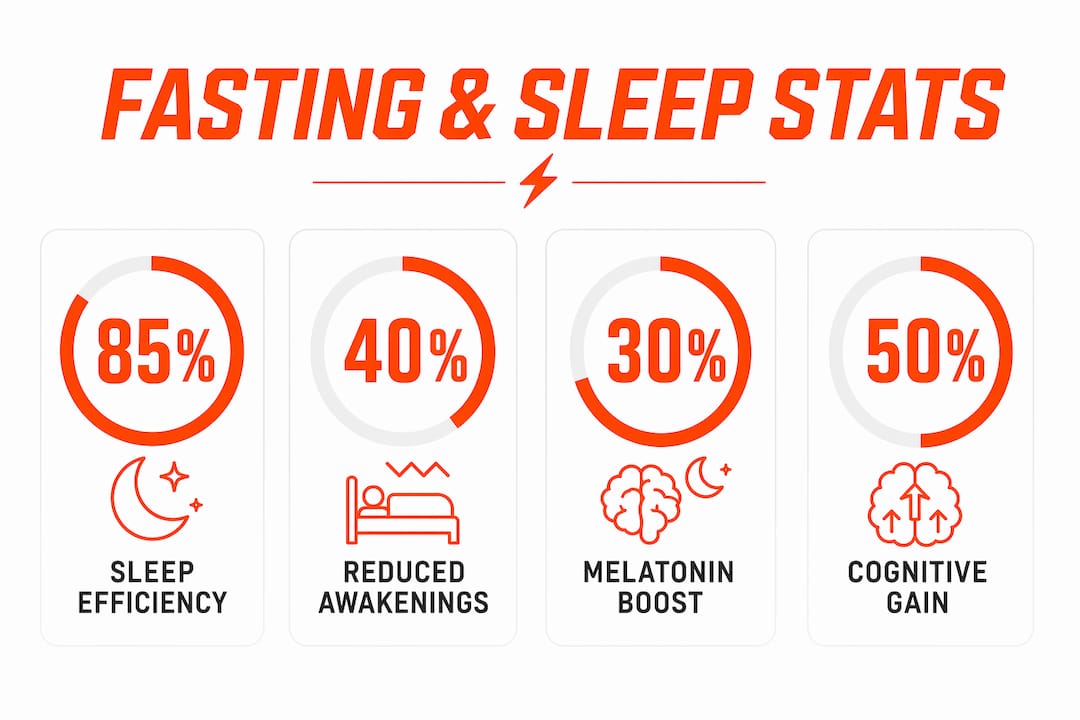
The mechanisms behind this go deeper than hormones alone. Reduced neuroinflammation during fasting supports the brain’s ability to regulate sleep-wake cycles. Increased BDNF (brain-derived neurotrophic factor) during fasting protects neurons involved in mood and sleep regulation. These neuroprotective effects compound over time, which is why people who stick with early TRE often report better sleep after several weeks rather than immediately.
Practical circadian alignment comes down to a few consistent behaviors:
Finish your last meal at least 2–3 hours before sunset when possible
Expose yourself to natural light in the morning to anchor your circadian clock
Keep your eating window consistent from day to day, including weekends
Avoid bright screens and artificial light after your eating window closes
Pro Tip: Pair your circadian fasting schedule with a consistent wake time. Your circadian rhythm responds to light and meal timing together. Fixing both creates a stronger signal than either one alone.
Does fasting improve mental health, and how does that affect sleep?
Fasting reduces depression and anxiety through measurable biological pathways, and that mental health improvement directly feeds better sleep. After four weeks of dawn-to-dusk fasting, depression and anxiety scores dropped significantly (p<0.001). Lower anxiety at night means less time lying awake with racing thoughts, which is one of the most common drivers of poor sleep quality.
The biological explanation centers on neuroinflammation. Fasting downregulates pro-inflammatory cytokines, the chemical messengers that drive both mood disorders and disrupted sleep. At the same time, fasting increases BDNF, which supports the growth and maintenance of neurons involved in emotional regulation and sleep architecture. These are not minor effects. They represent a genuine shift in brain chemistry that persists beyond the fasting period itself.
Cognitive function also improves during fasting, with 50% of studies in a systematic review reporting gains in cognitive performance. Better cognitive function during the day correlates with lower mental fatigue at night, which supports faster sleep onset. The neurological benefits of intermittent fasting extend well beyond weight loss.
One important caveat: subjective sleep complaints during fasting are common and often contradict what objective measures show. People frequently report feeling like they slept worse, while actigraphy data shows stable or improved sleep efficiency. This gap is most pronounced during the adaptation phase, typically the first one to two weeks of a new fasting protocol.
Practical tips to protect sleep quality while fasting
Getting the most from fasting requires more than picking the right eating window. Hydration, meal timing, caffeine management, and sleep hygiene all interact with your fasting schedule to determine how well you sleep.
Hydration comes first. About 20% of daily fluid intake normally comes from food. When you fast, that source disappears. Chronic mild dehydration degrades sleep quality and continuity, so you need to actively replace those fluids with water and electrolytes throughout your eating window and during fasting hours.
Set a meal cutoff time. Finish eating 2–5 hours before bedtime to minimize acid reflux and digestive activity during sleep. Acid reflux disrupts sleep even without causing obvious discomfort, so the buffer matters more than most people realize.
Manage caffeine carefully. Restrict caffeine to before 2 p.m. Caffeine has a half-life of roughly 5–6 hours, meaning an afternoon coffee still affects your brain chemistry at bedtime. This is especially relevant for fasting individuals who often use coffee to manage hunger during fasting windows.
Keep your schedule consistent. Eating and sleeping at the same times each day reinforces circadian alignment. Irregular schedules confuse your internal clock and undermine the sleep benefits that structured fasting can produce.
Track your patterns. Using a fasting and sleep tracking app lets you see how your eating window placement correlates with your actual sleep data. Most people are surprised by what the numbers reveal compared to how they feel.
Prioritize sleep hygiene basics. Cool room temperature, darkness, and a consistent wind-down routine amplify the sleep benefits of fasting. Fasting improves the biological conditions for sleep; good sleep hygiene removes the behavioral barriers.
Pro Tip: If hunger keeps you awake during the first week of fasting, recognize that hunger-induced insomnia is often psychological rather than physiological. Controlled studies show stable sleep architecture even when people report feeling hungry. The feeling typically passes within 7–10 days as your body adapts.
Key takeaways
Fasting improves sleep quality most reliably when the eating window is placed early in the day and aligned with natural light cycles.
Point | Details |
Early TRE wins on sleep metrics | An 8 a.m.–4 p.m. eating window improves sleep efficiency and reduces awakenings in objective studies. |
Circadian alignment is non-negotiable | Eating late suppresses melatonin and disrupts the hormonal signals your body needs for restful sleep. |
Mental health and sleep reinforce each other | Fasting reduces anxiety and depression, which directly lowers nighttime arousal and supports faster sleep onset. |
Subjective and objective sleep often diverge | People commonly feel worse during adaptation, while actigraphy data shows stable or improved sleep. |
Hydration and meal cutoff times matter | Replacing food-sourced fluids and finishing meals 2–5 hours before bed protects sleep continuity during fasting. |
What I’ve learned after years of watching people fast and sleep badly
Most people approach fasting as a daytime discipline and treat sleep as a separate issue. That framing is the core mistake. The eating window and the sleep window are two halves of the same biological cycle. When you treat them as connected, the results compound. When you treat them as separate, you often undermine one with the other.
The subjective sleep disruption that people experience in the first week of fasting is real, but it is almost never permanent. I have seen this pattern repeatedly: someone starts early TRE, reports terrible sleep for a week, and then quits. They never reach the adaptation phase where objective sleep quality actually improves. The people who push through that initial discomfort consistently report better rest after two to three weeks.
Early TRE produces the strongest sleep benefits in people who already have poor baseline sleep or carry excess weight. If your sleep is already good and your weight is healthy, the gains will be more modest. That is not a reason to avoid fasting. It is a reason to set realistic expectations and measure outcomes with data rather than feelings.
The mental health angle is underappreciated. Reducing anxiety through fasting is not a side effect. It is a primary mechanism through which fasting improves sleep. If you are fasting for weight loss but ignoring the psychological dimension, you are leaving the most powerful sleep benefit on the table. ForgeFast builds the mental framework alongside the physical one, which is why the approach produces more durable results than simple calorie restriction.
Individual variation is real. Some people thrive on a strict 8 a.m.–4 p.m. window. Others do better with a 9 a.m.–5 p.m. or 10 a.m.–6 p.m. schedule. The principle is consistent: earlier is better for sleep. The exact timing needs to fit your life or you will not sustain it long enough to see the benefits.
— Tony Lindsay
How ForgeFast supports better fasting and better sleep
ForgeFast is built around the insight that fasting works best when it is structured, consistent, and aligned with your biology.

The ForgeFast method places eating windows in alignment with circadian rhythms, which the research consistently identifies as the key driver of sleep improvement during fasting. The program integrates the psychological discipline that makes early TRE sustainable, not just the meal timing itself. Readers who want to track their fasting windows alongside sleep data can use the ForgeFast app to monitor how schedule changes affect their rest over time. For those serious about sustainable fat loss and measurably better sleep, the structured approach removes the guesswork that causes most fasting attempts to stall.
FAQ
Does intermittent fasting improve sleep quality?
Early time-restricted eating significantly improves objective sleep efficiency and reduces nighttime awakenings, particularly in people with obesity or poor baseline sleep. The 16:8 protocol shows a neutral effect on most sleep metrics when the eating window is placed earlier in the day.
What is the best fasting schedule for better sleep?
An early eating window, such as 8 a.m.–4 p.m., produces the strongest sleep benefits by aligning with circadian rhythms and allowing melatonin to rise naturally in the evening. Late eating windows do not show the same improvements and may actively disrupt sleep.
Why do I sleep worse when I start fasting?
Subjective sleep disruption during the first week of fasting is common and often psychological rather than physiological. Controlled studies show that sleep architecture remains stable even when people report feeling like they slept poorly, and the discomfort typically resolves within one to two weeks.
How does fasting affect mental health and sleep together?
Four weeks of intermittent fasting significantly reduces depression and anxiety scores, which lowers nighttime arousal and supports faster sleep onset. Fasting also increases BDNF and reduces neuroinflammation, creating biological conditions that support both mood stability and restful sleep.
Should I drink more water while fasting to protect my sleep?
Yes. About 20% of daily fluid intake normally comes from food, so fasting reduces your total hydration unless you actively compensate. Chronic mild dehydration degrades sleep quality, making deliberate water and electrolyte intake a practical priority during any fasting protocol.
Recommended
Comments