Fasting Support for Stress Management: 2026 Guide


Fasting support for stress management is the practice of using structured nutritional timing to reduce cortisol load, improve mood, and build emotional resilience through measurable physiological change. A 4-week dawn-to-dusk intermittent fasting study found significant decreases in depression and anxiety scores, measured by the PHQ-9 and GAD-7 scales, alongside improved sleep quality across 336 adults. That result matters because it shows fasting’s mental health effects are trackable, not just anecdotal. Fasting is not a substitute for professional mental health care, but it is one of the most accessible stress relief techniques available. ForgeFast builds its entire methodology around this intersection of metabolic discipline and mental clarity.
How does fasting biologically support stress reduction?
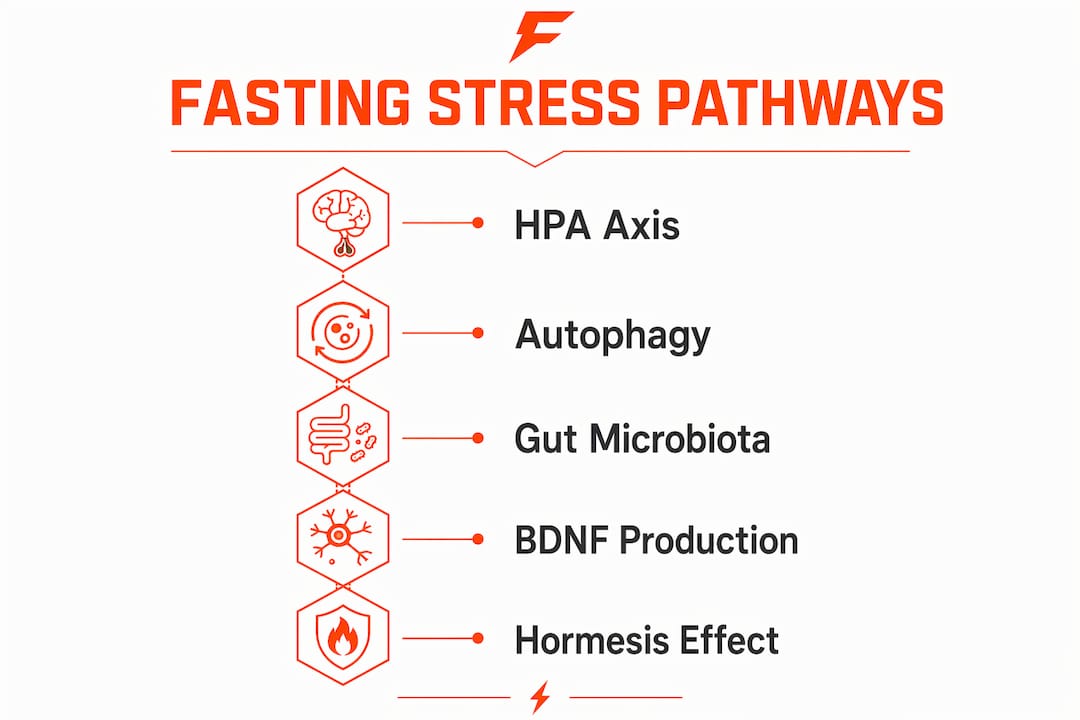
Fasting works on stress through three overlapping pathways: HPA axis modulation, autophagy activation, and gut microbiota changes. Each one directly affects how you feel, focus, and recover from pressure.

HPA axis and cortisol regulation
The hypothalamic-pituitary-adrenal (HPA) axis controls your cortisol output. Chronic stress keeps this axis overactive, flooding your body with cortisol and leaving you anxious and mentally foggy. Fasting, when timed correctly, modulates the HPA axis by acting as a controlled, short-term stressor. This hormetic effect trains your stress response to become more efficient, much like how exercise stresses muscles to make them stronger.
Autophagy, BDNF, and neuroprotection
Fasting triggers autophagy, the cellular cleanup process that removes damaged proteins and renews mitochondria. This process directly supports brain health by reducing neuroinflammation. Fasting also stimulates brain-derived neurotrophic factor (BDNF) production, a protein that supports neuron growth and protects against anxiety and depression. Preclinical research shows that intermittent fasting reverses stress-induced myelin damage in key brain regions through gut microbiota modulation. Myelin is the protective sheath around nerve fibers, and its repair means faster, clearer neural signaling.
Gut microbiota and emotional regulation
The gut-brain axis is a two-way communication system. Fasting reshapes the gut microbiome in ways that reduce inflammatory signals sent to the brain. This is one reason why people who fast consistently report lower baseline anxiety. The neurological benefits of intermittent fasting extend well beyond digestion, reaching directly into emotional regulation and mood stability.
Pro Tip: Pay attention to your mental state during the last two hours of a fasting window. Irritability or brain fog at that point signals low blood sugar, not psychological weakness. Shorten your window by one hour and reassess over three days.
What safety protocols are essential for stress-supportive fasting?
Fasting under stress adds a second stressor to a system that may already be strained. Safety protocols prevent that combination from tipping into harm.
The most critical threshold to monitor is blood glucose. Extended fasts over 24 hours require electrolyte support, and fasting should stop immediately if blood glucose drops below 55 mg/dL. Blood pressure also needs watching, particularly in people with a history of adrenal fatigue or anxiety disorders. These are not edge cases. They are the points where fasting shifts from beneficial stress to harmful stress.
“Electrolyte support with sodium, potassium, and magnesium is critical to avoid stress fasting headaches and adrenal strain.” This is especially true when fasting overlaps with high-demand work periods or poor sleep.
Electrolyte supplementation with sodium, potassium, and magnesium prevents the headaches and hormonal imbalance that derail fasting routines during stressful periods. Without these minerals, your adrenal glands work harder, which defeats the purpose of fasting for stress reduction.
Stop fasting immediately if you experience any of the following:
Blood glucose below 55 mg/dL
Dizziness or fainting
Heart palpitations
Severe mood swings or dissociation
Persistent nausea lasting more than 30 minutes
Pro Tip: Keep a simple stress and fasting management checklist on your phone. Log your fasting window, mood rating (1–10), and any physical symptoms each day. Three consecutive days of declining mood scores are a clear signal to shorten your window or pause entirely.
How to tailor fasting routines to different stress levels
Not every stress level calls for the same fasting window. Matching fasting intensity to your current stress load is the single most effective way to sustain the practice long term.
Under high stress or illness, fasting windows should shorten to 12–14 hours to reduce cortisol load while maintaining metabolic rest. That 12–14 hour range still delivers autophagy benefits and gut microbiota improvements without pushing the HPA axis further. For people managing demanding jobs or acute life events, this is the practical starting point.
Here is a step-by-step approach to matching your fasting window to your stress level:
Assess your current stress load. Rate it low, moderate, high, or acute before choosing a window. Be honest. Most people underestimate their stress level on busy weeks.
Select your starting window. Use the table below as your baseline.
Hold that window for five days. Do not adjust based on one bad day. Look for patterns across the week.
Track mood and energy. Use PHQ-9 or GAD-7 self-assessments monthly to measure real change, not just subjective feeling.
Expand or contract the window by one hour. Make one change at a time. Rapid shifts in fasting duration spike cortisol.
Stress level | Recommended fasting window | Key focus |
Low | 16–18 hours | Metabolic flexibility and mental clarity |
Moderate | 14–16 hours | Cortisol balance and mood stability |
High | 12–14 hours | Metabolic rest and adrenal recovery |
Acute (illness, crisis) | Pause or 12 hours max | Recovery and nourishment first |
Fasting schedules for busy professionals often work best when meal timing is fixed rather than flexible. Structured meal timing reduces decision fatigue, which is itself a significant source of daily anxiety. Knowing exactly when you eat removes one category of mental load from an already full day.
Common challenges when fasting for anxiety and mood support
Fasting for anxiety and mood support works well in theory. In practice, most people hit the same three obstacles: irritability in the first week, fatigue during high-stress periods, and the temptation to use rigid protocols as a form of control rather than care.
Short-term fasting can raise irritability and anxiety in some people, particularly in the first 5–7 days as blood sugar regulation adjusts. This is normal and temporary. The mistake is interpreting early discomfort as evidence that fasting does not work, then quitting before the adaptation occurs.
A practical stress and fasting management checklist for troubleshooting:
Drink at least 2.5 liters of water daily during fasting windows
Add a pinch of sea salt to morning water to support sodium levels
Eat protein and healthy fats at your first meal to blunt cortisol response
Avoid caffeine in the first hour after waking if cortisol is already elevated
Schedule your eating window to end at least three hours before sleep
Rigid fasting protocols worsen emotional volatility when life becomes unpredictable. A missed eating window or an unplanned meal is not a failure. It is data. The goal is lasting wellness through fasting, not perfect adherence to a fixed schedule. Flexibility within structure is what separates sustainable practice from short-term dieting.
Consult a healthcare professional before starting any fasting protocol if you have a history of eating disorders, diabetes, or anxiety disorders requiring medication. Fasting changes blood sugar and hormone levels in ways that interact with several common medications.
Pro Tip: Pair your fasting practice with two mental clarity habits that do not depend on food: a 10-minute morning walk and a 5-minute breathing exercise before your first meal. Both lower cortisol independently and amplify fasting’s mood benefits.
Key Takeaways
Fasting supports stress management most effectively when fasting windows are matched to current stress load, electrolytes are maintained, and the practice is treated as flexible structure rather than rigid rule.
Point | Details |
Match window to stress level | Use 12–14 hours during high stress; expand to 16–18 hours when stress is low. |
Electrolytes are non-negotiable | Sodium, potassium, and magnesium prevent adrenal strain and mood crashes during fasting. |
Track mood with real metrics | PHQ-9 and GAD-7 self-assessments give you objective data beyond daily feelings. |
Flexibility sustains the practice | Rigid protocols increase emotional volatility; adjust windows based on weekly patterns. |
Fasting is not standalone treatment | Combine fasting with professional care and other stress relief techniques for best results. |
Why I think most people approach fasting and stress backwards
Most people start fasting to lose weight and discover the mental clarity benefits by accident. I think that is the wrong entry point, especially for anyone dealing with chronic stress. When weight loss is the goal, people push fasting windows as long as possible and ignore every signal their body sends. That approach works against stress management, not for it.
The research on fasting and stress resilience consistently shows that the benefit comes from the hormetic effect, a controlled, modest stress that trains the system. Overdoing it does not double the benefit. It compounds the cortisol load you are already carrying.
What I have found actually works is starting with the shortest window that still delivers metabolic rest, around 12–13 hours, and building from there based on how mood and energy respond. Psychological readiness matters as much as biological timing. If you are dreading the fast every morning, that dread is itself a cortisol trigger. The mind-body fasting approach treats mental state as a variable, not an afterthought.
The science on fasting and mental health is still evolving. The 2026 clinical findings are promising, but individualized evaluation remains the standard. What works for one person at a moderate stress level may not work for another person managing acute anxiety. Personalization is not optional. It is the method.
— Tony Lindsay
ForgeFast and your stress management fasting goals
Knowing the science is one thing. Applying it consistently under real-world stress is another challenge entirely.

ForgeFast is built specifically for people who want fasting to work as a long-term mental and physical practice, not just a short-term experiment. The ForgeFast Method integrates fasting schedules, mood tracking, and psychological frameworks into a single structured program. It accounts for varying stress levels and adjusts guidance accordingly, so you are not left applying a one-size protocol to a constantly changing life. The ForgeFast app includes stress-aware fasting windows and daily check-ins that make the stress and fasting management checklist part of your routine, not an extra task.
FAQ
Does fasting actually reduce anxiety?
Clinical studies using GAD-7 measurements show significant anxiety reductions after four weeks of structured intermittent fasting. Results vary by individual, and fasting should not replace professional treatment for anxiety disorders.
What fasting window is best for high stress?
Practitioners recommend 12–14 hour fasting windows during high-stress periods to maintain metabolic rest without adding cortisol load. Longer windows during acute stress can worsen adrenal strain.
Can fasting improve mental clarity?
Fasting stimulates BDNF production and reduces neuroinflammation, both of which directly support focus and cognitive performance. Most people report noticeable mental clarity improvements within two to three weeks of consistent practice.
When should I stop fasting due to stress?
Stop fasting if blood glucose drops below 55 mg/dL, if you experience dizziness, heart palpitations, or severe mood swings, or if you are acutely ill. These signals indicate the body needs nourishment, not metabolic rest.
Is intermittent fasting safe for people with anxiety disorders?
Fasting can raise irritability in some people, particularly in the early adaptation phase. Anyone with a diagnosed anxiety disorder should consult a healthcare professional before starting a fasting protocol.
Recommended
Comments