Fasting Protocol for Competitive Athletes: 2026 Guide

Fasting protocols for competitive athletes are structured eating windows designed to improve body composition, metabolic flexibility, and recovery without sacrificing training output. The 16:8 intermittent fasting method, where athletes eat within an 8-hour window and fast for 16 hours, is the most widely studied approach compatible with athletic training. Research confirms that 16:8 time-restricted feeding works for athletes when daily protein intake stays between 1.6 and 2.2 grams per kilogram of body weight, with at least 30 grams per meal. The key is matching your fasting window to your training schedule, not the other way around.
Which fasting protocols suit different types of competitive athletes?
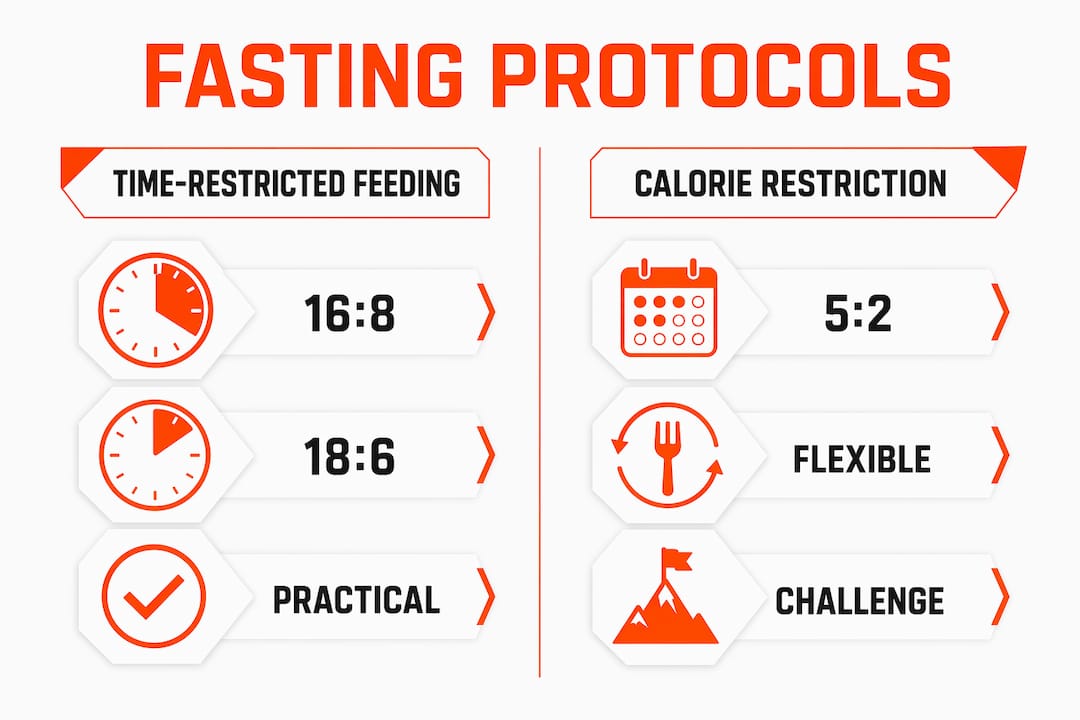
The right fasting protocol depends on your sport, training volume, and performance goals. Three protocols dominate sports nutrition discussions: 16:8, 18:6, and 5:2. Each fits a different athlete profile.
16:8 (Time-Restricted Feeding): Athletes eat within an 8-hour window, typically noon to 8:00 PM. This is the most practical option for athletes who train in the morning and need flexibility in the evening for social meals or team dinners.

18:6: A tighter 6-hour eating window suits athletes in the off-season focused on body composition. It is harder to sustain during high-volume training because fitting adequate calories into 6 hours requires deliberate meal planning.
5:2: Athletes eat normally for 5 days and restrict calories significantly on 2 non-consecutive days. This works best for athletes in base-training phases, not during competition season or peak training blocks.
Protocol | Best for | Pros | Cons |
16:8 | Endurance and mixed-sport athletes | Flexible, easy to sustain | Requires disciplined meal timing |
18:6 | Off-season body composition | Greater fat adaptation stimulus | Hard to hit calorie targets |
5:2 | Base training, low-volume phases | Minimal daily disruption | Not suitable for peak training |
12:12 | Competition season, beginners | Low risk, easy adherence | Modest metabolic benefit |
Endurance athletes, such as marathon runners and cyclists, tolerate fasting better than power athletes because their training often includes low-to-moderate intensity sessions where fat oxidation is the primary fuel source. Power athletes, including sprinters and weightlifters, need immediate glucose availability for maximal efforts. For them, strict fasting windows during heavy training blocks carry real performance risk.
Base-training and off-season phases are the best time to use fasting for body composition and metabolic benefits. Competition season and peak training phases demand caloric adequacy above all else.
Pro Tip: Schedule your eating window to open within 30 minutes of finishing your hardest training session. This single adjustment captures the post-workout anabolic window without breaking your fasting structure.
How to align nutrition and fasting windows with training
Timing macronutrients correctly inside your eating window determines whether fasting helps or hurts your performance. Getting this right is not complicated, but it requires consistency.
Open your eating window with a recovery meal. Consume 1.0–1.2 grams per kilogram of carbohydrates and 20–25 grams of high-quality protein within 30 minutes after training. This combination drives glycogen resynthesis and muscle repair simultaneously.
Load carbohydrates before competition. Athletes should consume 6–10 grams of carbohydrates per kilogram of body weight in the 24–36 hours before a competition. This means your fasting window must shrink or disappear entirely in the days leading up to race day or game day.
Distribute protein across all meals. Hitting 1.6–2.2 grams per kilogram daily requires spreading protein across 3–4 meals within your eating window. Cramming all protein into one or two meals reduces muscle protein synthesis efficiency.
Hydrate aggressively during fasting hours. Water, electrolytes, and black coffee or tea are the only fasting-safe options. Sodium, potassium, and magnesium losses accelerate during training, and fasting does not pause that process.
Use nutrient-dense foods to hit calorie targets. Whole grains, lean meats, eggs, legumes, and healthy fats pack the most nutritional value per calorie. Athletes in compressed eating windows cannot afford low-density foods like chips or sugary drinks.
The 4Ps nutritional framework, which covers preparation, performance, post-exercise, and periodization, treats carbohydrate timing as non-negotiable for competitive output. Fasting fits inside this framework only when it does not compromise any of the four phases.
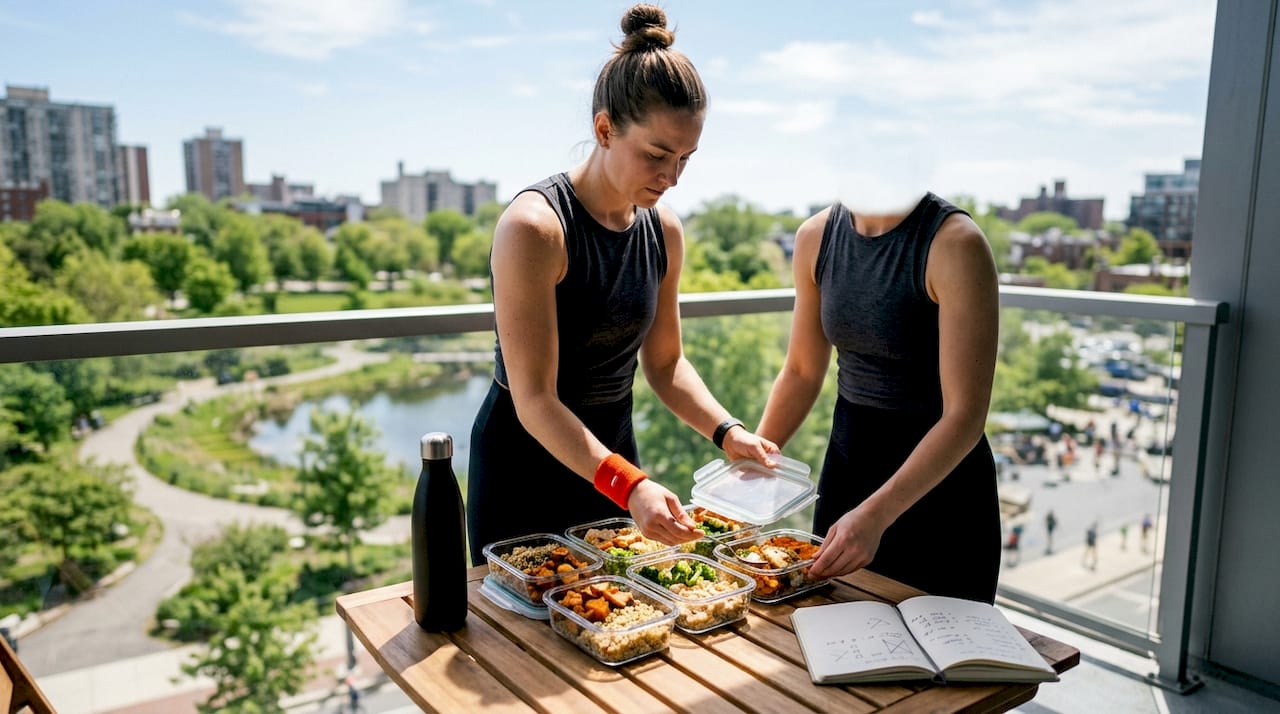
Pro Tip: Prepare two or three high-protein, carbohydrate-rich meals in advance for your eating window. Meal prep removes the decision fatigue that causes athletes to undereat on busy training days. The meal prep strategies that work best for fasting days prioritize calorie density and speed of preparation.
Step-by-step guide to implementing intermittent fasting for athletes
Adopting a fasting protocol without a clear plan leads to underfueling, fatigue, and stalled performance. Follow these steps to build a protocol that fits your training life.
Assess your current energy needs. Calculate your total daily energy expenditure using your body weight, training volume, and sport type. Athletes training more than 10 hours per week need at least 40–50 kilocalories per kilogram of body weight daily. Know this number before you compress your eating window.
Choose a fasting window that fits your training schedule. If you train at 6:00 AM, a noon to 8:00 PM eating window works well. If you train at 5:00 PM, shift the window to 2:00 PM to 10:00 PM. The window should always open near your hardest session.
Build your first meal around recovery nutrition. Your first meal after training is the most important of the day. Prioritize protein and carbohydrates here before anything else.
Plan a second substantial meal mid-window. A second full meal 3–4 hours after the first maintains amino acid availability and prevents the energy crash that hits athletes who eat only once or twice.
Close your window with a protein-rich final meal. Casein-rich foods like Greek yogurt or cottage cheese slow digestion and support overnight muscle repair during the fasting period.
Adjust for training phases. During high-volume weeks, extend your eating window or drop fasting entirely. Nutrition periodization means treating fasting as a flexible tool, not a fixed rule.
The critical factor in fasting success for athletes is meeting total energy and protein needs within eating windows rather than strict fasting duration adherence. An athlete who hits their calorie and protein targets in a 10-hour window outperforms one who rigidly holds a 16-hour fast but chronically underfeeds.
Common mistakes to avoid:
Training at high intensity in a fasted state without quick-digesting carbohydrates on hand
Skipping the post-workout meal to “extend” the fast
Applying competition-day fasting when the body needs maximum fuel availability
Ignoring sleep quality, which fasting can affect if the final meal is too close to bedtime
Fasted training suits low-to-moderate intensity aerobic sessions but is counterproductive for high-intensity or power training that requires immediate glucose. Keep a fast-acting carbohydrate source available during any fasted session as a safety net.
Common challenges and how to adapt your fasting approach
Even well-planned fasting protocols create friction for competitive athletes. Knowing where the problems appear makes them easier to fix before they cost you a training block or a competition result.
Underfueling during peak training. Maintaining strict fasting windows during high-volume or high-intensity training impairs recovery and performance. When weekly training volume spikes, the eating window must expand to match caloric demand.
Suppressed muscle protein synthesis. Athletes who compress eating into one or two large meals risk gaps in amino acid availability. Muscle protein synthesis requires regular stimulation, not just total daily protein.
Scheduling conflicts with team meals or travel. Rigid fasting schedules break down during road trips, training camps, and competition weekends. Social flexibility around fasting windows is not a weakness. It is a sign of a mature nutrition strategy.
Performance decline as an early warning sign. If sprint times slow, strength drops, or perceived effort increases without a change in training load, fasting is likely the cause. Track performance metrics weekly and treat decline as a signal to refuel, not push through.
Fatigue and irritability during adaptation. The first 2–3 weeks of fasting feel harder than the steady state. Most athletes adapt within 3 weeks if protein and calorie targets are met consistently.
Pro Tip: Use a 12–14 hour overnight fast as your entry point if 16:8 feels too aggressive at first. You capture meaningful metabolic benefits with far less performance risk, and the transition to a longer window becomes natural over 4–6 weeks.
For athletes in the structured fasting athletic lifestyle, the goal is never perfect adherence to a fasting clock. The goal is consistent fueling that supports training, recovery, and long-term performance.
Fasting as a tool, not a rulebook
Fasting primarily benefits body composition rather than directly enhancing athletic performance. That distinction matters more than most athletes realize.
After working with fasting frameworks across different training populations, the pattern I see most often is athletes treating fasting as a performance intervention when it is actually a body composition and metabolic tool. The athletes who get the best results are the ones who periodize fasting the same way they periodize training load. They fast more aggressively in the off-season and base phase, then relax or abandon the window entirely during peak training and competition season.
The athletes who struggle are the ones who treat fasting as an identity. They hold the 16-hour window on a Tuesday before a Thursday race because “that’s the protocol.” That rigidity costs them glycogen, recovery, and sometimes the race itself. Fasting should bend to your training calendar, not the other way around.
My strongest recommendation is to consult a sports dietitian before committing to any fasting structure. A professional can calculate your exact energy needs, identify the right window for your sport, and tell you when to stop fasting entirely. ForgeFast provides a structured framework for building fasting habits, but individual customization from a qualified professional is irreplaceable for competitive athletes.
— Tony Lindsay
ForgeFast and the athlete’s fasting framework
Athletes who want structure without rigidity get the most from a system built around both.

ForgeFast integrates the ForgeFast intermittent fasting method with a disciplined lifestyle framework that accounts for the mental demands of fasting, not just the biological ones. The platform helps athletes track fasting windows, monitor nutrition timing, and build the consistent habits that make fasting sustainable across full training seasons. For endurance athletes specifically, the endurance fasting guide walks through protocol selection and macro timing in detail. ForgeFast also offers a dedicated fasting tracking app to keep your windows, meals, and performance data in one place.
Key takeaways
The most effective fasting protocol for competitive athletes is one that flexes with training load, meets daily protein targets of 1.6–2.2 grams per kilogram, and never compromises competition-day fueling.
Point | Details |
Match protocol to sport type | Endurance athletes tolerate 16:8 well; power athletes need more flexibility during heavy training. |
Post-workout nutrition is non-negotiable | Consume 1.0–1.2 g/kg carbohydrates and 20–25 g protein within 30 minutes after training. |
Periodize fasting with training load | Use stricter fasting in base and off-season phases; relax or drop it during peak and competition phases. |
Never fast on competition day | Use 12–14 hour overnight fasts near events to retain metabolic benefits without performance risk. |
Total intake beats fasting duration | Hitting calorie and protein targets inside any eating window matters more than the exact fasting clock. |
FAQ
What is the best fasting protocol for competitive athletes?
The 16:8 protocol is the most studied and practical option for competitive athletes. It works best when the eating window opens near the hardest training session of the day.
Does fasting improve athletic performance directly?
Fasting primarily improves body composition and metabolic flexibility rather than directly boosting performance. Performance benefits appear indirectly when lower body fat improves power-to-weight ratio.
Can athletes fast during competition season?
Strict fasting protocols are not recommended during competition season or peak training phases. A 12–14 hour overnight fast offers metabolic benefits with minimal performance risk during these periods.
How much protein do athletes need while fasting?
Athletes need 1.6–2.2 grams of protein per kilogram of body weight daily, with at least 30 grams per meal. This target must be met within the eating window regardless of its length.
What should athletes eat to break a fast after training?
The first meal after training should contain 1.0–1.2 grams of carbohydrates per kilogram of body weight and 20–25 grams of high-quality protein to support glycogen resynthesis and muscle repair.
Recommended
Comments