Pre-Workout Nutrition During Fasting Windows: 2026 Guide


Does pre-workout break a fast, and which ingredients are actually safe?
The short answer: most pre-workout supplements do break a fast, but a handful of specific ingredients do not. What determines the line is whether an ingredient triggers an insulin response or contributes meaningful calories. Pure caffeine, black coffee, creatine monohydrate, L-citrulline, and beta-alanine all clear that bar. BCAAs, protein powders, collagen peptides, and added sugars do not.
If you are training inside a fasting window, the goal is to support performance without signaling your body to exit the fasted state. Autophagy, the cellular cleanup process that fasting activates, gets interrupted by insulin spikes. Calories do the same thing. So the question for every ingredient is simple: does it raise insulin or add calories? If yes, it breaks your fast.
Ingredients that do NOT break a fast:
Pure caffeine or black coffee (no milk, no sweetener)
Creatine monohydrate (calorie-free, no insulin effect)
L-citrulline (amino acid precursor that does not trigger a measurable insulin spike at standard doses)
Beta-alanine (non-essential amino acid; no caloric or insulin impact)
Plain electrolytes (sodium, potassium, magnesium with zero added sugars)
Plain water
Ingredients that DO break a fast:
BCAAs (branched-chain amino acids trigger an insulin response that halts autophagy)
Whey or plant protein powders
Collagen peptides
Added sugars or maltodextrin
Flavored electrolyte powders with sweeteners or hidden calories
Which pre-workout ingredients break a fast vs. which ones support it?
The distinction between fast-safe and fast-breaking ingredients comes down to one mechanism: insulin secretion. Amino acids, particularly leucine found in BCAAs and protein powders, directly stimulate the pancreas to release insulin. Sugars do the same, and often faster. That insulin signal tells your body you are fed, which shuts down fat oxidation and autophagy regardless of how few calories you actually consumed.
Category | Breaks Fast? | Examples |
Stimulants | No | Caffeine anhydrous, black coffee |
Performance amino acids | No (at standard doses) | L-citrulline, beta-alanine |
Creatine | No | Creatine monohydrate |
Branched-chain amino acids | Yes | Leucine, isoleucine, valine blends |
Protein supplements | Yes | Whey, casein, plant protein, collagen |
Sugars and carb fillers | Yes | Dextrose, maltodextrin, honey |
Flavored electrolytes | Often yes | Many commercial powders with sweeteners |
One category that catches people off guard is flavored electrolyte powders. Many products marketed as “zero calorie” still contain hidden sugars or sweeteners that can disrupt fasting. Always check the full ingredient list, not just the front-of-label claim.
Key takeaways by ingredient group:
Caffeine and black coffee are the gold standard for fasted pre-workout stimulation
Creatine monohydrate is one of the few performance supplements with no fasting conflict
L-citrulline supports blood flow and nitric oxide production without breaking a fast
Beta-alanine provides buffering against muscle fatigue, also fasting-compatible
Any supplement containing amino acid chains (BCAAs, protein, collagen) will trigger insulin
The nuance with BCAAs is worth noting. Some people practicing intermittent fasting accept a minor insulin spike from amino acids specifically to protect muscle during high-intensity training. That is a deliberate tradeoff, not an oversight. But if your primary goal is fat oxidation or autophagy, BCAAs during the fasting window work against you.
How to choose a fasting-compatible pre-workout supplement
Most commercial pre-workout powders are not fasting-compatible out of the box. They are formulated for fed athletes and routinely include BCAAs, added sugars, or proprietary blends that obscure caloric content. Reading the label is not optional.
Pre-workout supplements with fewer than a few calories, such as pure caffeine, creatine monohydrate, L-citrulline, and beta-alanine, generally do not break a fast. The problem is that most commercial products bundle these with fast-breaking ingredients. A DIY stack using individual pure ingredients gives you full control over what goes into your body during the fasting window.
What to look for when selecting a fasting-compatible supplement:
Zero calories per serving (or fewer than 5, which is the practical threshold most protocols accept)
No amino acids beyond L-citrulline or beta-alanine
No added sugars, dextrose, or maltodextrin
No artificial sweeteners if you are following a strict fast (some protocols allow them; know your own)
Third-party tested for label accuracy and purity (NSF Certified for Sport or Informed Sport certification)
Unflavored or naturally flavored with no caloric additives
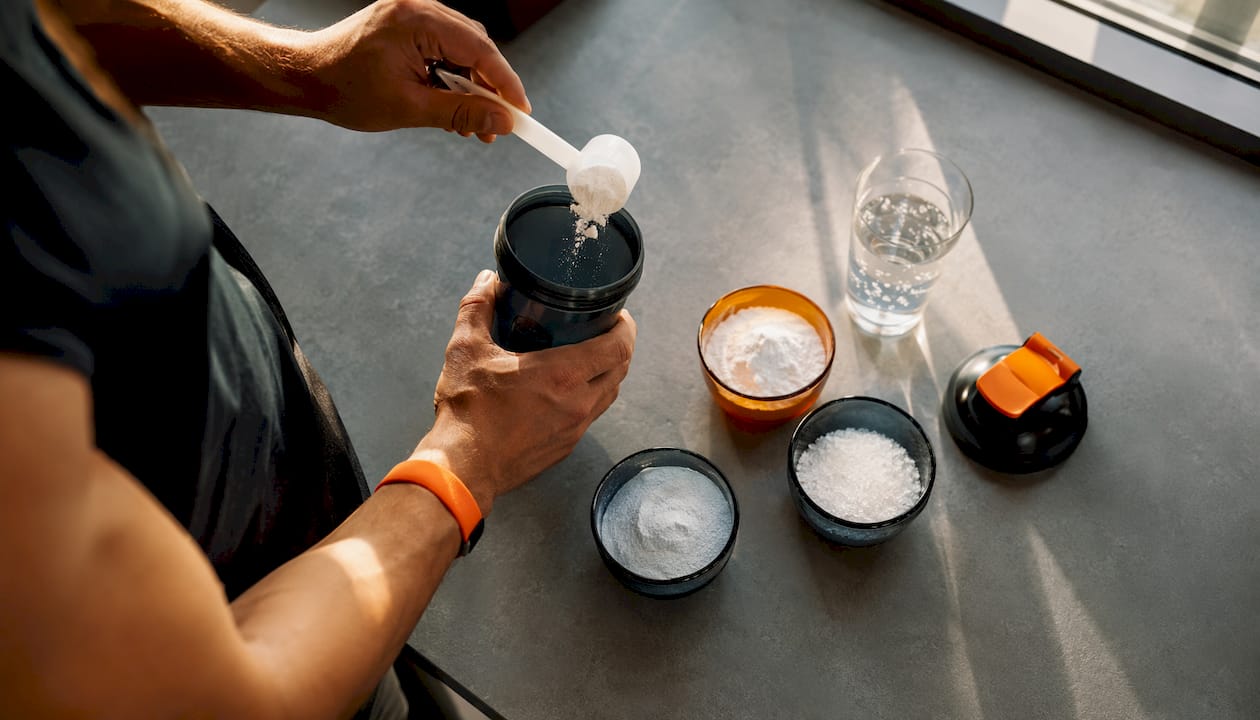
Pro Tip: Build your own stack with caffeine anhydrous (100–200 mg), creatine monohydrate (3–5 g), and L-citrulline (3–6 g) purchased as separate pure powders. You get full ingredient transparency, lower cost per serving, and zero risk of hidden fast-breaking fillers that show up in pre-packaged blends.
Workout intensity matters when choosing what to take. For a 30-minute moderate-intensity session, caffeine alone may be all you need. For a 90-minute strength session, adding creatine and L-citrulline makes a real difference in sustained output. Match the supplement to the demand, not to the marketing copy on the label.
Tips for using pre-workout during fasting windows
Timing your pre-workout intake within a fasting window requires thinking about two things: when your fast ends relative to your workout, and how long the supplement needs to take effect. Caffeine peaks in the bloodstream roughly 30–60 minutes after ingestion, so taking it 45 minutes before training is the practical sweet spot for most people.
Practical tips for fasted training with pre-workout:
Take caffeine or black coffee 30–60 minutes before your workout for peak effect
Drink plain water or unflavored electrolytes throughout the session to maintain hydration without breaking the fast
If your eating window opens within an hour of finishing your workout, time your first meal to hit immediately post-session for recovery
Avoid taking creatine on an empty stomach if you are sensitive to GI discomfort; some people do better taking it with their first meal instead
Skip flavored pre-workout drinks unless you have verified the label shows zero calories and no amino acids
Hydration deserves specific attention. Fasted training increases the risk of dehydration because you are not getting water from food. Plain sodium and potassium electrolytes dissolved in water support muscle function and prevent cramping without adding calories. The electrolytes and fasted workouts guide from ForgeFast covers the specific ratios worth targeting for 16:8 protocols.
Post-workout nutrition timing is just as important as what you take before training. Getting protein and carbohydrates into your body promptly after a fasted session is critical for halting catabolism and restoring muscle glycogen. If your eating window opens right after training, that is the ideal setup. If not, you may need to reconsider your workout timing relative to your fasting schedule.

How your fasting protocol changes your pre-workout strategy
Not all fasting protocols put the same pressure on pre-workout nutrition. The structure of your fast determines how much flexibility you have and what trade-offs you face.
Time-restricted eating (16:8, 18:6, 20:4) is the most common protocol and the most forgiving for athletes. With a 16:8 schedule, you have an 8-hour eating window that can be positioned to open right after your workout. Many people on this protocol train at the tail end of their fast, take fasting-compatible supplements beforehand, then eat their first meal immediately post-workout. That structure captures both the fat-oxidation benefit of fasted training and the recovery benefit of prompt post-exercise nutrition.
Alternate-day fasting (ADF) is a different challenge. On low-calorie or zero-calorie fasting days, ADF protocols typically allow roughly 25% of normal caloric intake. High-intensity training on a full fast day is not advisable under ADF. The smarter approach is to schedule demanding workouts on feeding days and keep fasting-day movement to low-intensity activity like walking or light mobility work.
Whole-day fasting (one or two non-consecutive days per week) follows similar logic. Treat full fast days as recovery or active rest days. Reserve your hardest sessions for days when you are eating normally. This is not a compromise; it is the approach that expert guidance from Precision Nutrition consistently supports for athletes combining IF with performance goals.
The practical rule across all protocols: the more severe the caloric restriction on a given day, the lower the workout intensity should be. Fasting-compatible pre-workout supplements can sharpen focus and support moderate effort, but they cannot replace the fuel that high-intensity training actually requires.
What actually happens to performance when you train fasted?
The honest picture is mixed. Fasted training does increase fat oxidation during the session. Your body, depleted of glycogen from an overnight fast, turns to fat stores more readily. That is real and well-documented. What is also real is that performance in high-intensity efforts tends to drop when glycogen is low, and that body composition depends more on overall calorie balance than on the timing of those calories.
For low-to-moderate intensity work, fasted training is genuinely effective. A 45-minute zone 2 cardio session, a yoga class, or a light lifting session can all be done fasted without meaningful performance loss. The body handles these demands well on fat oxidation alone, especially once you are adapted to fasting.
High-intensity training is where the calculus shifts. Sessions longer than 60–90 minutes or efforts requiring sustained power output benefit from pre-exercise fueling. Without it, you will likely hit a wall earlier, lift less, or compromise technique as fatigue sets in faster than it would in a fed state. Caffeine and creatine can partially offset this, but they cannot replace carbohydrate availability for glycolytic work.
Muscle retention is the other variable. Excessive fasted high-intensity training over time can impair muscle preservation, even when overall protein intake is adequate. This is why fasting-compatible supplements like creatine matter: they support phosphocreatine resynthesis and reduce the catabolic pressure of training without touching your fast.
The benefits and real drawbacks of training fasted
Fasted training has genuine advantages, and it has real costs. Both deserve an honest look.
Benefits:
Increased fat oxidation during the session
Potential improvement in insulin sensitivity over time
Simplified morning routine (no pre-workout meal prep)
Mental clarity from caffeine without food-induced sluggishness
Alignment with autophagy and metabolic flexibility goals
Drawbacks:
Reduced power output for high-intensity efforts
Higher risk of muscle catabolism during long sessions
Greater dehydration risk without food-sourced water
Possible post-workout overeating if hunger is not managed
Harder to sustain for athletes with high weekly training volumes
The ForgeFast framework treats this as a spectrum, not a binary. You do not have to choose between fasting and performance. You choose which sessions to do fasted, which supplements to use within the fast, and when to time your eating window around training. That flexibility is what makes intermittent fasting sustainable for active people long-term. For a deeper look at structuring this, the structured fasting athletic lifestyle guide from ForgeFast lays out the full framework.
What the science actually says about fasted pre-workout options
The research on fasted training and supplement use is more nuanced than most fitness content suggests. A few findings stand out.
On caffeine: it is the most studied and most consistently effective fasting-compatible performance aid. It improves focus, reduces perceived effort, and supports fat oxidation without triggering insulin. Black coffee delivers the same benefit with the added advantage of being a whole food source with antioxidants.
On creatine: the evidence for creatine monohydrate as a performance supplement is among the strongest in sports nutrition. It does not break a fast, and it supports phosphocreatine replenishment during high-intensity efforts, which is exactly the energy system that fasted training depletes fastest.
On BCAAs during fasting: the research is genuinely split. Some evidence suggests that the muscle-building and performance benefits of a pre-workout insulin spike from amino acids may outweigh strict fasting adherence in high-intensity contexts. For someone whose primary goal is muscle retention during a cut, a small BCAA dose before a heavy lifting session might be a defensible choice. For someone prioritizing fat loss and autophagy, it is not.
On L-citrulline and beta-alanine: both have solid research support for their performance effects (nitric oxide production and muscle buffering, respectively), and neither has a meaningful caloric or insulin impact at standard doses. They are among the cleanest additions to a fasted pre-workout protocol.
Wearable biometric tools like the VOLTRA health band can help you track how your body responds to different fasting and supplement combinations, giving you real data on heart rate variability, recovery, and readiness rather than relying on generic recommendations.
How to match workout intensity with your fasting and supplement plan
The single most useful framework for fasted athletes is this: match your nutrition to your training demand, not to a fixed rule about fasting purity.
Low-intensity workouts can be done safely in a fasted state with minimal or no pre-workout supplementation. Walking, yoga, light cycling, and zone 2 cardio all fall here. If you want a mental edge, black coffee is enough.
Moderate-intensity sessions, think 45–60 minutes of strength training or tempo cardio, benefit from caffeine and creatine. Both are fasting-compatible and together they cover focus, power output, and muscle energy replenishment.
High-intensity or long-duration sessions are where you need to make a deliberate choice. If the session runs longer than 60–90 minutes or demands sustained glycolytic output (sprints, heavy compound lifts, competitive sport), eating beforehand will produce better results than any fasting-compatible supplement stack. The ForgeFast approach here is pragmatic: schedule those sessions to start at or near the opening of your eating window, so you can fuel properly and still capture the majority of your fasting period.
Action points for matching intensity to nutrition:
Low intensity (yoga, walking, light cardio): black coffee or plain water only
Moderate intensity (30–60 min strength or cardio): caffeine plus creatine monohydrate
High intensity or long duration (over 60 min): open your eating window first, or accept a performance trade-off
All sessions: plain electrolytes for hydration, timed post-workout meal as soon as your eating window allows
Statistic callout: Research from Colorado State University’s Kendall Reagan Nutrition Center confirms that for high-intensity or long-duration sessions, eating before exercise provides immediate energy that improves performance and recovery in ways that fasting-compatible supplements alone cannot replicate.
The post-workout fasting window guide from ForgeFast covers exactly how to handle nutrition timing after high-intensity fasted sessions, including what to eat first and how quickly to eat it for maximum muscle repair.
Key Takeaways
Fasting-compatible pre-workout nutrition centers on calorie-free, non-insulin-triggering ingredients, while workout intensity determines whether supplementation alone is enough or whether breaking the fast to fuel properly is the smarter call.
Point | Details |
Safe fasting ingredients | Caffeine, creatine monohydrate, L-citrulline, and beta-alanine do not break a fast. |
Fast-breaking ingredients | BCAAs, protein powders, collagen, and added sugars trigger insulin and halt autophagy. |
Intensity determines strategy | Sessions over a certain duration benefit from pre-exercise fueling, not supplements alone. |
Protocol shapes your options | Time-restricted eating allows workout-adjacent eating; alternate-day fasting requires low-intensity training on fast days. |
Post-workout timing matters | Eating protein and carbohydrates promptly after a fasted session is critical for muscle repair and glycogen restoration. |
Recommended
Comments